Indian Express
How US move to shrink visa duration will hurt students already in the country
4 min readNew DelhiUpdated: Jul 17, 2026 03:20 PM IST
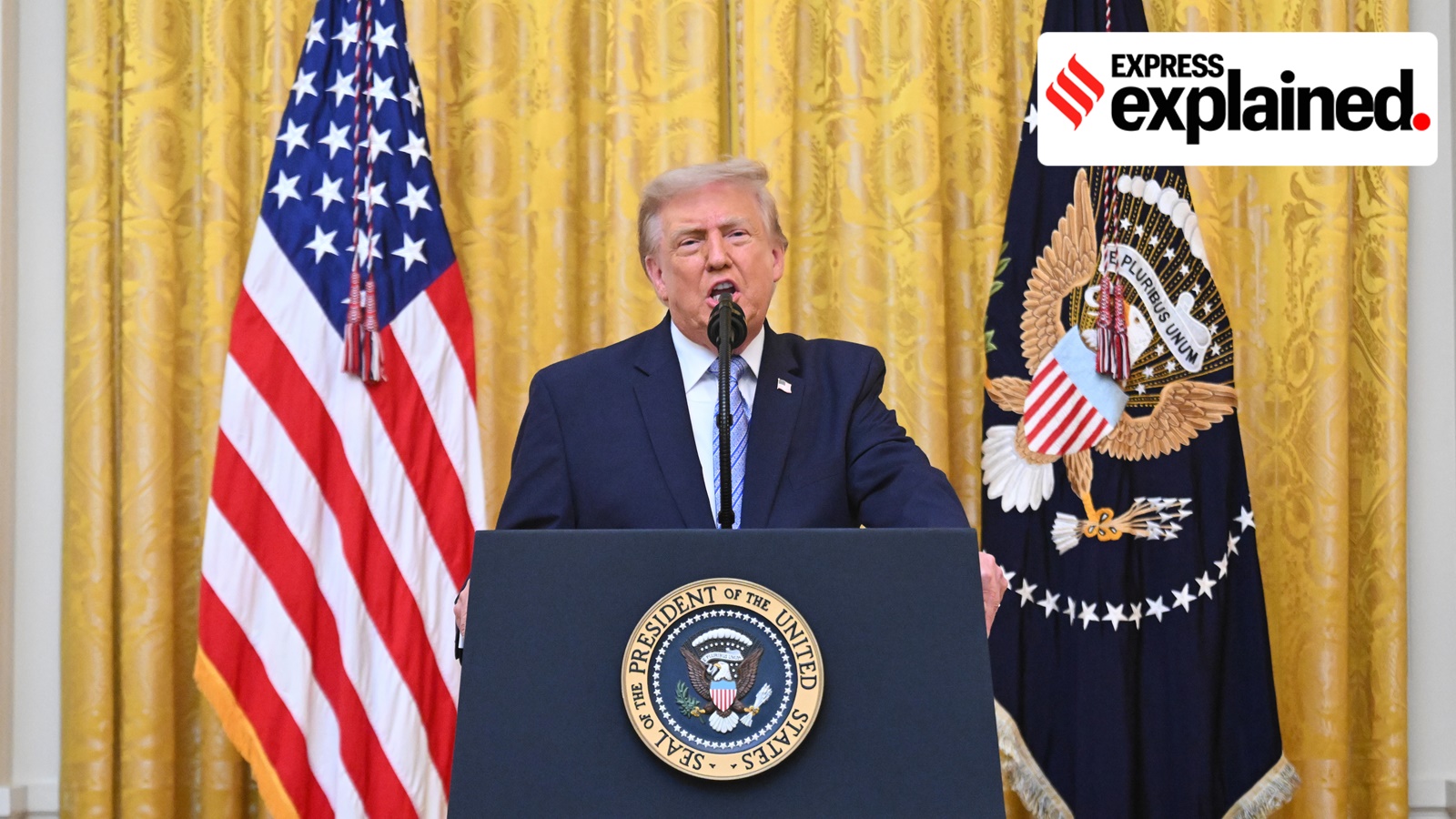
The policy change is in line with the Trump administration’s wider crackdown on immigration. (Saul Loeb/Pool via AP)
The United States Department of Homeland Security (DHS) on Thursday (July 16) announced a rule that eliminates “duration of status (D/S)” — a provision that allowed foreign students, exchange visitors, and media representatives to extend their stay in the US without being subject to additional screening.
The rule will likely affect those already in the country, who will transition to the new system “automatically” and have their “authorised stay capped at a maximum of four years from the effective date of this rule”, a DHS statement said.
Here is what to know.
What does Duration of Status mean?
International students in the US are largely on F-1 visas. Holders of F (academic student visa) and J (exchange visitor visa; used for educational exchange programmes) category visas are admitted to the US for an unspecified period known as the “duration of status”. This means that their records don’t set a specific date upto which they can stay in the country.
Rather, students can remain in the US for as long as they maintain their student status and their stay is marked as “D/S”. If they need more time to complete a program, they can request their school officials to extend the duration of their stay.
Compliance is overseen primarily by universities through Designated School Officials (DSOs), and reported to the Student and Exchange Visitor Information System (SEVIS), the DHS’ student-tracking system.
F-category visa-holders have up to 60 days to leave the US after the completion of their course. They can extend their stay by maintaining their student status, either by transferring to another school or opting for another level of study.
As of January 2025, there were about 300,000 Indian students in the US, mostly in graduate (Master’s) programmes in STEM (Science, Technology, Engineering and Mathematics) fields. According to the US State Department report, in 2024, 90,129 Indians obtained F (student) visas, 15,208 got J (exchange visitor) visas, and 426 got I (journalist) visas.
What changes now?
Story continues below this ad
Most students will now be admitted for a fixed period matching the length of their academic program, with an absolute maximum initial admission of four years.
Students who take longer to complete their degrees must formally petition the US Citizenship and Immigration Services (USCIS) for an extension of stay. The post-graduation grace period to prepare to depart the US or apply for a status change has also been halved from 60 days to 30 days.
The duration of I visas, for members of the media, will be capped at 240 days under the new rule, and 90 days for Chinese nationals.
The US government claims that this shift restores integrity to the nation’s immigration system, combats rampant visa abuse, and strengthens national security through regular vetting. A fixed period of admission is currently in place for many other types of nonimmigrant visas, they add.
Story continues below this ad
“For nearly half a century, the outdated ‘duration of status’ system has compromised national security and created an environment ripe for immigration fraud,” said DHS Secretary Markwayne Mullin. “For decades, foreign students have been admitted into the US indefinitely, allowing thousands to abuse our immigration system by perpetually enrolling in courses to avoid having to leave the US.”
The policy change is in line with the Trump administration’s wider crackdown on immigration.
Does it impact student intake for this Fall?
While the DHS visa rules will not stop the upcoming fall intake, the rules do create significant administrative challenges and uncertainty for new students. The final rule takes effect on September 15, by which time Fall admissions and visa processes are generally complete.
The policy change also moves oversight from university staff back to federal authorities and subjects applicants to biometric vetting, background checks, and fraud screenings, the DHS said. It further institutes strict limitations on academic changes.
Story continues below this ad
Experts point out that there is still a lack of clarity, and processes will become clearer once the rules become applicable in mid-September. However, they say that in their new form, the rules may complicate things for people who are already in the US.
Divya A reports on travel, tourism, culture and social issues - not necessarily in that order - for The Indian Express. She's been a journalist for over a decade now, working with Khaleej Times and The Times of India, before settling down at Express. Besides writing/ editing news reports, she indulges her pen to write short stories. As Sanskriti Prabha Dutt Fellow for Excellence in Journalism, she is researching on the lives of the children of sex workers in India. ... Read More
Tags:
Express Explained
US immigration
View original source — Indian Express ↗
Related stories

TechRadar
TechnologyJul 17, 2026 · 1 min
How to watch Ann Droid online from anywhere – it's *FREE*
TechRadar

TechRadar
TechnologyJul 17, 2026 · 1 min
'The first week of pre-orders brought in $180 million'
TechRadar

Wired
TechnologyJul 17, 2026 · 1 min
A $10K Bounty Aims to Make Sony’s PlayStation 5 a Computer Again
Wired

France 24
TechnologyJul 17, 2026 · 1 min
Trump reviving election fraud claims to contest midterm results, say Democrats
France 24