
Hacker Noon
The Next Big Social Media Platform Won't Look Like the Current Ones
Somewhere between one and three years ago, I noticed something was off with how I used social media. I'd open an app with a specific reason: check a message, see what a friend posted, and come out the other side twenty or forty minutes later, having absorbed content I never asked for, felt vaguely worse than when I started, and forgotten what I opened the app for in the first place. My primary instinct was that this was a personal discipline problem. I assumed I just needed better habits and change how I use social media and technology in general. But the feeling kept recurring even with the disciplinary changes, and it didn't feel like a willpower issue so much as something the apps themselves were doing to me. So I started asking a different question: was this just me, or was I noticing something a lot of people were experiencing but not really talking about? A Year of Listening I didn't set out to run a study. I started inserting questions into conversations I was already having naturally — in person, on Facebook posts/groups, in Reddit discussions, and other open networks, and then staying in those conversations longer than usual to actually understand people's perspective rather than just collecting a one-line reaction. Over about a year, that turned into something close to thousands of conversations via Facebook and Reddit posts, comments, and personal chats, and in-person conversations and talks happened on various other community platforms. The people I talked to ranged from teenagers to grandparents, from people who build software for a living to superb marketers who know the social media algorithm inside and out, to people who've never thought about how an app works. I wasn't trying to hit a number. I was trying to find out if the frustration I felt was universal, generational, niche, or imagined. It turned out to be none of those. It was close to universal. Almost everyone had a version of the same story — for themselves, or for a child, or for a parent. What surprised me wasn't that people were frustrated. It was how consistently the same frustrations came up, phrased in strikingly similar ways, from people who had never talked to each other and had nothing in common except using the same handful of platforms. Manob is the shape that emerged from that year of listening, it is not the starting point, and not the point of this writing either. I want to walk through what people actually told me and what the data says about each one. "I Forget What I Opened the App For” This was maybe the most common complaint, described almost identically by teenagers and grandparents alike: opening an app for one specific reason and getting pulled into an unrelated scroll that's hard to stop. Is this actually how the apps are designed, or does it just feel that way? Short answer: YES, It's designed. Feeds built on variable reward schedules — the same mechanism behind slot machines — release dopamine unpredictably with each scroll, which conditions compulsive checking behavior more powerfully than a predictable reward would. As one 2026 analysis on the neuroscience of scrolling puts it, each notification or new post delivers an unpredictable reward through the same variable ratio reinforcement mechanism slot machines use. The cumulative effect on attention is measurable: attention researcher Gloria Mark's widely cited work found the average human attention span on a screen dropped from 2.5 minutes in 2004 to 47 seconds by 2020. This isn't a fringe theory. A 2025 public health paper on "dopamine-scrolling," published in a peer-reviewed journal, describes small doses of dopamine released with each scrolling motion, paired with variable reward schedules that lead to tolerance over time, meaning the same behavior is needed for a diminishing payoff, which is precisely what the people I spoke with described: needing longer sessions to feel the same sense of having "checked in." "It Makes Me Frustrated at Random Things" Several people, independently, described a specific and strange side effect: noticing the scrolling effect and coming away from a session feeling irritated at society, at people in general, or at themselves, often without being able to point to why. This matches perfectly with what researchers are finding about sustained engagement with feeds optimized for emotional reactivity. Engagement-based ranking doesn't just show people more content, it changes what kind of content rises to the top. A large-scale controlled study published in Nature in 2026, which followed 2,000 participants around the 2024 US election, found that engagement-based feeds amplify intergroup, moralized, and emotional content relative to a simple reverse-chronological feed — and that an alternative ranking approach reduced exposure to that content while keeping the platform equally enjoyable to use. In other words, the irritation ability wasn't imaginary, and it wasn't unavoidable — it was a byproduct of a specific design choice that could be made differently. "I Can't Tell What's Real Anymore" This complaint showed up constantly, and it had two layers: first, that misinformation was already hard to spot before AI; second, that generative AI has made it close to impossible. On the first layer, the data is not new but is still the clearest evidence available. In the largest study of its kind, tracking roughly 126,000 news cascades on Twitter over more than a decade, MIT researchers found that falsehood mixes significantly farther, faster, deeper, and more broadly than the truth in every category of information, often by an order of magnitude. Specifically, false news stories were found to be 70 percent more likely to be retweeted than true stories, and true stories took about six times as long to reach 1,500 people as false stories did. Crucially, this wasn't a bot problem — when the researchers filtered out bot activity, both false and true news continued to circulate at the same relative rates, pointing to human sharing behavior, not automation, as the driver. On the second layer, comes AI-generated content, the numbers have moved fast enough that even people who aren't following tech news closely have started to notice. Deepfake volume online is estimated to have grown from roughly 500,000 shared files in 2023 to a projected 8 million in 2025, close to 900% annual growth according to cybersecurity firm DeepStrike. Human ability to catch these hasn't kept pace: a 2024 meta-analysis spanning 56 separate studies found overall human deepfake-detection accuracy barely above chance, and a 2025 study by iProov found only 0.1% of participants could correctly identify every piece of fake and real media they were shown. A good example fake news causing chaos was reported by Andreas Sandre on Social media platforms on the nature of fake news. This becomes more critical as platforms have already stopped working and sharing data with fact-checkers. If people can't reliably detect AI-generated content, what's actually left to catch it? Increasingly, researchers point toward infrastructure-level provenance systems — content signed and labeled at the point of creation — rather than relying on a viewer's judgment after the fact, since that judgment has stopped being reliable. "I Want My Feed to Be Mine" This was the request that came up almost as often as the addiction complaint, and it was oddly specific: people didn't want more content. They wanted less. They just the accounts and creators they actually follow, shown in the order they posted, even if that meant a shorter feed. What's notable is that the platforms people were describing frustration with are now visibly responding to this exact demand. In 2026 alone, Meta rolled out tools letting users see and adjust what their algorithm shows them, TikTok expanded topic-filtering controls, and Instagram's head, Adam Mosseri, publicly acknowledged that ranking systems have historically not been transparent to users, and that newer approaches can now show why content is displayed and let people explicitly state their preferences. This isn't a voluntary shift in philosophy so much as a regulatory one. Under the EU's Digital Services Act, platforms with more than 45 million users are required to offer a non-personalized feed option, and in October 2025 a Dutch court ruled that Meta must make non-algorithmic timelines more accessible to users. If the biggest platforms are already adding these controls, doesn't that solve the problem? Only partially. A control buried in settings, manual opt-in and easy to miss, is a different thing from a platform where the chronological, self-curated feed is the default experience rather than an alternative you have to go looking for. "Nothing Is Private Anymore" The specific fear people described wasn't abstract surveillance — it was that everything they post, message, or even just view is quietly being used to train AI systems, "for betterment," without a clear opt-out. This one is now backed by hard survey numbers, not just sentiment. A 2025 survey on US digital privacy attitudes found that 69% of Americans are aware social media platforms use their data to train AI models, and 91% are concerned about the practice; one in three said they had already stopped using certain platforms because of it. The willingness to pay for an alternative is not trivial either: 21% said they'd pay for a social platform that doesn't use their data to train AI models, and another 50% said they'd consider it depending on features and pricing. That's roughly seven in ten people expressing real or conditional willingness to pay specifically to avoid this one practice. The number grows if you bring Artists into the conversation, where almost everyone is skeptic on their content they post to let the world know is not reaching people rather being used to train Artificial Intelligence models that then get better in the ability to generate creative arts on its own. "Every User Should Be Protected, Not Monetized" The last recurring factor wasn't really about features. It was closer to a values statement: children, teenagers, adults, and older users should all be genuinely safe on a platform by design, not as an afterthought bolted on after a scandal or a lawsuit. Lawmakers are increasingly agreeing. More than 75 bills targeting the design of recommendation algorithms have been introduced in the US since 2023, with more than a dozen signed into law — including legislation in New York and California specifically restricting minors' exposure to what regulators are now calling "addictive feeds." The fact that safety-by-design has become a legislative trend, not just an ethical preference, says something about how far the gap has grown between what platforms optimized for and what the people using them actually wanted. Where Platforms Like This Actually Stand? It would be dishonest to present any of this as already solved. A handful of platforms have started building toward what people described to me: chronological feeds by default, no data sold or fed into AI training, human-reviewed moderation instead of pure automation. Manob, the platform I developed, is one attempt at that list. UpScrolled is another, having grown rapidly in early 2026 on the strength of a chronological feed and a no-data-training policy. But "matches the list of things people are asking for" and "is a finished answer" are different claims, and I don't think platforms in this category — including my own — should pretend otherwise. There's a long list of things still to get right from the ground up: moderation that's fast without becoming automated censorship, growth that doesn't quietly reintroduce the same engagement incentives it was built to avoid, and trust that has to be earned over years, not asserted in a launch post. Early attempts at this list have a lot of work left before they're a real substitute for the platforms people are leaving. The Pattern, Not the Platform What stayed with me after a year of these conversations wasn't any single complaint. It was how little variation there was across age, geography, or technical background. A grandparent worried about a grandchild's attention span and a software engineer annoyed at his own compulsive checking were, underneath the surface, describing the exact same mechanism. That's the actual claim here: the next big social media platform won't look like the current ones, not because of any one company's failure, but because the underlying design — engagement-optimized ranking, ad-funded growth, opaque data use, reactive moderation — has produced a remarkably consistent, remarkably widespread reaction. The platforms best positioned to matter next are the ones treating that reaction as the starting brief, not as a complaint to manage around.
View original source — Hacker Noon ↗
Related stories

BBC
TechnologyJul 17, 2026 · 1 min
Too hot to fly: the airports at risk from climate change
BBC

TechRadar
TechnologyJul 17, 2026 · 1 min
The Medion Signium 27 S1 isn't going to turn the computing world upside down, but it's a surprisingly capable…
TechRadar
Engadget
TechnologyJul 17, 2026 · 1 min
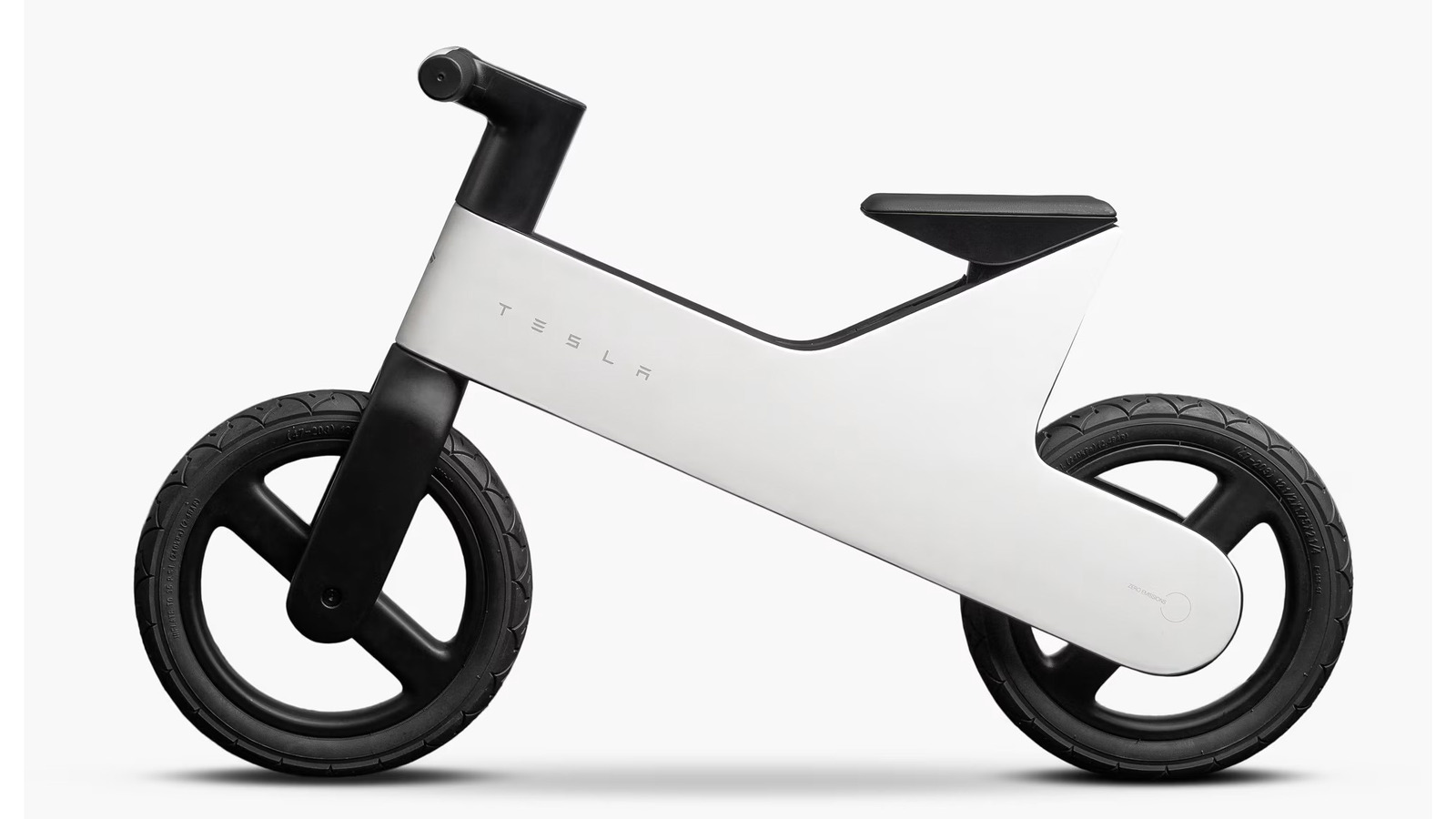
Tesla's selling a $225 balance bike for toddlers
Engadget

Philippine Daily Inquirer
TechnologyJul 17, 2026 · 1 min
Tarriela to Padilla: WPS transparency is not ‘wartime propaganda’
Philippine Daily Inquirer