Indian Express
Supreme Court allows release of animated film on Lord Jagannath after Rath Yatra
The Odisha High Court had stayed the film over objections to its portrayal of Lord Jagannath and concerns over devotees' sentiments. (File Photo)
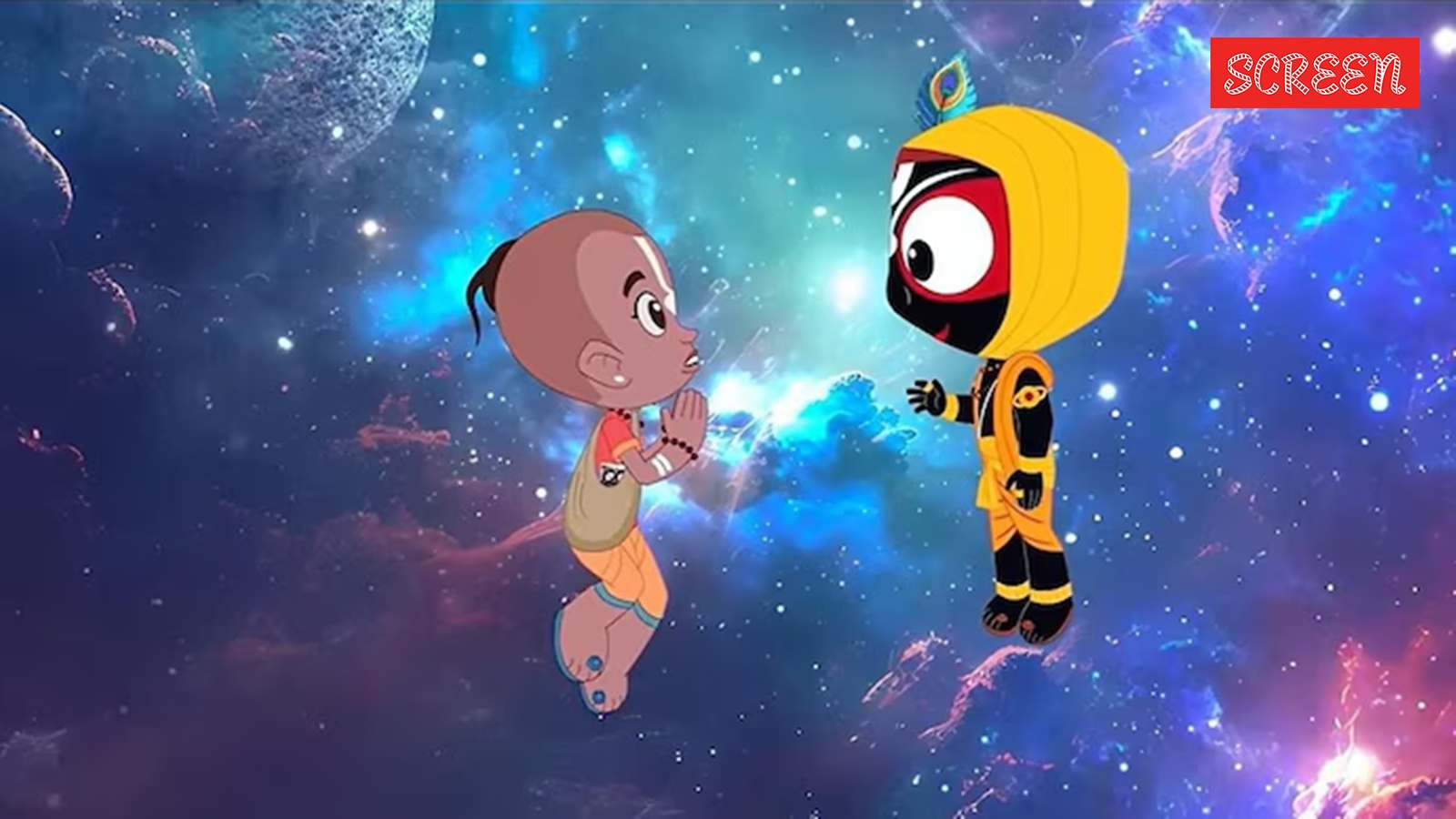
The Supreme Court Friday allowed the release of an animated film, Mahaprabhu Jagannath, on or after July 28, after the Rath Yatra concludes, after hearing a plea by its producer challenging the July 15 Odisha High Court order staying its screenings.
The film was previously scheduled for release on July 17.
Appearing for the producer, Ele Animations Private Limited, Senior Advocate Devadatt Kamat urged a two-judge bench presided by Justice B V Nagarathna, also comprising Justice R Mahadevan, to permit its release on Friday itself, given the huge investment involved and the fact that theatres had already been hired.
Kamat pointed out that the film, meant for children, was based on a long-running TV series and had been cleared by the Central Board of Film Certification (CBFC).
However, the court declined the request. “Don’t do it during Rath Yatra… You can release it after Rath Yatra,” said Justice Nagarathna.
PIL against film
The Odisha High Court order came on a Public Interest Litigation (PIL) seeking directions to restrain the filmmakers from public exhibition, screening, or releasing the film within Odisha.
The PIL said Ele Animations released the teaser on its YouTube channel on June 6, announcing the film’s release on July 10. Several people, including the Shree Jagannath Temple Administration, questioned its title and content, following which it was screened for the temple administration and the Gajapati Maharaja of Puri.
Though some objections were raised about the content, the producer announced its release on July 17, the PIL said, adding this was done without making the suggested changes.
Story continues below this ad
The petitioner “succinctly highlighted the objectionable portion of the said animated film, where the fictional childhood or the personal adventure of Lord Jagannath has been portrayed, which is not in tune with the religious texts of the Skandha Purana and the Brahma Purana”.
“The animated actor playing the role of Lord Jagannath was also shown to be speaking and behaving in an invented manner, which is not in conformity with the devotional literature and the temple traditions and the cultures practised and/or professed since the advent of the establishment of the Lord Jagannath Temple,” the petitioner added.
The filmmakers argued that the film included a disclaimer stating it is a work of fiction with no connection to reality, and that there was no attempt to undermine devotees’ beliefs. They also cited their fundamental right to speech and expression under Article 19.
What Odisha High Court said
In its order, the Odisha High Court said that thoughts, ideas, and the realities of life can be conveyed through multiple forms of expression, including the print media, newspapers, articles, audio platforms, and films exhibited in theatres.
Story continues below this ad
“The moment it is expressed in the form of a movie, it has to be judged on the basis of an overall impact on the public. Though they are primarily aiming for amusement, at times they create a massive impact in the minds of the viewers and/or the public, more particularly when it is intricately related to a religious belief and/or endowment as a devotee to the feet of God”.
The court added that while Article 19 of the Constitution guarantees freedom of speech and expression, the exercise of that right must be balanced with the reasonable restrictions permitted under Article 19(2).
“Even if the movie enjoins the guarantee of the freedom of expression and/or speech, it impacted the thoughts and the action of the common people and, therefore, should ensure a high degree of attention and retention. At times it creates an immediate influence and at times may shatter the sentiments, the emotions and the religious belief, which cannot be allowed, if it results in unrest in the peaceful society.”
Restraining its release, the HC said, the filmmakers “intended to release” it “without bringing any change as suggested while screening” it … “therefore, we feel that screening of the said film on 17th July, 2026 shall be counterproductive”.
Story continues below this ad
“We have succinctly highlighted the objectionable content of the said animated film vividly and lucidly narrated in the instant public Interest Litigation, which needs to be determined in a threadbare manner after the exchange of the affidavits.”
View original source — Indian Express ↗
Related stories

The Punch
WorldJul 17, 2026 · 1 min
VIDEO: Ododo receives rescued kidnap victims at Kogi government house
The Punch
The Punch
WorldJul 17, 2026 · 1 min
Rescued Kogi school victims receiving care — Police
The Punch
The Punch
WorldJul 17, 2026 · 1 min
I spent money campaigning for Obi, he never appreciated me – Isaac Fayose
The Punch

Philippine Daily Inquirer
WorldJul 17, 2026 · 1 min
Ultra Lotto jackpot rises to P137.99M after no July 17 draw winner
Philippine Daily Inquirer