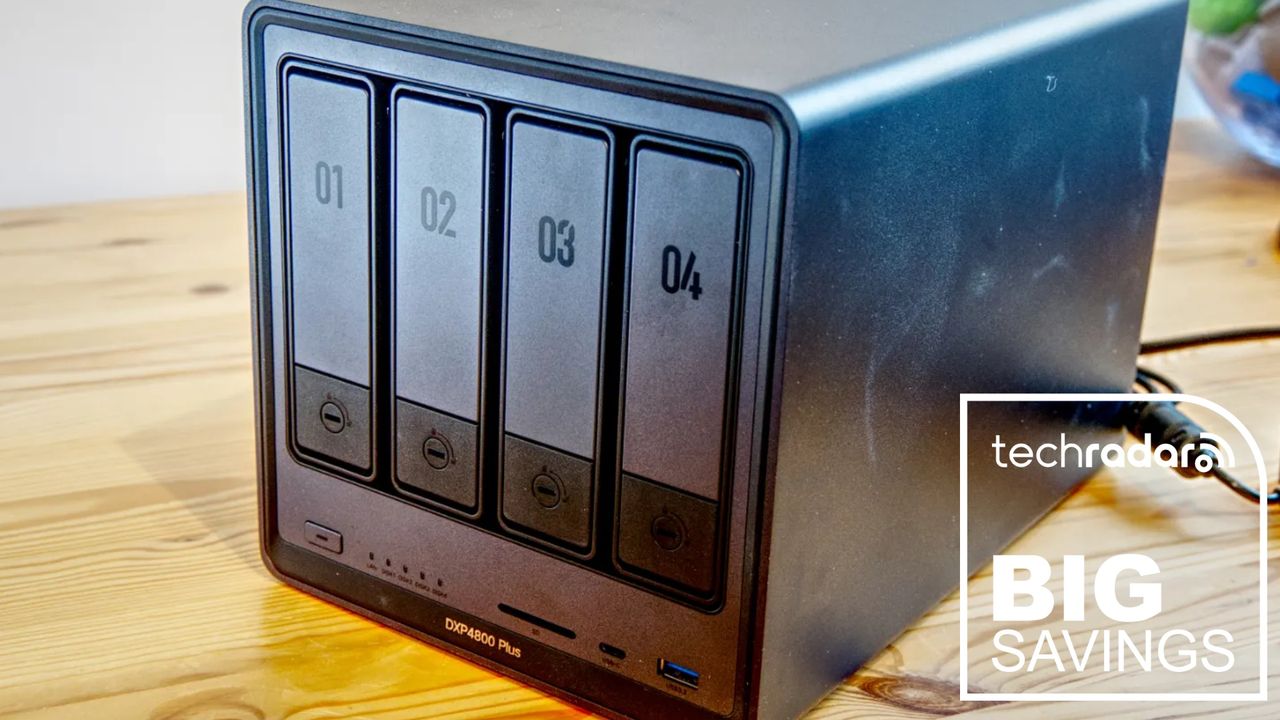
Ugreen's 'exceptionally powerful' NASync DXP4800 Plus NAS drops in price
If you're a small business looking to boost your storage, I've uncovered a top deal on the Ugreen NASync DXP4800 Plus for $657 (was $730) at Amazon. This four-bay NAS system
For a 4-bay NAS that can handle Docker, VMs, 10GbE, and serious creative workflows without approaching Synology or QNAP pricing, the Ugreen NASync DXP4800 Plus makes a compelling case.
In our hands-on tests, we found the hardware was "exceptionally well-considered and powerful." In the UK, Ugreen's NAS system is also discounted to £527 (was £620) at Amazon.
Today's top NAS deal
The Intel Pentium Gold 8505 is the spec that separates the DXP4800 Plus from ARM-based NAS alternatives like the DH2300. It’s an x86 processor, which means it runs Docker containers properly — Jellyfin, Home Assistant, qBittorrent, Nextcloud, and hundreds of other containerized apps all work without compatibility caveats. It also supports virtual machines, letting you run a full Windows or Linux instance inside the NAS if your workflow requires it.
For the broad category of buyers who want a NAS that can also serve as a self-hosted server for home automation, media, or development workloads, x86 matters in a way that ARM simply can’t match.
The 10GbE network port is the other hardware differentiator. Most NAS at this price max out at 2.5GbE; the DXP4800 Plus provides a 10GbE port alongside the 2.5GbE, giving you a genuine multi-gigabit network connection for fast file transfers and 4K network video editing. Camera Jabber’s review found transfer speeds “impressive and stable” even on a 5GbE network, calling it “a superb option for any photographer or videographer looking for a small office or studio NAS system.” For the right setup, 10GbE effectively removes the network as a bottleneck for large file workflows.
The dual M.2 NVMe slots for SSD caching are worth understanding before buying. They don’t add to your storage total — they serve as a fast cache layer that accelerates frequently accessed files, making the mechanical HDD array feel significantly more responsive for mixed read/write workloads. If you’re serving files to a busy household or small office with multiple simultaneous users, adding even modest NVMe SSDs to the cache slots makes a noticeable difference.
UGOS, Ugreen's operating system, has matured considerably since the DXP series launched in 2024. Early criticism centered on missing features and instability; that criticism is now largely outdated. The App Center has grown substantially, Docker is well-integrated, and the web interface is clean and intuitive. The honest caveat is that UGOS is still newer and has a smaller ecosystem of native apps than Synology DSM or QNAP QTS — buyers who rely on specific Synology or QNAP apps that have no UGOS equivalent should verify compatibility before switching. For the most common use cases — file serving, media streaming, cloud sync, backups, Docker containers — UGOS covers everything needed.
For more high-capacity storage solutions, we've tested the best NAS devices and the best NAS hard drives.
Also consider: More Ugreen NASync deals
Sign up to the TechRadar Pro newsletter to get all the top news, opinion, features and guidance your business needs to succeed!
Bryan M. Wolfe is a staff writer at TechRadar, iMore, and wherever Future can use him. Though his passion is Apple-based products, he doesn't have a problem using Windows and Android. Bryan's a single father of a 15-year-old daughter and a puppy, Isabelle. Thanks for reading!
View original source — TechRadar ↗
Related stories

Even Microsoft couldn’t make Windows 11 work well on 8GB of RAM

India’s growth rate will rise or fall this financial year — depending on the variable you consider

Google renames NotebookLM as Gemini Notebook, expands AI research features