
Rio Times
Brazil’s Voting Machines Keep No Paper Trail – Can Voters Still Trust Them in 2026?
BRAZIL · ELECTIONS
Key Facts
—Largest paperless vote: Brazil is the biggest democracy on earth that records every ballot on an electronic machine and keeps no paper copy the voter can check, across roughly 156 million registered voters.
—The trust split: A Genial/Quaest poll in February 2025 found 53% of Brazilians trust the machines and 43% do not. Among 2022 Bolsonaro voters, distrust rose to 69%.
—No proven fraud: Since the machines arrived in 1996, no audit has found evidence that a single vote was flipped. That includes the 2022 review commissioned by Bolsonaro’s own Defence Ministry.
—Made in Brazil: The urnas are built by Positivo Tecnologia, a Brazilian company, and the source code is inspected before each election by parties, prosecutors, the bar association and the Armed Forces.
—The paper-trail vote: Congress rejected a printed-ballot constitutional amendment on 10 August 2021 by 229 to 218, short of the 308 votes needed. The Supreme Court had struck down an earlier printed-vote law in 2018.
—The global comparison: Germany’s top court banned paperless e-voting in 2009, India pairs every machine with a paper receipt, and the United States counts mostly on paper with post-election audits.
—Why now: Brazil enters a polarised 2026 presidential race with the trust gap unresolved, and Donald Trump’s 16 July address on election security pushed the issue back onto the regional agenda.
Brazil is the largest democracy in the world that records every vote on an electronic machine and keeps no voter-verified paper trail, and heading into 2026 roughly four in ten Brazilians say they do not trust it. Whether that gap is an argument for adding a paper record, or a symptom of manufactured doubt, is now one of the country’s sharpest political questions.
One-stop reference
Company Intelligence
Every listed company in Latin America — financials, ownership and structure for 1,450+ companies across 26 exchanges, in one place.
Browse the directory →
Why the question is back
The doubt is not new, but it is louder. Brazil heads into a 2026 presidential race as polarised as the 2022 contest that ended with the 8 January riot in Brasília.
Donald Trump’s 16 July address, which claimed foreign interference in United States elections, was watched closely by Brazil’s right, where distrust of the urna has become a defining cause.
The numbers show how uneven that distrust is. Overall a slim majority still trusts the machines, but among the voters who backed Jair Bolsonaro in 2022, a clear majority does not.
The case for a paper trail
The strongest argument for change does not rest on any claim of fraud. It rests on the idea that a result no one can recount by hand asks citizens to trust software they cannot see.
A voter-verified paper record lets an outcome be checked without trusting the code, the manufacturer or the electoral court. Supporters argue that verifiability, not accusation, is the point.
This is why the debate refuses to die even when audits come back clean. When 43% of voters say they do not trust the count, the absence of a paper trail leaves officials with no simple way to prove them wrong.
What the audits have actually found
On the other side of the ledger sits an unbroken record. In nearly three decades of electronic voting, no official audit has produced evidence that a single vote was altered.
That includes the review the Armed Forces carried out in 2022 at the request of Bolsonaro’s own government, which suggested procedural improvements but found no fraud. Before every election the machine’s source code is opened to political parties, the public prosecutor, the bar association and the military.
One persistent claim can be settled directly. The urnas are not built in Venezuela; they are manufactured by Positivo Tecnologia, a listed Brazilian company, and run software developed and audited inside Brazil.
How other democracies handle it
Brazil is an outlier less for using machines than for keeping no paper copy. Germany’s Federal Constitutional Court ruled in 2009 that paperless electronic voting breached the public nature of elections, and the country returned to hand-counted paper.
India, the only democracy larger than Brazil, votes on electronic machines but now prints a paper receipt the voter can see before it drops into a sealed box. The United States counts mostly on paper ballots and increasingly runs post-election audits that recheck the machine tally.
That leaves Brazil as the largest electorate voting with no independent paper record at all. Defenders reply that its centralised system is faster, cheaper and harder to tamper with locally than a patchwork of paper counts.
The trust problem is real either way
Even with a clean audit record, a 43% distrust figure is a governance problem in its own right. Elections work only when the losing side accepts the result, and trust in Brazil now splits sharply along partisan lines.
Congress has already chosen once, rejecting the printed-ballot amendment in 2021, and the electoral court argues that more transparency, not paper, is the answer. Whether that holds through a contested 2026 count is the open question.
The headline dilemma is genuine, not rhetorical. A system with no proven fraud and a system a large minority refuses to trust can be the same system, and Brazil now has to decide whether verifiability is worth the cost of adding it.
Frequently asked questions
Does Brazil’s electronic voting system have a paper trail?
No. The vote is recorded only electronically and the voter cannot verify a paper copy, and Congress rejected a printed-ballot amendment in 2021.
Has fraud ever been proven in Brazil’s electronic vote?
No. There is no proven case of a vote being flipped since 1996, and audits including the military’s 2022 review found no fraud.
Are Brazil’s voting machines made in Venezuela?
No. They are built by Positivo Tecnologia, a Brazilian company, and the software is developed and audited inside Brazil before each election.
How do other large democracies vote?
Germany’s top court banned paperless e-voting in 2009, India prints a paper receipt with each machine, and the United States relies mostly on paper ballots with audits.
Do most Brazilians trust the voting machines?
A February 2025 Genial/Quaest poll found 53% trust and 43% distrust, with distrust concentrated among opposition voters.
The Rio Times · Power Map
See who really holds power in Latin America
Click to open the Power Map →
View original source — Rio Times ↗
Related stories

The Punch
PoliticsJul 17, 2026 · 1 min
Tinubu signs executive order on virtual assets, establishes council to harmonise crypto regulation
The Punch
The Guardian
PoliticsJul 17, 2026 · 1 min
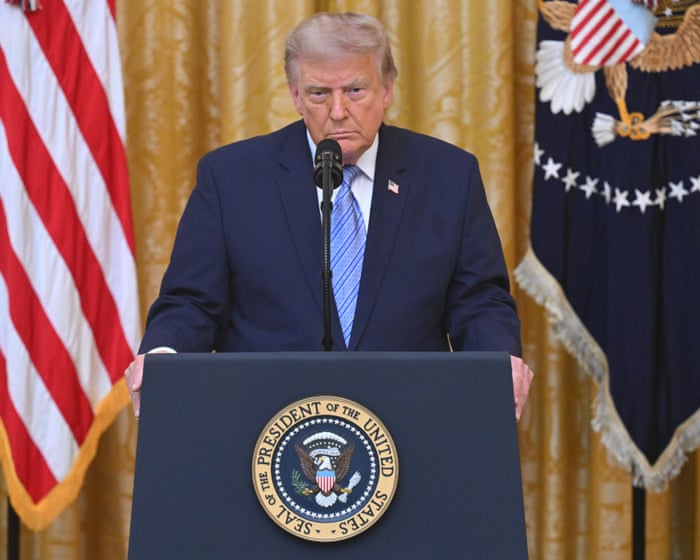
Trump speech lays groundwork for him to tamper with midterm results, critics warn
The Guardian
The Punch
PoliticsJul 17, 2026 · 1 min
Tinubu mourns ex-minister Amaechi’s mother
The Punch
Dawn
PoliticsJul 17, 2026 · 1 min
Govt decides to fix fuel prices daily due to renewed hostilities in Persian Gulf: petroleum minister
Dawn