Indian Express
9-year wait and no bride: Kerala consumer court orders marriage bureau to pay man
2 min readNew DelhiJul 18, 2026 12:49 PM IST
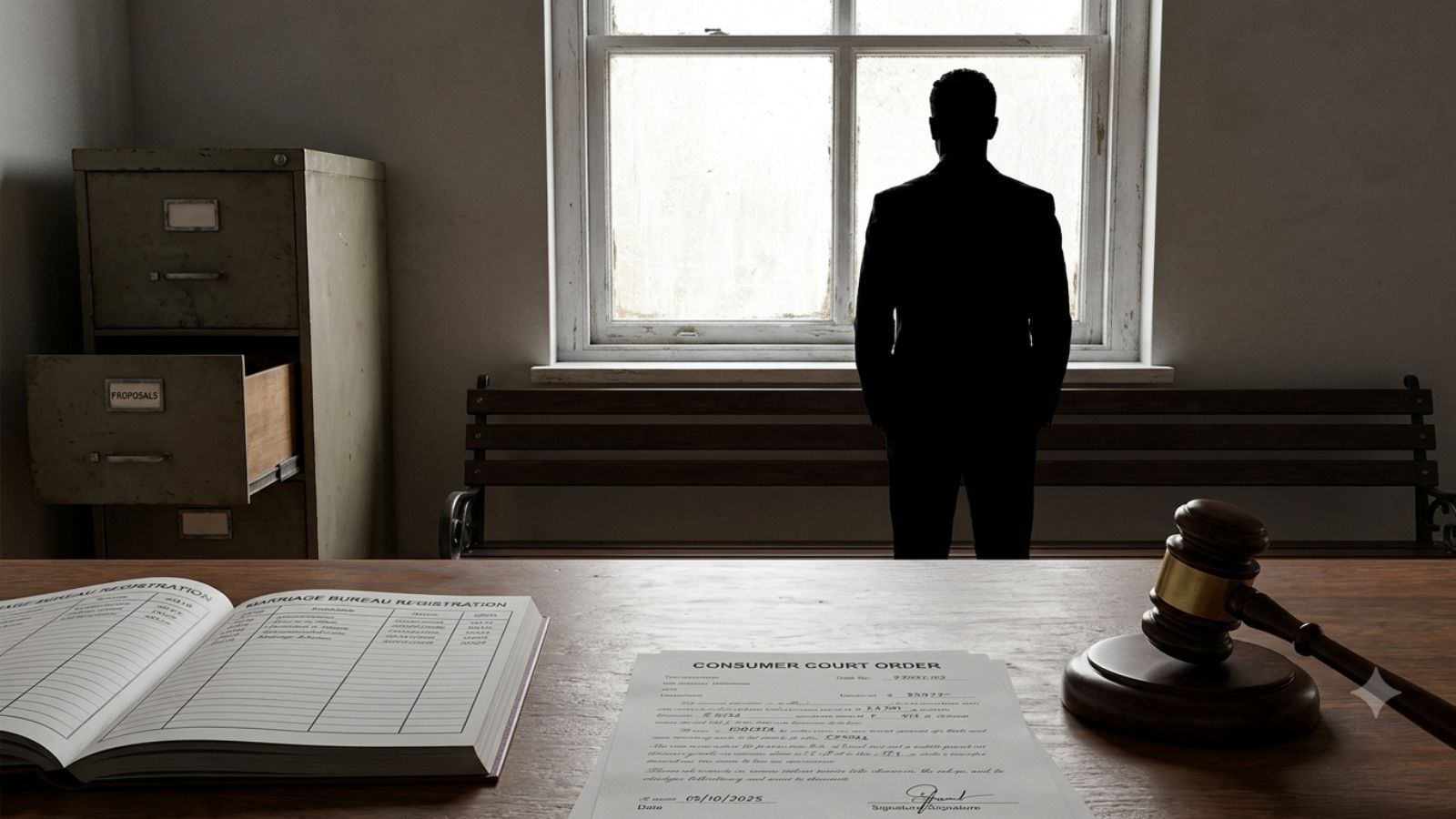
Ajith K K alleged that despite his matrimonial profile remaining active and receiving annual assurances from the Kannur marriage bureau, he was left waiting for nine years. (Image generated using AI)
A district consumer court in Kerala’s Kannur directed a local marriage bureau to refund a customer and pay him compensation after it failed to find him a suitable match for nearly nine years. The commission held the bureau liable for a deficiency of service after it accepted a registration fee but did not provide the promised matrimonial proposals.
The complainant, Ajith K K, a nursing college professor, registered his biodata with Sreechakra Marriage Bureau in November 2016 and paid a registration fee of Rs 3,000. The bureau had initially assured him of a prospective bride from Kasaragod, but no suitable proposal ever materialised.
Ajith alleged that despite his profile remaining active and receiving annual assurances from the bureau, he was left waiting for nine years. In that time, his father passed away from cancer. Aggrieved by the “deficiency of service and unfair trade practice”, he approached the Kannur District Consumer Disputes Redressal Commission under the Consumer Protection Act, 2019, in November 2025—less than a month after his father’s demise.
The marriage bureau did not respond to the commission’s notices and failed to file a written defence. The commission consequently proceeded ex parte—meaning that it heard and decided the matter in the absence of the bureau, based solely on the complainant’s evidence.
After examining the registration and payment receipts, the commission concluded on June 30 that the bureau was “directly bound to [redress]” the complainant’s grievances. It ordered the marriage bureau to refund the Rs 3,000 registration fee, as well as pay Rs 3,000 as compensation for the “mental agony” caused to him, along with Rs 2,000 towards litigation costs. The bureau was given 30 days to pay the amount, failing which it will attract an interest of 9 per cent per annum.
View original source — Indian Express ↗
Related stories

The Punch
WorldJul 18, 2026 · 1 min
Fubara condoles ex-Rivers governor Amaechi over mother’s death
The Punch
The Punch
WorldJul 18, 2026 · 1 min
Substation explosion plunges parts of Enugu into blackout
The Punch

Indian Express
WorldJul 18, 2026 · 1 min
What critics don’t get about Christopher Nolan’s Odyssey — like Ramayana and Mahabharata, there’s no ‘true’ epic
Indian Express
Indian Express
WorldJul 18, 2026 · 1 min
Sonam Wangchuk murals lead to 2 arrests and police scrutiny in Guwahati
Indian Express