Indian Express
Sonam Wangchuk hospitalised: How prolonged fasting affects the body — and can turn fatal
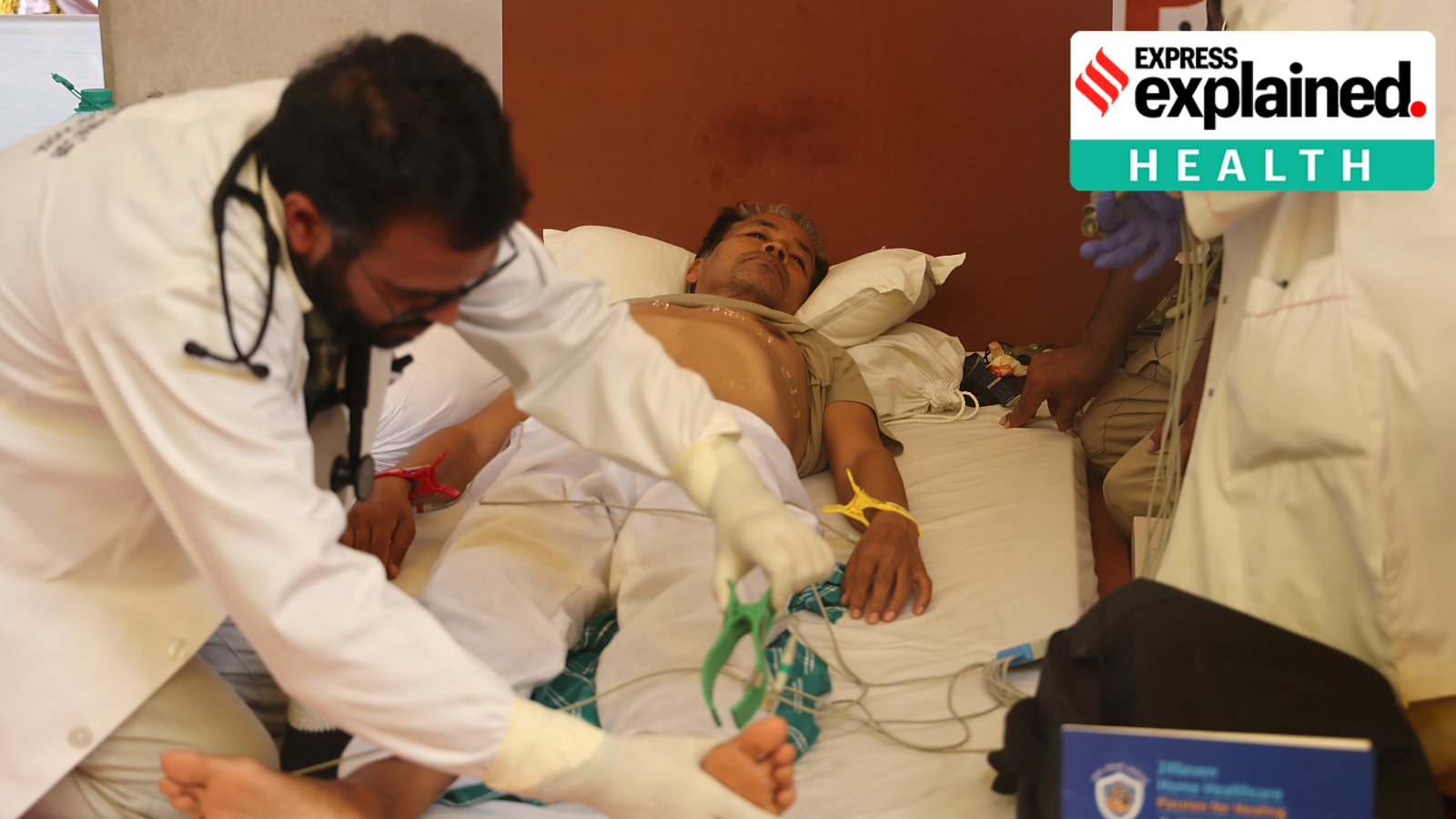
The Delhi Police Saturday shifted activist Sonam Wangchuk to a hospital from Jantar Mantar on the 21st day of his hunger strike demanding reforms to the examination system and the resignation of Union Education Minister Dharmendra Pradhan over multiple paper leaks.
Police cited the Delhi High Court’s order on Wangchuk’s health while taking the activist to Safdarjung Hospital. The High Court had on Thursday had told the Union and Delhi governments to ensure regular monitoring of Wangchuk’s health and to “intervene immediately” if required.
The hospital said in a statement that Wangchuk was weak owing to prolonged fasting and dehydration. “Although he is currently stable, he requires continuous observation, monitoring and treatment to restore his body parameters,” it said.
On Friday, Wangchuk’s blood pressure was recorded at 108/68 mmHg, blood sugar at 80 mg/dL, pulse rate at 72 beats per minute, and oxygen saturation (SpO₂) at 96%. His weight went down by 350 gms in 24 hours to 56.55 kg on Friday, according to his doctor.
How long fasting affects the body
Dehydration: Dehydration is the first challenge that comes with long fasts. It can lead to salt imbalance, affecting all organ systems. “Dehydration can affect all organs but also malnutrition and lack of energy can lead to these systems slowly shutting down,” Dr B K Tripathi, former head of the department of medicine at Safdarjung Hospital, told The Indian Express.
Blood pressure dip: The lack of nutrition also leads to a drop in blood pressure, with the circulation first stopping in the extremities — as the body attempts to preserve energy — and then eventually all organ systems, he said. In the initial stage, the body uses stored glycogen (carbohydrates) for energy. Blood sugar and insulin decrease. This stage is usually marked by fatigue, headache, irritability and dizziness.
Story continues below this ad
Fat and muscle loss: After 10 days of fasting, there is continued fat loss and ongoing muscle breakdown, including some loss of organ protein. Vitamin deficiencies begin developing and the immune system may become less effective. Doctors say risks increase for low blood pressure, fainting, heart rhythm abnormalities, gallstones, dehydration (if fluid intake is inadequate) and hormonal changes.
Even with electrolyte water, you do not get protein, essential fats, vitamins and calories. Electrolytes help reduce the risk of sodium, potassium, or magnesium imbalances, but they do not prevent starvation. As for weight loss, a person may lose 8-15 kg over 20 days.
The biggest challenge
A big challenge when it comes to long fasts is a condition called starvation ketoacidosis.
“When there is a lack of calories, the body starts utilising protein reserves. When the proteins are broken down, ketones are produced as a byproduct. This changes the pH of the body, which is linked to several bodily processes all of which get affected. The body produces so many ketones that they accumulate and make the blood acidic,” said Dr Tripathi, adding that this condition may turn fatal if not reversed quickly.
Story continues below this ad
Dr Hans Raj, former head of medicine department at Delhi’s Dr Ram Manohar Lohia Hospital, said: “Fasting for long durations can lead to all bodily and metabolic functions slowing down. The BP falls, the pulse rate falls, and the kidney deteriorates. It can also lead to starvation ketoacidosis. In such a state, the patient requires immediate hospitalisation. They have to be given nutrition through a nasal tube and hydration through IV fluids. The salts have to be balanced immediately and underlying conditions have to be monitored.”
Muscle loss continues despite ketosis, metabolism begins to slow to conserve energy, weakness becomes more noticeable.
What about nasal feeding?
Dr Tripathi said that the nasal feeding tube does not lead to any complication per se, and can sustain a person for days and weeks. “However, when the tube is being inserted it can cause some injuries in the windpipe or food pipe if forced.”
Story continues below this ad
The danger of ‘refeeding syndrome’
One of the greatest dangers comes after the fast. Suddenly eating a normal meal after 20 days can trigger “refeeding syndrome”. This refers to shifts in electrolytes — especially phosphate — that can cause heart failure, seizures, breathing problems. This can even be fatal.
Refeeding is a gradual exercise and has to be medically supervised, said both doctors quoted above. Refeeding should begin with small, easily digestible meals and calories should be increased slowly over several days while ensuring adequate fluids, vitamins (particularly thiamine), and electrolyte monitoring.
Survival vs safety
Many people can survive 20 days without food if they have adequate body fat and continue drinking fluids with electrolytes. However, survival is not the same as safety.
Story continues below this ad
The risk of serious complications rises with the duration of the fast, and some people may experience life-threatening complications much sooner. Those at greater risk include people who are underweight, pregnant, elderly, have diabetes, heart or kidney disease, or take certain medications.
View original source — Indian Express ↗
Related stories

Rio Times
TechnologyJul 18, 2026 · 1 min
Bolivia’s Timber Trade Cleared as Cocaine Case Collapses
Rio Times

South China Morning Post
TechnologyJul 18, 2026 · 1 min
Why Japan should be able to weather a US market crash
South China Morning Post

Philippine Daily Inquirer
TechnologyJul 18, 2026 · 1 min
Baguio seeks barangay tanods in schools amid campus violence
Philippine Daily Inquirer
The Next Web
TechnologyJul 18, 2026 · 1 min
Google used Veo and Gemini to reconstruct the greatest goal Pelé ever scored, which was never filmed
The Next Web