Times of India
Boom at the front, bust at home: Russia’s war economy is holding but its people are cracking
By 2024, Russia appeared to have defied expectations. Despite unprecedented Western sanctions, the economy grew by 4.9%, unemployment fell to record lows, and factories linked to the defence sector ran around the clock.
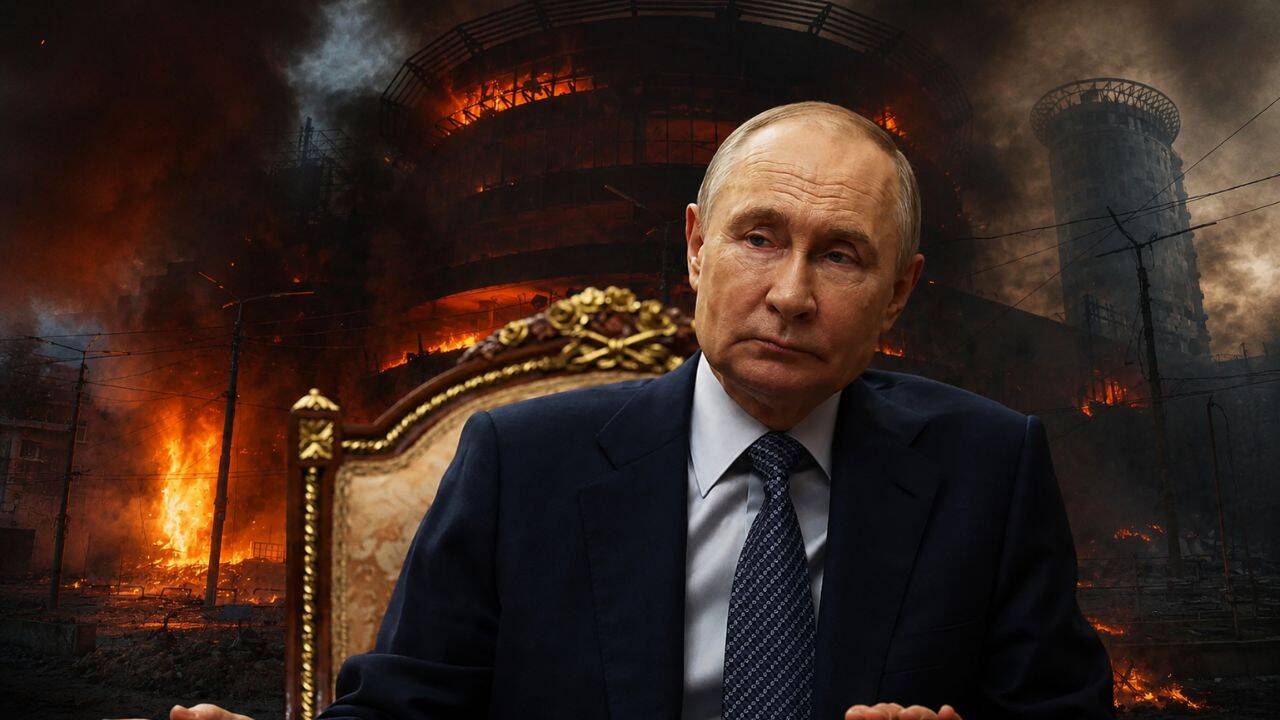
President Vladimir Putin pointed to these figures as proof that Russia had adapted to wartime conditions.But beneath the headline numbers another story has quietly emerged: more Russians are declaring bankruptcy, banks are becoming increasingly cautious, borrowing costs remain among the highest in two decades, and some of the country's largest lenders warn of deteriorating loan quality.So, is Russia's economy finally beginning to crack? Or are rising bankruptcies simply the inevitable side effect of an economy adjusting after years of extraordinary wartime spending?As the war in Ukraine grinds into 2026, more than four years since Moscow's full-scale invasion in February 2022, that question has grown harder to dodge.
The answer lies somewhere in between. Official data suggests that while Russia is far from economic collapse, the burden of sustaining its war economy is increasingly shifting onto households and the financial system.
Are Russians really going bankrupt in record numbers?
Short answer: yes—but that does not mean Russia itself is collapsing.A European intelligence assessment obtained by Reuters and prepared for EU policymakers in June 2026 said more than 500,000 Russians declared personal bankruptcy in 2025, almost one-third higher than the previous year.
The report also said more than 13 million Russians simultaneously held at least three loans, reflecting rising household indebtedness.Personal bankruptcy in Russia is a legal process that allows individuals overwhelmed by debt to restructure or write off liabilities. A rise in bankruptcies therefore signals growing financial stress among households, not the insolvency of the state. The Bank of Russia has acknowledged rising household debt but rejects suggestions that these figures indicate a systemic banking crisis.
Has the war economy masked deeper problems?
Russia performed far better than many Western analysts expected after the 2022 invasion. According to the IMF's World Economic Outlook (July 2026), Russia's economy expanded by 4.9% in 2024, outperforming many major economies despite sweeping sanctions. That growth was largely fuelled by record government spending on the military and defence-industrial production, which kept factories operating and supported strong labour demand.
This wartime mobilisation pushed unemployment to exceptionally low levels. The IMF projects unemployment at 2.4% in 2026 — among the lowest for major economies.
But that exceptional growth faded quickly. The IMF now projects growth of only 1.0% in 2025 and 1.1% in 2026–27, suggesting the wartime boom is giving way to a prolonged period of slow growth rather than a sharp recession. The World Bank reached a similar conclusion, citing weaker fiscal stimulus, high interest rates and structural constraints that slowed growth after 2024 government spending began to moderate.Anupam Manur, professor of economics at the Takshashila Institution, said Russia's economy "is still not collapsing, but the financial sector is under stress." He argued the government had lowered lending standards to keep the economy and the war machine running, pushing banks to lend to riskier borrowers — a factor now showing up as financial strain and rising bankruptcies.
Why have high interest rates become a problem?
One major pressure on households and businesses is borrowing costs.
To combat inflation, the Bank of Russia raised its key rate to 21% in 2024, the highest since the early 2000s. Although the central bank began easing in 2026, lowering the rate to 14.25% in June, borrowing costs remain far above pre-war levels.The Bank of Russia said inflation slowed but that inflation expectations remained elevated, lending had accelerated again, and persistent fiscal deficits could require a tighter policy than previously expected.
High rates have made mortgages, consumer loans and corporate borrowing substantially more expensive. The World Bank notes that high borrowing costs and increased taxes sharply curtailed credit growth, while investment contracted by more than 3.6% in 2025 as businesses postponed expansion.
Are Russian banks under pressure?
Here opinions diverge. The European intelligence report warns that banks are increasingly exposed after years of subsidised lending to defence companies, regional projects and mortgage borrowers.
It estimates around 10% of corporate loans could already be doubtful, while some major banks reported retail non-performing loan ratios of up to 15% in 2025. The report argues that state-backed lending programmes and repeated restructurings have masked the true quality of bank assets, creating an "explosive" vulnerability if another shock hits.The Bank of Russia strongly disputes this. Deputy Governor Filipp Gabunia said in June 2026 that the central bank "does not see signs of a banking crisis", noting banks' capital buffers are at their highest in three years and corporate bad loans remained broadly stable at around 4%.The truth likely sits between these positions. There is no clear evidence of an imminent banking collapse, but rising credit risks are apparent if growth continues to weaken.
What are Russia's biggest banks saying?
Statements from major lenders provide direct evidence of strain. On July 1, 2026, Sberbank said it would lower its corporate lending growth forecast because of borrowers' worsening financial condition. CFO Taras Skvortsov said corporate bad debts were rising amid high rates and slowing growth.
VTB announced plans to increase loan-loss provisions to prepare for possible defaults. Such admissions matter because these institutions have direct exposure across the economy.The intelligence report added that banks had been pushed into subsidised lending for defence, homebuyers and regional projects, with government support and restructurings masking vulnerabilities.Anupam Manur said the central bank's claims of resilience and the surge in bankruptcies reflect different aspects of the economy: the former measures banking solvency, the latter household distress.
"Both signals can be true," he said. He advised investors to watch deposit rates, fiscal deficits, the rouble, and inflation expectations for signs of a broader crisis.
Have sanctions finally started to bite?
Sanctions have not produced the sudden collapse many predicted in 2022; instead, their effects have accumulated. The World Bank cites lower oil and gas revenues, deeper discounts on Russian crude, higher taxes and tighter restrictions as contributors to slowing growth.
The EU in 2026 proposed a 21st sanctions package targeting almost 90 additional banks, cryptocurrency platforms and oil trading networks, arguing Russia increasingly relies on smaller financial institutions to bypass restrictions.
How has the war reshaped Russia's economy?
IMF research shows large defence spending booms can boost activity short term, particularly in defence industries, supporting employment and output. But they also create medium-term trade-offs: fiscal deficits typically worsen, public debt rises, and inflationary pressures increase.
In Russia's case, wartime expenditure cushioned the immediate shock from sanctions but coincided with high interest rates, slowing private investment, and growing household pressure — illustrating that macro resilience can coexist with micro-level stress.
Is the war creating hidden economic costs?
Yes. Repeated Ukrainian drone attacks on oil refineries and disruptions in maritime routes prompted Russia to impose a temporary diesel export ban in July 2026 to stabilise domestic fuel supplies after shortages and rising prices.
The Bank of Russia warned such disruptions could raise inflationary risks, and Reuters reported long fuel queues in several regions.Labour shortages persist. Although unemployment is historically low, wage growth has outpaced productivity, increasing inflationary pressure and raising costs for businesses outside the defence sector. Manur said Russia's wartime resilience has largely come at households' expense: high policy rates, elevated inflation eroding real incomes, and a consumer credit boom that pulled less creditworthy borrowers into unsecured debt.
Does rising bankruptcy mean Russia is heading for collapse?
Not necessarily. Manur described the situation as financial stress, not economic collapse. The IMF, World Bank and Bank of Russia agree the economy is slowing but none sees imminent collapse. The IMF expects growth to stabilise near 1.1%, while the Bank of Russia believes inflation will move back toward its 4% target over the medium term. The central bank continues to describe the banking system as well-capitalised and resilient.However, mounting pressure on households is clear: higher borrowing costs, slowing wage growth outside defence industries, elevated household debt and weaker private investment all suggest ordinary Russians are increasingly bearing the economic costs of a prolonged war.
View original source — Times of India ↗
Related stories

France 24
BusinessJul 18, 2026 · 1 min
Why is Latin America shifting to the right?
France 24

Rio Times
BusinessJul 18, 2026 · 1 min
Ecopetrol Cyberattack Hits 3,300 Accounts as CEO Roa’s Return Looms
Rio Times

Rio Times
BusinessJul 18, 2026 · 1 min
CMPC and Arauco ride pulp rebound as CCU reshuffles under new CEO
Rio Times

Rio Times
BusinessJul 18, 2026 · 1 min
China’s new battery tax sends Chile’s SQM sharply lower
Rio Times