
Rio Times
Delcy Rodríguez Hardens Political Line as Saudi Investment Deals Advance
Venezuela · Politics
Key Facts
—Acting presidency. Delcy Rodríguez assumed Venezuela’s interim presidency on 3 January 2026 after US forces captured Nicolás Maduro in Caracas.
—Saudi-backed conference. Rodríguez pitched Venezuela as a stable investment destination at a Saudi-backed conference, emphasising long-term energy and commodity opportunities.
—IMF access restored. The IMF resumed dealings with Venezuela on 16 April 2026, unlocking approximately US$5 billion in Special Drawing Rights after a seven-year freeze.
—Oil output rebound. Venezuelan crude production reached 1.179 million barrels per day in May 2026, a seven-year high, with exports hitting 1.25 million bpd.
—First SDR draw. Venezuela plans to tap an initial US$200 million from its IMF reserves for earthquake reconstruction by late June 2026.
Venezuela’s acting president Delcy Rodríguez is hardening her political stance against Washington while simultaneously courting Saudi investment deals and unlocking frozen IMF reserves, signalling a dual-track strategy that investors across Latin America cannot afford to ignore.
One-stop reference
Company Intelligence
Every listed company in Latin America — financials, ownership and structure for 1,450+ companies across 26 exchanges, in one place.
Browse the directory →
A presidency forged in crisis
Delcy Eloína Rodríguez Gómez became Venezuela’s acting president on 3 January 2026, mere hours after US special forces captured Nicolás Maduro and First Lady Cilia Flores in Caracas during “Operation Absolute Resolve.” A fast-tracked injunction from the Constitutional Chamber of the Supreme Court installed her in the role, though three months into her tenure the chamber has still not clarified whether the presidential vacancy is temporary or permanent.
That deliberate institutional ambiguity has given Rodríguez room to manoeuvre between conciliation and confrontation. In her first days she denounced the US action as an “atrocity” while simultaneously signalling willingness to “work with the US” on a cooperative agenda, before pivoting sharply by late January to declare she had “had enough” of orders from Washington.
The hardening political line
Rodríguez has adopted a de facto negotiating posture that amounts to refusing new political dialogue with the United States and the domestic opposition until sanctions are fully lifted. While she has not uttered the exact phrase “no dialogue until sanctions lifted” in any verifiable public statement, her repeated demands for sovereignty, recognition, and sanctions relief make the stance unmistakable.
She has framed US actions as “invasive aggression” and insists that Venezuela must be free from external threats before meaningful talks can proceed. This position complicates Washington’s conditional engagement model, which has eased energy sanctions to accelerate oil recovery and debt restructuring while maintaining legal proceedings against Maduro and Flores in New York on narcoterrorism charges.
The hardening line also puts pressure on opposition figures who had hoped the post-Maduro transition would open space for political negotiation. Instead, Rodríguez is betting that economic results and new international partnerships will strengthen her hand sufficiently to dictate terms rather than accept them.
Saudi investment deals reshape the capital landscape
At a Saudi-backed investment conference early in 2026, Rodríguez pitched Venezuela as a stable, resource-rich destination for long-term capital, stressing “promising long-term investment prospects” to an audience of Gulf and global investors. The event marked a significant diplomatic and financial overture towards Riyadh, though precise deal volumes and contractual details remain undisclosed in public reporting.
The Saudi framing appears to centre on conference sponsorship and political backing, with potential follow-on investment intentions rather than confirmed multibillion-dollar signed project agreements. Still, the symbolism carries weight: a major Gulf petro-state lending legitimacy and capital interest to Venezuela’s interim government at a moment when Western recognition remains conditional.
For international investors watching Latin America’s frontier markets, the Saudi dimension introduces a new variable. Gulf capital, if it materialises in significant volumes, could reduce Venezuela’s reliance on Western financial institutions and alter the risk calculus for energy-sector participation.
IMF reserves thaw after seven-year freeze
The International Monetary Fund formally resumed dealings with Venezuela on 16 April 2026, recognising the government under acting President Rodríguez after a polling process among member countries controlling a majority of IMF voting power. The decision ended a seven-year suspension that began in 2019 due to disputes over recognition of Maduro’s government.
The restoration unlocks approximately US$4.5 billion to US$5 billion in Special Drawing Rights held by Venezuela at the Fund. Bloomberg reported that by late June 2026, Caracas plans to draw an initial US$200 million for earthquake reconstruction, marking the first concrete use of these reserves under Rodríguez’s administration.
IMF Managing Director Kristalina Georgieva has stated the Fund is “poised” to offer further financial assistance once necessary groundwork and conditions are met. However, the macroeconomic backdrop remains fragile, with the IMF characterising Venezuela’s economy as suffering triple-digit inflation, a rapidly depreciating currency, and public debt around 180 percent of GDP.
Oil production anchors the recovery narrative
Rodríguez’s political leverage rests substantially on a crude-driven recovery that has seen Venezuelan oil output reach 1.179 million barrels per day in May 2026, a 10.6 percent increase year-on-year and the highest level in seven years. Exports hit 1.25 million bpd the same month, according to Reuters shipping data, driven by sanctions easing that has allowed Vitol, Trafigura, and Chevron to expand operations.
A revised hydrocarbons law approved on 30 January 2026 permits foreign private companies to exert much greater control over extraction and sales, reduces tax burdens, and enables independent arbitration while preserving formal state oversight. Rodríguez has told oil executives that sector investments reached about US$900 million in 2025 and are expected to rise to US$1.4 billion in 2026, supported by 29 production-sharing agreements already signed.
Her public ambition is for Venezuela to become a “giant producer of hydrocarbons” on a par with Russia, the United States, and Saudi Arabia. Analysts at JPMorgan caution that raising output from current levels to 2.5 million bpd could take up to a decade and require tens of billions of dollars in capital, meaning meaningful capacity additions are unlikely before late 2027 or 2028.
What the dual-track strategy means for investors and expats
For portfolio investors and frontier-market specialists, Venezuela under Rodríguez presents a high-risk, high-reward proposition. The combination of rising crude output, newly accessible IMF reserves, and Gulf-backed investment platforms creates a liquidity pathway that did not exist six months ago, even as political uncertainty and sanctions overhang persist.
Expats and professionals considering Venezuela should note that the hydrocarbons law reform and the government’s explicit courting of foreign capital signal a regulatory environment more welcoming to international participation than at any point in the past decade. However, triple-digit inflation, currency depreciation, and fragile public services remain daily realities that no investment conference can paper over.
The Saudi dimension adds a geopolitical layer worth monitoring. If Gulf sovereign capital begins flowing into Venezuelan energy and infrastructure assets, it could reshape competitive dynamics for Western firms and alter the diplomatic calculus in Caracas, potentially accelerating sanctions relief or, conversely, triggering new frictions with Washington.
What to watch next
The immediate milestone is the planned US$200 million SDR draw for earthquake reconstruction, which will test the government’s capacity to deploy multilateral funds transparently. Any misstep could complicate future IMF programme negotiations and dampen investor confidence.
Beyond that, watch for concrete announcements from Saudi entities regarding specific project commitments, as well as any movement in Washington towards formalising sanctions relief. Rodríguez’s bet is that economic momentum will force political accommodation; whether that bet pays off will determine the trajectory of Venezuela’s most consequential transition in a generation.
Frequently Asked Questions
What is Delcy Rodríguez’s current position on negotiations with the United States?
Rodríguez has adopted a de facto stance of refusing political dialogue with Washington and the domestic opposition until sanctions are fully lifted. While she has not used those exact words in any verified public statement, her repeated demands for sovereignty, recognition, and sanctions relief make the position clear.
She has described US. actions as “invasive aggression” and insists Venezuela must be free from external threats before meaningful talks can proceed.
How much Saudi investment has Venezuela actually secured?
Available reporting confirms that Rodríguez pitched Venezuela at a Saudi-backed investment conference and actively courted Gulf capital, but precise deal volumes and contractual details have not been publicly disclosed. The Saudi involvement appears to centre on conference sponsorship and political backing, with potential follow-on investment intentions.
Any claims of signed multibillion-dollar deals should be treated as unconfirmed until independent verification emerges.
What does IMF access mean for Venezuela’s economic recovery?
The IMF’s resumption of dealings on 16 April 2026 unlocked approximately US$5 billion in Special Drawing Rights that had been frozen since 2019. Venezuela plans an initial US$200 million draw for earthquake reconstruction, and the IMF has signalled readiness to offer further financial assistance.
However, the economy remains fragile with triple-digit inflation and public debt around 180 percent of GDP, meaning SDR access provides a liquidity bridge rather than a comprehensive solution.
View original source — Rio Times ↗
Related stories

Philippine Daily Inquirer
PoliticsJul 18, 2026 · 1 min
Palace lambasts Cayetano's 'lies' on rejected ₱10,000 ayuda proposal
Philippine Daily Inquirer
Indian Express
PoliticsJul 18, 2026 · 1 min
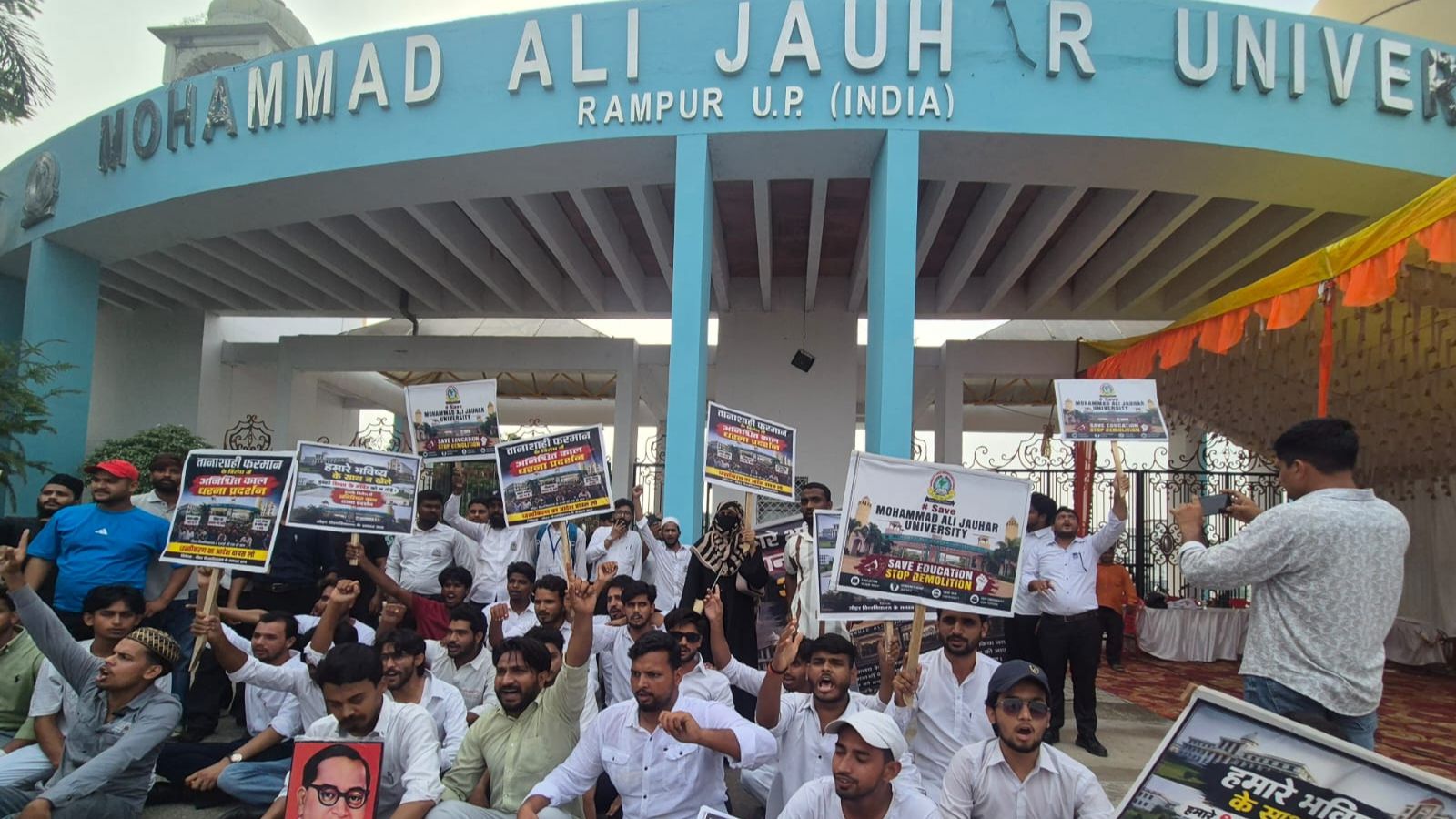
‘Future at stake’: Students protest at Azam Khan’s Jauhar university over demolition order
Indian Express

The Hindu
PoliticsJul 18, 2026 · 1 min
U.S. lawmaker urges Congress to review arms sales to India
The Hindu

Straits Times
PoliticsJul 18, 2026 · 1 min
US data centre protests go national as backlash grows
Straits Times