Indian Express
Mamata out of power, how Martyrs’ Day shapes rebel groups’ battle for TMC legacy
The end of the 15-year Mamata Banerjee-led Trinamool Congress (TMC) regime in West Bengal has not only altered the state’s political landscape but has also cast a shadow on the TMC’s Martyrs’ Day event, which the party has traditionally held on July 21 every year.
For the first time since the TMC was founded on January 1, 1998, the party stands divided into three factions, each claiming ownership of its political legacy and preparing to observe July 21 separately.
Unlike previous years, none of this year’s July 21 programmes will be held on Central Avenue in central Kolkata, where Mamata organised the annual rally for nearly two decades.
The Kolkata Police has imposed prohibitory orders under Section 163 of the Bharatiya Nagarik Suraksha Sanhita (BNSS), 2023, across parts of central Kolkata, including the traditional venue of the Martyrs’ Day rally.
The order, issued by Kolkata Police commissioner and executive magistrate Ajay Nand, came into effect on July 2 and will remain in force until August 30. Police cited intelligence inputs suggesting that multiple political programmes could trigger violence and disrupt public order.
TMC divisions
Weeks after its Assembly election defeat in May, the TMC witnessed its first split when more than 60 of its 80 MLAs, led by Leader of the Opposition (LoP) Ritabrata Banerjee, formed a separate bloc, claiming to be the “real TMC”.
The second split of the TMC took place when 20 of the party’s 29 Lok Sabha MPs joined the little-known Nationalist Citizens Party of India (NCPI).
Later, the crisis gripping the TMC deepened further after its four Rajya Sabha MPs resigned. Three of them subsequently joined the BJP.
The TMC faction led by Mamata and her nephew Abhishek Banerjee is now referred to in state political circles as the “Kalighat Trinamool” in a reference to the party founder’s residence at Kalighat in south Kolkata.
Martyrs’ Day rally
The Calcutta High Court has now permitted the Mamata faction to hold its programme to commemorate Martyrs’ Day near central Kolkata’s Birla Planetarium between noon and 3 pm, with a maximum of 2,500 participants. Justice Sougata Bhattacharya directed the police to make adequate security arrangements for the event.
The Ritabrata faction will organise its event on the day in front of the Gandhi statue on Mayo Road, while the state Congress will hold its programme near Shaheed Minar in the city. The NCPI has also announced that it will mark the Martyrs’ Day, although it has yet to announce its venue.
The Ritabrata-led rebel TMC faction has instructed the district party workers to attend the Gandhi statue rally wearing specially designed badges. Senior rebel leaders, including Firhad Hakim, Arup Biswas and Sandipan Saha, have held a series of meetings to ensure a large turnout on July 21. Abhijit Sinha is coordinating mobilisation in Birbhum, while state party president Biplab Mitra is overseeing preparations in north Bengal.
According to sources, a meeting was held recently at the Assembly involving MLAs aligned with the dissident camp. Later, Ritabrata held closed-door discussions with Hakim and Biswas. Sources said Hakim suggested that, besides ensuring a large turnout at their own programme, efforts should also be made to prevent district workers from attending Mamata’s rally.
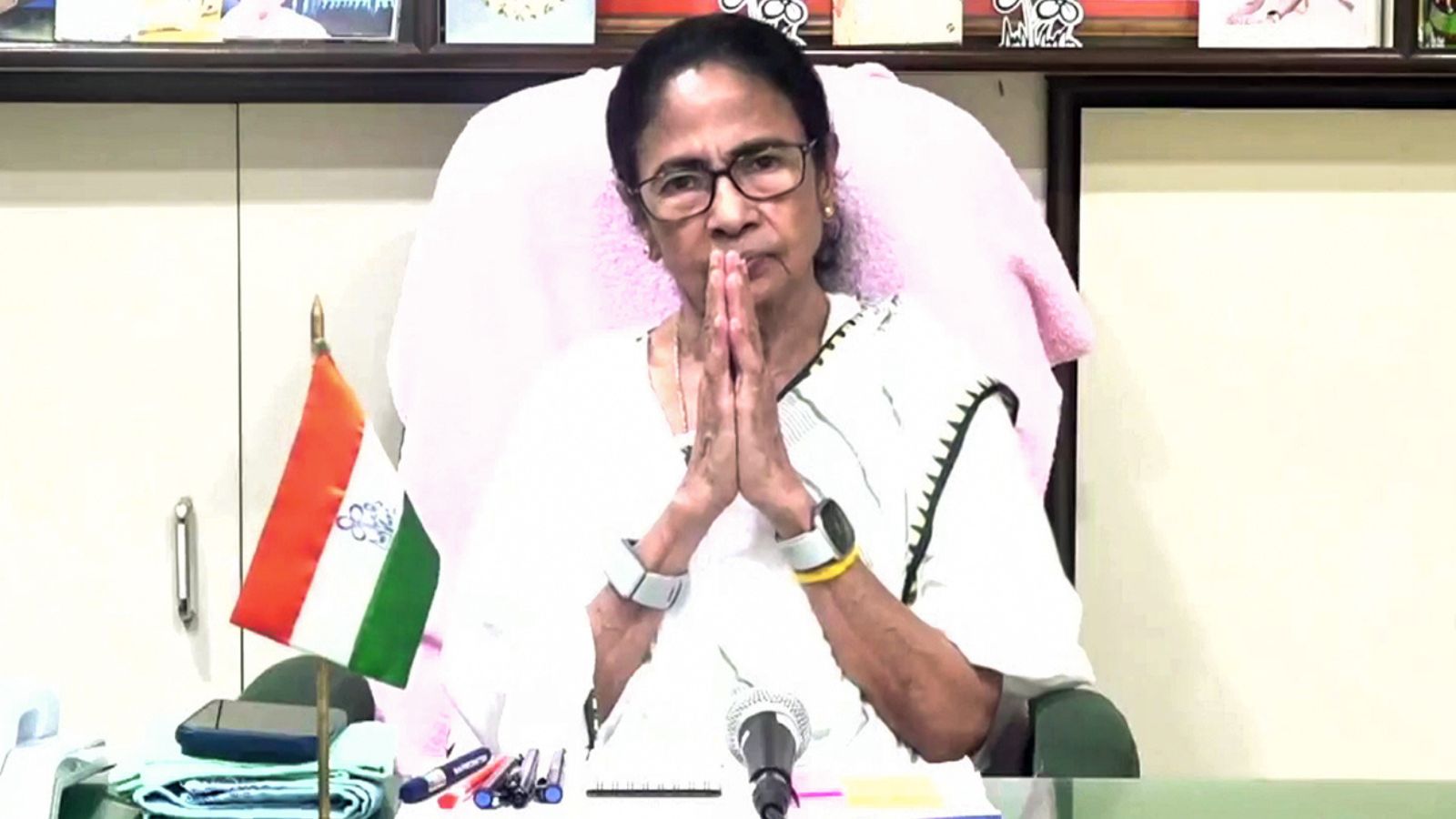
Despite the court’s permission, Mamata has expressed doubts over whether the administration will remain impartial. During a Facebook Live session, the former chief minister alleged that decorators and sound system operators associated with her party event could face intimidation.
“We are grateful to the court for granting permission. But I know they may intimidate the decorator and the microphone operator. I request the administration to act impartially. We can deliver speeches without microphones if necessary. If needed, I will address the gathering standing on a rickshaw or a handcart. The meeting will take place,” she said.
Congress sees opportunity
For the Congress, this Martyrs’ Day is an opportunity to revive its organisational strength in the state. The party has announced plans to organise its own July 21 programme on a much larger scale than in previous years.
State Congress leaders argue that the commemoration of the day used to be originally held by the Youth Congress, pointing out that when the police firing took place on the Congress workers on July 21, 1993, Mamata was still a Congress leader and had led that Youth Congress agitation.
The grand old party has maintained that after founding the TMC, Mamata “appropriated the legacy of that movement”. In the changed political scenario, the Congress now says it intends to reclaim that legacy. “We have been observing this day with respect for 33 years. It is a day to remember those who lost their lives. We do not want history to be forgotten or distorted. Mamata led the movement then as a Congress leader. Later, after leaving the party, she observed Martyrs’ Day under a different flag. Over time, those programmes became more about political power than remembering the martyrs,” state Congress chief Shubhankar Sarkar said.
Sarkar also demanded that Chief Minister Suvendu Adhikari make public the files related to the July 21, 1993, police firing.
What’s at stake for TMC factions
For the Ritabrata faction, the challenge is to demonstrate that it now represents the principal political force carrying forward the TMC’s legacy. Its leaders believe that a large turnout at its Gandhi statue programme would strengthen their claim of being the “real TMC” at a time when Mamata’s organisational grip has apparently weakened.
The Mamata camp is, meanwhile, seeking to preserve the symbolism of an event that has defined the party’s political identity for nearly three decades.
Political observers say July 21 became the TMC’s most significant annual event after the party was formed and helped it emerge as the principal challenger to the CPI(M)-led government.
Why is Martyrs’ Day observed?
On July 21, 1993, Mamata, then the state Youth Congress president, led the “Writers’ Abhijan” against the then CPI(M)-led Left Front government, demanding that the voter identity cards be made mandatory for casting votes. The Opposition Congress argued that the measure was necessary to prevent electoral malpractice. The plan was to march towards Writers’ Buildings — the state secretariat at the time — from multiple directions.
Then CM Jyoti Basu had made it clear that the march would not be allowed to reach the secretariat.
As processions approached from Brabourne Road, B B Ganguly Street, Mission Row and Mayo Road, police stopped one of the groups near the Mayo Road-Red Road crossing, where prohibitory orders under Section 144 were in force. A confrontation followed. Police first resorted to a lathicharge after stone-pelting allegedly began. As the violence spread across Curzon Park, police opened fire, killing 13 people.
The incident assumed greater political significance after the TMC came to power in 2011. Since then, the annual programme has served not only as a tribute to those killed in the 1993 firing but also as a platform for the party to demonstrate its political strength.
View original source — Indian Express ↗
Related stories

The Punch
WorldJul 18, 2026 · 1 min
Nigeria needs leaders with capacity for effective leadership — Cleric
The Punch
The Punch
WorldJul 18, 2026 · 1 min
Hit the ground running, Gombe gov tells 23 new commissioners
The Punch
The Punch
WorldJul 18, 2026 · 1 min
Police arrest second suspect over alleged vandalism of Bayelsa bridge
The Punch
The Punch
WorldJul 18, 2026 · 1 min
Police arrest suspected robber, recover stolen motorcycle in Oyo
The Punch