
Hacker Noon
Most AI Agent Failures Aren't Model Problems, They're Architecture Problems
Most AI agents that fail in production were built by smart teams using capable models. The failure was not in the intelligence of the LLM. It was in the architecture surrounding it. Specifically, three things: an unmanaged context window , a monolithic instruction set , and a missing governance layer . Fix those three things and your agent goes from demo-ready to production-grade. This article shows you exactly how. The Agent Architecture Most Teams Get Wrong An AI agent is an LLM running in a loop, calling tools, reasoning about what to do next, and iterating until it produces a final response. Five components make up this loop: A system prompt defining behaviour and constraints A user prompt providing the task or question Tools such as APIs, search, databases, and code execution An agent reasoning step where the model plans decides A final output returned to the user This architecture is deceptively simple. The complexity emerges at runtime, inside the context window. And that is where most teams are flying blind Why the Context Window is an Architectural Constraint, Not Just a Cost Every agent operates within a context window, a fixed-size buffer of tokens the model can process at once. In a long-running agent, this window fills up in a predictable sequence. The system prompt occupies the first portion. Conversation history accumulates with each turn. Documents, code, and data retrieved during execution consume the middle. Tool results and outputs push the window further. Eventually one of two things happens: the model begins losing earlier context through truncation, or the task fails entirely. Research on long-context model behaviour consistently shows performance degrades significantly as context approaches the window limit, particularly for tasks requiring recall of earlier instructions. In enterprise environments, where agents handle regulatory documents, multi-system queries, and extended workflows, this ceiling is reached routinely. Token usage is not just a cost metric. It is an architectural constraint that directly determines whether your agent can complete a task reliably. Four Techniques That Actually Fix Context Management There are four established techniques for managing context in production agents. Most teams use none of them. Compaction summarises older context to free up space. Long conversation history is replaced with a shorter summary. The risk is information loss. A poorly designed summariser may drop instructions or facts needed later. Effective compaction requires a strategy that knows which messages to retain and which to compress. Context Editing removes or modifies irrelevant content directly. Old messages are dropped, and older tool responses are either deleted or saved to files with a reference kept in the active context. More surgical than compaction but requires explicit management logic. Agent Skills load instructions progressively and on demand, rather than placing everything into context at startup. This is the most architecturally significant technique and the one most teams have never heard of. Memory persists state across agent turns and sessions. Rather than keeping everything in the context window, the agent writes to and reads from an external memory store. In practice, production agents use a combination of all four. The Agent Skills Pattern: The Highest-Leverage Fix Here is the core insight most agent builders miss. Most agents load all their instructions into the context window at startup, regardless of whether those instructions are needed for the current task. A general-purpose agent with 20 capabilities loads all 20 capability definitions upfront, consuming tokens for capabilities it may never use. Skills solve this through progressive disclosure. Instead of loading everything upfront, the agent loads only a lightweight index at startup: the name and brief description of each available skill. When a task matches a skill's description, the agent reads the full instructions on demand. Instructions that are never needed are never loaded. The result is dramatically lower token usage, reduced truncation risk, higher relevance in the active context, and lower cost per task. The three phases work as follows: Discovery: at startup, the agent loads only skill names and descriptions, just enough to know when each skill might be relevant. Activation: when an incoming task matches a skill's description, the agent reads the full SKILL.md instruction file into context. Execution: the agent follows the loaded instructions, optionally loading referenced scripts, templates, or assets as needed. How to Structure a Skill: The SKILL.md Specification A skill is a self-contained folder: my-skill/ SKILL.md # Required: instructions and metadata scripts/ # Optional: executable code references/ # Optional: documentation assets/ # Optional: templates and resources The SKILL.md file contains the skill's name and description for the Discovery phase, followed by full execution instructions. Here is a real example from a Kubernetes operations skill used in enterprise infrastructure management. --- name: kubernetes-ops description: Kubernetes cluster operations skill. Use when the user needs to check pod health, scale deployments, read logs, inspect namespaces, or troubleshoot workload issues. --- # Kubernetes Operations Skill ## When to use this skill Use this skill when the user asks about: - Pod status, restarts, or health checks across namespaces - Scaling deployments up or down - Reading or filtering container logs - Troubleshooting CrashLoopBackOff, OOMKilled, or Pending pod states Do not use this skill for Helm chart management, cluster provisioning, or Terraform-based infrastructure changes. ## How to check pod health 1. List pods filtered by non-running status: kubectl get pods --all-namespaces \ --field-selector=status.phase!=Running 2. Describe a pod to identify failure reasons: kubectl describe pod <pod-name> -n <namespace> ## How to scale deployments 1. Scale a deployment: kubectl scale deployment <name> -n <namespace> --replicas=<count> 2. For regulated environments, confirm current replica count first: kubectl get deployment <name> -n <namespace> \ -o jsonpath='{.spec.replicas}' ## Output format - Current state summary (healthy, degraded, or critical) - Specific pods or deployments affected - Root cause assessment based on events and logs - Recommended remediation steps in priority order - Any compliance considerations for regulated environments The description field is what the agent reads at startup. Precise enough to trigger on the right tasks, narrow enough not to activate unnecessarily. Eight Tips for Building Skills That Actually Work Based on real production experience managing infrastructure at a global financial institution: Keep each skill focused on one clear responsibility. Skills that handle multiple unrelated tasks become difficult to trigger accurately. Define explicit triggers in the description. Vague descriptions cause missed activations or false positives. Specify not just what the skill does, but when to use it. Write step-by-step instructions with expected output formats. Precision in the instruction set translates directly to reliability in execution. Embed domain knowledge directly in the skill. Rules, terminology, and constraints live in the skill, not in a global system prompt consuming tokens globally. Use templates and examples. Concrete examples of correct outputs reduce ambiguity and anchor agent behaviour during execution. Design for composability. Skills should work independently and in combination, allowing agents to chain multiple skills in one task without conflict. Keep skills lightweight. A skill that loads a large reference document as part of its core instructions defeats the purpose of progressive disclosure. Test and iterate based on real usage. Monitor which skills activate, how often, and whether they produce expected outputs. Skill performance degrades in ways not obvious from design-time inspection. The Agent Harness: Production Reliability at Scale Context management and skills address specific failure modes. The Agent Harness is the architectural frame that holds them together. An agent in production is not just an LLM plus a prompt. It is a system: Agent = LLM / Model + Harness (Tools + Memory + Guardrails) + Tool Execution + Session Memory + Lease and Audit The Harness sits between the model and the world. It manages tool execution, calling APIs, running code, reading files, and handling errors. It maintains session memory, persisting state across turns. And it enforces lease and audit constraints, bounding execution time, tracking every action, and providing full traceability. This last component is critical in regulated environments. Every tool call, every decision point, every output must be traceable to a specific input and a specific reasoning step. The Harness provides this without requiring the agent's core logic to manage it. The progression from a basic agent to a production-grade one follows a clear path: chat loop, tool calling, ReAct reasoning, skills, sandboxed execution, session management, full context management, and finally memory and self-reflection for long-running tasks. What Platform and DevOps Engineers Already Know Platform engineers are naturally positioned to lead agent reliability work. Context management is a resource management problem. Skills are a modular architecture problem. The Agent Harness is an operational reliability problem. These are not new problem categories. They are new instances of problems this community has solved before in CI/CD pipelines, Kubernetes operations, and internal developer platforms. The same thinking that built reliable infrastructure applies directly to building reliable agents. The organisations successfully deploying AI at scale are the ones applying platform engineering disciplines to AI systems from day one, not retrofitting governance after incidents occur. Key Takeaways AI agent failures in production are almost always architectural, not model failures. The context window is an architectural constraint, not just a cost metric The Agent Skills pattern reduces token usage and improves reliability through progressive disclosure Effective skills are focused, precisely triggered, lightweight, and composable The Agent Harness provides the production reliability layer: tool execution, session memory, and lease-plus-audit controls Platform and DevOps engineers are naturally positioned to lead agent reliability work
View original source — Hacker Noon ↗
Related stories

Dawn
TechnologyJul 19, 2026 · 1 min
Aoun takes Lebanon’s peace push to Washington
Dawn

Philippine Daily Inquirer
TechnologyJul 19, 2026 · 1 min
West PH Sea: Tarriela hits back at Padilla anew over caricature issue
Philippine Daily Inquirer
Indian Express
TechnologyJul 19, 2026 · 1 min
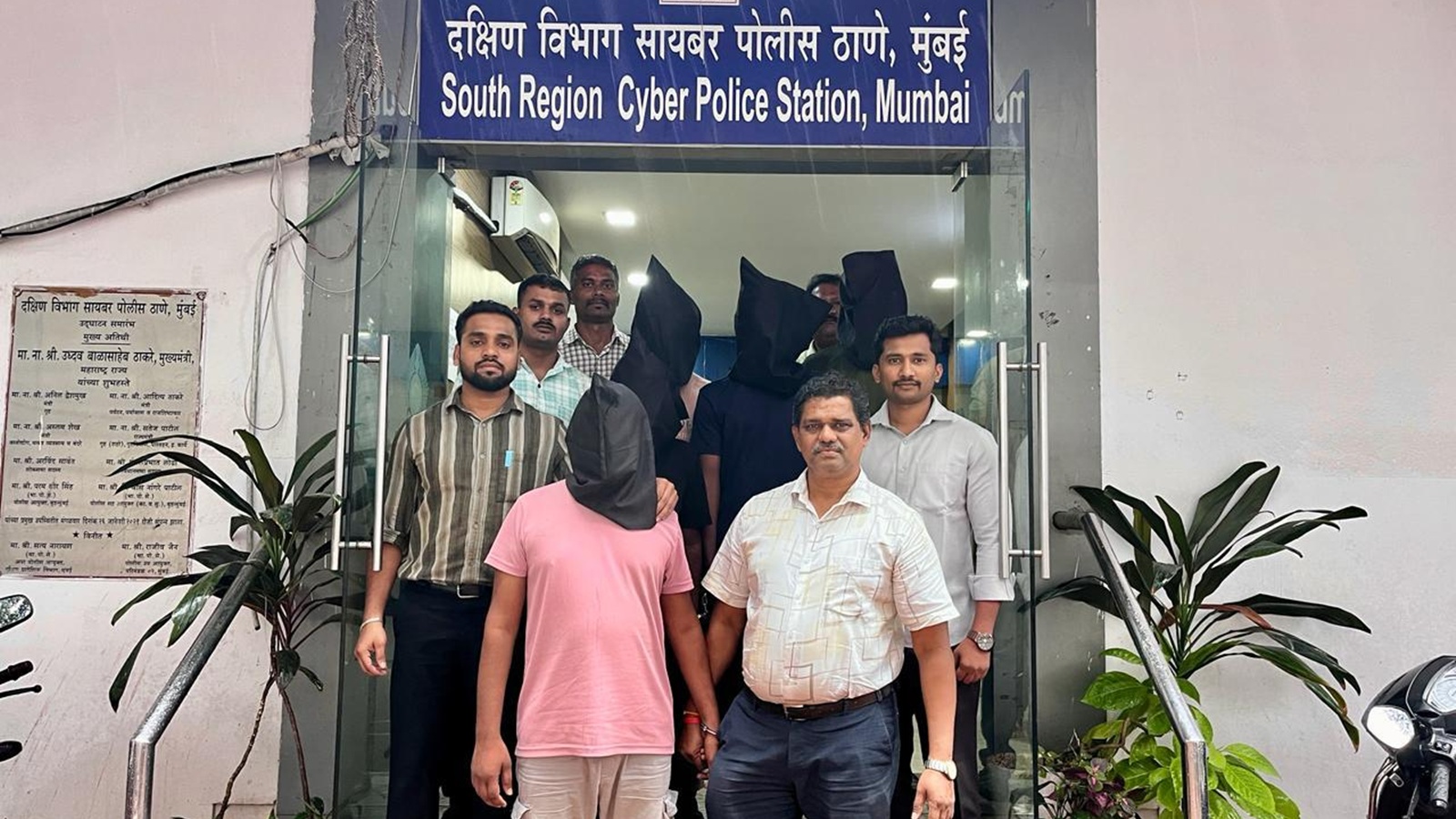
A fake senior executive, 63 transfers, Rs 10 crore gone: Inside India’s new ‘Boss Scam’
Indian Express

Philippine Daily Inquirer
TechnologyJul 19, 2026 · 1 min
TAN-AWA: Yassi Pressman, Luigi Villafuerte mi-anunsyo sa engagement
Philippine Daily Inquirer