Indian Express
Maharashtra panel to examine if Scheduled Tribes who convert can still receive benefits
5 min readMumbaiJul 19, 2026 04:20 AM IST
The issue is legally distinct from that of Scheduled Castes (SCs). While SC reservation is linked to religion under the Constitution (Scheduled Castes) Order, 1950, there is no such restriction for STs. Under Article 342 of the Constitution, STs continue to be recognised as STs, irrespective of the religion they profess.
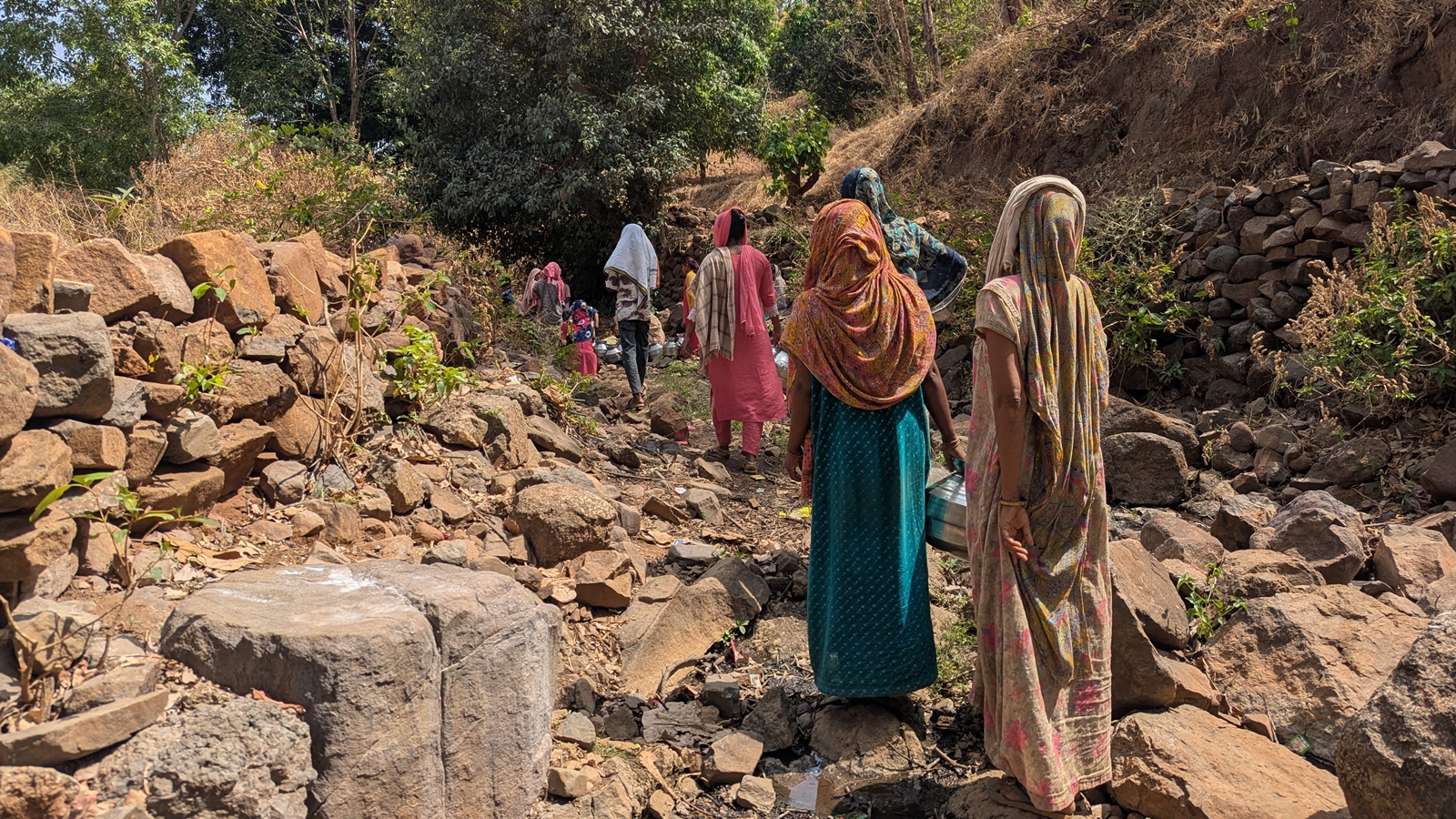
(Express photo by Purnima Sah)
The Maharashtra government has constituted a 27-member committee to examine whether Scheduled Tribe (ST) members who convert to another religion should continue to receive reservation and other government benefits, reopening a politically and constitutionally sensitive issue that has long been raised by RSS-affiliated organisations and sections of the BJP.
A Government Resolution (GR) issued by the state’s Tribal Development Department on July 16 said the committee, headed by Tribal Development Minister Ashok Uike, will examine the constitutional and legal position governing reservation and welfare benefits for STs after religious conversion, study the approach followed by the Centre and other states, and recommend a policy for Maharashtra.
The GR, however, does not specify any deadline for the committee to submit its recommendations.
Uike did not respond to phone calls or text messages.
The issue is legally distinct from that of Scheduled Castes (SCs). While SC reservation is linked to religion under the Constitution (Scheduled Castes) Order, 1950, there is no such restriction for STs. Under Article 342 of the Constitution, STs continue to be recognised as STs, irrespective of the religion they profess.
The issue has figured in the Sangh Parivar’s tribal outreach agenda. In May this year, the Janjatiya Suraksha Manch (JSM), backed by the RSS-affiliated Vanvasi Kalyan Ashram, submitted memoranda to President Droupadi Murmu and Prime Minister Narendra Modi seeking the “delisting” of STs who convert to another religion. It argued that those who give up traditional tribal faith, customs and culture after conversion should no longer be entitled to ST benefits. It also sought amendments or clarifications to the Constitution (Scheduled Tribes) Order, 1950, a statutory definition of ‘Scheduled Tribe” and stronger anti-conversion laws.
The demand gathered momentum in May, when a large Sangh-affiliated Adivasi gathering in New Delhi, attended by Union Home Minister Amit Shah, sought the “delisting” of STs who convert to Christianity or Islam.
Story continues below this ad
Echoing the Sangh Parivar’s position, Union Minister of State for Housing and Urban Affairs Tokhan Sahu (BJP) had told The Indian Express in an interview in August 2024: “The Hindu religion never talks of anyone’s religious conversion. We are believers of Sanatan Sanskriti. We respect all religions. We have never told anyone to convert. But the Congress has always pushed religious conversion in the interest of vote-bank politics. Why should those who have converted get the benefit of that (ST) community? Those who are in a particular community should reap the benefits of that community, as per the Constitution framed by Dr B R Ambedkar, so that all sections get the benefits.”
The question assumes particular significance in Maharashtra, where STs account for 9.35% of the state’s population. According to the 2011 Census, the state’s ST population grew from 85.77 lakh in 2001 to over 1.05 crore, cutting across several faiths. While 97.2% of the STs identified as Hindus, the Census also recorded 1.13 lakh Muslims, over 20,000 Christians and nearly 21,000 Buddhists, besides smaller numbers of Sikhs and Jains.
Between 2001 and 2011, the Muslim ST population grew by 49.1%, Buddhist STs by 114.8% and Jains nearly six-fold, while the Christian ST population declined by 34.8%.
The state committee will be chaired by Uike and includes Minister of State for Tribal Development Indranil Naik, Food and Drug Administration Minister Narhari Zirwal, MLAs representing ST constituencies, and the Commissioner of the Tribal Research and Training Institute (TRTI), Pune, as member secretary.
Story continues below this ad
The move follows an assurance given by the state government during the 2025 Monsoon Session of the Assembly, after BJP legislators raised allegations of religious conversions among tribals in Nandurbar district and questioned whether those who convert should continue to get benefits.
This is not the first time that the Mahayuti government has examined the issue. In 2023, it constituted a three-member committee to probe allegations that ST students who had converted to other religions were availing reservation benefits in Industrial Training Institutes (ITIs). An interim report tabled in the Assembly in March 2024 identified 257 students admitted under the ST quota who had declared a religion other than Hinduism. While the government announced that these admissions would be scrutinised, no further action followed amid criticism from tribal organisations and legal experts.
“This entire issue is illogical and driven by the RSS agenda. The RSS and the Vanvasi organisations have been raising this demand for years, and, despite being in power in several states, they know it cannot be implemented without a constitutional amendment. The Constitution does not make religion a criterion for ST status. What is being attempted is unconstitutional and part of Hindutva politics,” Dr Sanjay Dabhade, a tribal rights activist and state committee member of the National Forum for Tribal Rights, said.
© The Indian Express Pvt Ltd
Zeeshan Shaikh is the Associate Editor who heads The Indian Express' Mumbai reporting team. He is recognized for his highly specialized Expertise in analyzing the complex dynamics of Maharashtra politics and critical minority issues, providing in-depth, nuanced, and Trustworthy reports.
Expertise
Senior Editorial Role: As an Associate Editor leading the Mumbai reporting team, Zeeshan Shaikh holds a position of significant Authority and journalistic responsibility at a leading national newspaper.
Core Specialization: His reporting focuses intensely on two interconnected, high-impact areas:
Maharashtra Politics & Urban Power Structures: Provides deep-dive analyses into political strategies, municipal elections (e.g., BMC polls), the history of alliances (e.g., Shiv Sena's shifting partners), and the changing demographics that influence civic power in Mumbai.
Minority Issues and Socio-Political Trends: Excels in coverage of the Muslim community's representation in power, demographic shifts, socio-economic challenges, and the historical context of sensitive political and cultural issues (e.g., the 'Vande Mataram' debate's roots in the BMC).
Investigative Depth: His articles frequently delve into the historical roots and contemporary consequences of major events, ranging from the rise of extremist groups in specific villages (e.g., Borivali-Padgha) to the long-term collapse of established political parties (e.g., Congress in Mumbai).
Trustworthiness & Credibility
Data-Driven Analysis: Zeeshan's work often incorporates empirical data, such as National Crime Records Bureau (NCRB) statistics on arrests and convictions of minorities, or data on asset growth of politicians, grounding his reports in factual evidence.
Focus on Hinterland Issues: While based in Mumbai, he maintains a wide lens, covering issues affecting the state's hinterlands, including water crises, infrastructure delays, and the plight of marginalized communities (e.g., manual scavengers).
Institutional Affiliation: His senior position at The Indian Express—a publication known for its tradition of rigorous political and investigative journalism—underscores the high level of editorial vetting and Trustworthiness of his reports.
He tweets @zeeshansahafi ... Read More
Stay updated with the latest - Click here to follow us on Instagram
Tags:
Maharashtra government
Mumbai
Scheduled Tribe
Scheduled Tribe category
Scheduled Tribe status
View original source — Indian Express ↗
Related stories
Indian Express
TechnologyJul 19, 2026 · 1 min
‘2 pyaj, 30 danay’: Police chargesheet traces coded WhatsApp message, Portugal link
Indian Express

Dawn
TechnologyJul 19, 2026 · 1 min
US renews strikes on Iran to 'punish' IRGC for troops' killing; Tehran targets American bases in Kuwait
Dawn

Times of Israel
TechnologyJul 19, 2026 · 1 min
UK founder of Muslims Against Antisemitism challenges coreligionists to fight rising hate
Times of Israel
Dawn
TechnologyJul 19, 2026 · 1 min
Aoun takes Lebanon’s peace push to Washington
Dawn