Indian Express
Indian Express··12 min read
Sanjay Jha at Idea Exchange: ‘Two people destroyed the India Bloc alliance: Mamata Banerjee and Arvind Kejriwal’
JD(U) working president Sanjay Jha on the roadmap for Bihar’s industrial future, taking the party forward after Nitish Kumar, and JD(U)’s distinct identity within the NDA. He was in conversation with Deeptiman Tiwary, Deputy Associate Editor, The Indian Express.
Deeptiman Tiwary: You are leading the JD(U) at a time when many believe the party is at a political crossroads. Questions are being raised about its future and the need to build a new leadership. You fought the last election with Nitish Kumar as the face, winning over 200 seats in the Assembly. Yet, shortly after, he exited Bihar politics. How do you explain this to an electorate that might see it as a betrayal of the mandate?
Nitish Kumar ji campaigned tremendously for this election. The government was formed under his leadership. Sometimes, it is up to the individual to decide the timing of their ‘call.’ As in cricket, the player chooses when to exit. No one can force Nitish Kumar ji to do anything; it was his own call. He felt the ‘next generation should take over.’ In personal conversations, he sometimes mentioned that he has served in all Houses and might want to just be in one House if the opportunity arose. He took this call himself. But leaving the CM’s post doesn’t mean that there will be a change in the ideology with which he ran the government for 20 years. His people are ministers in equal numbers — 16 from BJP and JD(U) each, with two Deputy CMs. The government is working according to the 2025 manifesto, which was perhaps the first of its kind in the NDA.
Sanjay Jha, JDU National Working President
Deeptiman Tiwary: You drew a parallel with cricket. But a captain doesn’t suddenly announce retirement without preparing a successor. This resignation seemed abrupt to the public.
It appears to be sudden in the public domain but nothing happens suddenly. He surely had this in mind and when he felt the time was right, he spoke to the senior people in the party. The person who is now CM served as his Deputy CM for two-and-a-half years since 2024, and had worked with him as a minister prior to that. Samrat ji has a long and substantive political career marked by grassroots engagement and administrative experience. We believe he is well-equipped to take on the mantle of leadership as CM of Bihar.
While the BJP-JD(U) relationship has had its ups and downs, there has been a long relationship with Nitish ji dating back to the era of Atal ji and Advani ji. There has always been a foundation of trust.
Even when we weren’t together, there were never issues with trust when we worked together. The current CM knows Nitish ji’s temperament and way of working. As far as the people of Bihar are concerned, there are no problems. Nitish Kumar remains the leader of our party today, and we will fight the 2029 and 2030 elections under his leadership. By then, you will see more leadership emerging in the party.
On Nishant Jumar joining JD(U) | He has been in the house with his father. Based on my interactions, he is sensitive and possesses his father’s qualities. Now he has to prove himself. Joining is one thing but public acceptance is another
Deeptiman Tiwary: Regarding ‘newer leadership’, Nitish Kumar’s son, Nishant Kumar, is being promoted. But his entry into politics seems like a ‘stop-start’ experiment — first rumours of Rajya Sabha, then Deputy CM, then party responsibility and finally a cabinet post. Isn’t this confusing for the electorate?
Nitish Kumar has over 40-50 years of public life and was CM for 21 years. In practice, he never promoted his family. Preparing leadership is a challenge for regional parties. Often, leaders who emerged from the socialist movements under Ram Manohar Lohia or Jayaprakash Narayan eventually became leaders of a specific caste or their own family. But Nitish ji was never just a caste leader; he had acceptability across caste lines.
As a working president, it was a challenge. People in the party would say Nishant should join. Nitish ji never approved of it initially. But after he decided to quit as CM, we felt Nishant should join. How he performs as a minister remains to be seen. He is straightforward and honest. His biggest challenge will be being always compared to Nitish ji but there is still time and he will grow.
Liz Mathew: You mentioned Nishant ‘knows politics.’ What gives you that impression? Nitish ji always spoke against bringing family into politics. What changed? Is there a dearth of leadership in the JD(U)?
He knows politics because he has been in the house with his father. He has been watching. Plus, internally, he has had interactions with people. For the last two months, he has been travelling in Bihar. Based on my interactions, he is sensitive and possesses his father’s qualities. Nitish Kumar practised what he preached. He was CM for 21 years and never allowed his family into meetings. Even in 2025, when some in the party wanted Nishant to contest assembly elections, he refused.
When Nitish ji stepped down as CM, I told him: ‘A large section feels since you are stepping down, Nishant should at least work in the party.’ There is no dearth of leadership. We have senior leaders but sometimes, this is a compulsion for regional parties. Now Nishant has to prove himself. Joining is one thing but public acceptance is another.
Liz Mathew: Now we see the Cockroach Janata Party (CJP) growing popular. We have seen mixed reactions. The BJP has even moved to block their social media handles. What is your view on this massive response from the youth? Does it show a vacuum in leadership or ideology?
Suddenly they have so many millions of followers but I travel across the country and my state, and I don’t see any connection. Despite this following, is there any anger against the government on the ground? No. The results show this. There might be grievances about specific issues but not anger against the government. The Opposition should definitely think about why someone else is taking their space. I don’t see any connection between CJP’s 22-odd million followers and the ground. This will be short-lived. Many people went to Bihar to do politics but elections are a different ball game. I have no idea if the government blocked their account but I don’t see a connection to the ground.
Sanjay Jha, JDU National Working President
Vikas Pathak: Most current Bihar leaders emerged from the JP Movement and the slogan of ‘Total Revolution.’ Given that background, shouldn’t there be a high level of tolerance for the Opposition and contrary views?
Absolutely. If someone has anger, there must be tolerance. There should always be space for the Opposition and contrary views. This has been the case over time and since we come from Bihar, we have shown this.
On establishing priorities | Establishing the rule of law… especially in places like Champaran, which was a hub for kidnapping… Now the launchpad is ready… Many people living outside want to invest in Bihar
Vikas Pathak: Regional parties such as Akali Dal and Shiv Sena have either broken away or split. Mamata Banerjee’s or Naveen Patnaik’s parties have lost ground. Does the decline of regional parties concern you?
It is a cause for concern. Many regional parties became ‘family’ parties, which led to their crumbling. Socialist leaders from the JP Movement started with ideology, then became caste leaders, then the family became integrated and then the crumbling began. Nitish ji tried hard to bring all socialist parties together and sacrificed everything for it. I remember he called a meeting where Mulayam Singh Yadav ji said, ‘Your flag and name will remain, everyone should just unite.’ But everyone felt their assets, property, and bank accounts were personalised by the party; they wondered what the point of uniting was. Everyone ran away from it. Probably we are the only party so far that has not practised this, and we won’t in the future. For 15 years, people have written that this party will end but it won’t, because Nitish Kumar’s legacy cannot be wiped out.
Deeptiman Tiwary: You have spoken of JD(U)’s moderation but BJP leaders in Bihar, like Vijay Kumar Sinha, have linked meat consumption to ‘violent tendencies.’ It seems the BJP is bringing its brand of politics from other states to Bihar while you remain a silent spectator.
I come from Mithila, where eating meat is almost mandatory, yet people there are very soft-spoken. There is a contradiction there. There may have been aberrations here and there but as far as the government is concerned, we do not agree with all of this. If the ideologies were identical, why would there be separate parties?
Both of us know our boundaries. Even previously, such comments would occasionally come from somewhere, but it was never allowed to affect larger governance. Bihar will continue to run as it has been running.
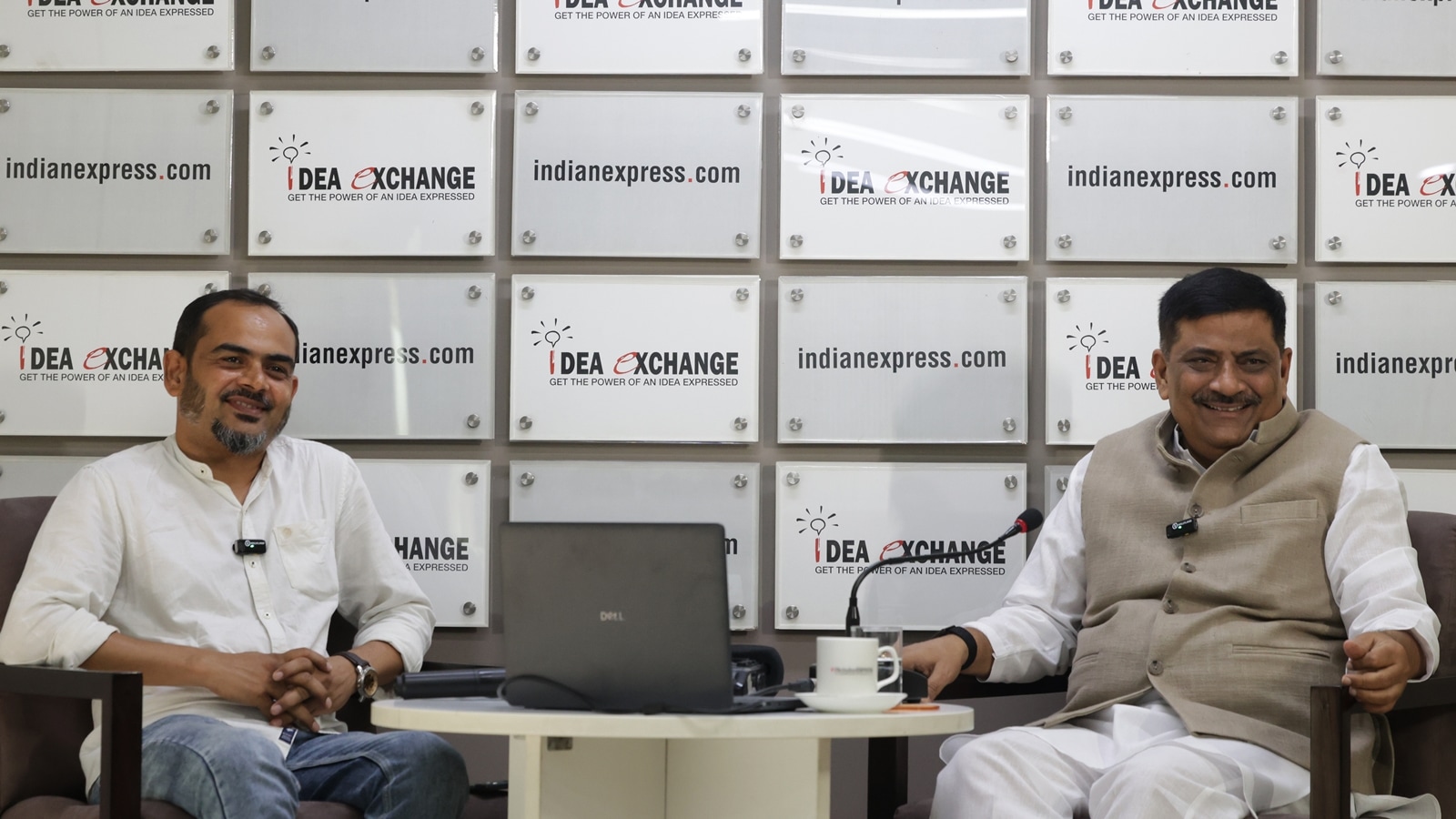
Sanjay Jha, JDU National Working President (right) with Deeptiman Tiwary, Deputy Associate Editor, The Indian Express, at the Noida office. (Express photo by Renuka Puri)
Manoj C G: Regarding the INDIA Bloc, the first meeting was at Nitish ji’s house in 2023. Less than a year later, he walked out. What happened?
Two people destroyed the India Bloc alliance — I am on record: their names are Mamata Banerjee and Arvind Kejriwal. A consensus had been reached that Nitish Kumar would be the convener. But in the meeting, these two came in — probably as a planned move — and said there should be a Dalit Convener, proposing (Mallikarjun) Kharge sahab. This put the Congress on the backfoot. Nitish ji was never desperate to be the Convener. He was bringing everyone onto one platform. But the move was sabotaged.
There was no plan, vision or cohesiveness in the bloc. Regional parties felt that Congress only does politics in a few states and it doesn’t affect them much. Personally, these two people sabotaged the alliance.
On Cockroach Janata Party | They have millions of followers but I don’t see any connection on the ground. There might be grievances about specific issues but not anger against the government. The Opposition should think about why someone else is taking their space
Aakash Joshi: The current government depends on allies, yet we don’t see the ‘alliance pressure’ that existed during the Vajpayee era. Core BJP/Sangh issues don’t seem to be set aside for the alliance.
In those days, there were 24 parties. Today, communication exists. If we have a state issue, it gets resolved. If there is a national issue, there is consultation. For the Women’s Reservation Bill, we were consulted. In the last meeting after the Bihar results, Nitish Kumar was praised. There is a system for NDA MPs to visit each other. It might not be the old ‘Vajpayee model’ but we don’t have issues that make us uncomfortable. If Nitish ji has an issue, we talk and resolve it.
Samiksha Mishra: Why do so many bridges fall in Bihar? One bridge has reportedly fallen three times.
Some bridges are truly old, like the one in Vikramshila. In the Seemanchal area, rivers keep changing course. You will find bridges where one half was built and then the river moved, leaving it stranded. However, thousands of bridges in Bihar, like the JP Setu and Mahatma Gandhi Setu, are intact. Many bridges built under Nitish ji’s government are solid. It has happened in a few places and the government is looking into it.
Liz Mathew: Regarding delimitation, were you informed that the 50 per cent increase in seats would not be part of the Constitution Amendment Bill?
They had said the 50 per cent increase would be done. There was clarity for everyone. Even the Opposition knew.
Raj Kamal Jha: Regarding the new numbers, Tamil Nadu says their seat count shouldn’t decrease during delimitation. How do you factor in Bihar and UP, etc.?
One vote has one value — that is what the Constitution says. But if you link it with the state GDP, how will that work? Bihar has a grievance: when Bihar and Jharkhand were together, all the minerals were taken but Bihar didn’t get any benefit because of the Freight Equalisation policy. Our interests must not be compromised.
Currently, representation for the high population in UP and Bihar is low, which is a democratic injustice. If the government feels a middle path is needed, we will agree. But the Congress policy of Freight Equalisation caused Bihar to suffer greatly, and this must be kept in mind.
Akshita Chauhan: You say the CJP isn’t grounded but as a youth, I see unemployment as a major concern. Is social media popularity not a wake-up call for how politics views youth issues?
Youth issues like unemployment are real and are being addressed through recruitment drives like the large-scale teacher recruitment in Bihar. But it is easy to flare things up on social media. There is a difference between resentment and a grievance; people still trust the government to do the work. If social media followers equalled votes, Congress would be winning everywhere based on their following. We must check if these movements are genuine or orchestrated by someone associated with a party’s campaign.
Shalini Langer: What happens to those whose names were removed from ration cards during the SIR process?
SIR happened in Bihar before West Bengal. Most names removed were people who had passed away or permanently shifted. In some border areas, someone gets married and comes to Bihar, and the Election Commission addressed that. The Opposition tried to make SIR an issue but it didn’t resonate. There was no violence and not a single re-poll in Bihar.
Deeptiman Tiwary: You have had 20 years. Beyond roads and electricity, what are your priorities?
Establishing the rule of law was the most challenging work, especially in places like Champaran, which was a hub for kidnapping for ransom. Nitish ji did that. Now the launchpad is ready. Migration is a challenge but in the next five years, you will see significant investment. Many people living outside are starting a ‘reverse migration’ and want to invest in Bihar. Factories are already being set up in Bihta and Muzaffarpur.
Aakash Joshi: Youth’s faith in recruitment is fading due to NEET, NTA and CUET issues. Does JD(U) raise this with the BJP?
Discussions happen. The NEET issue is painful and the government cancelled it immediately upon learning of the irregularities. I feel the government will fix it next year. Bihar’s BPSC has become a robust system. You haven’t seen an agitation there for 3-4 years. Regarding the Teacher Recruitment Examination (TRE 4), the CM has fixed a timeline: 20,000 teachers every year, totalling 100,000 over five years.
Deeptiman Tiwary: The Opposition alleges you have failed on the diplomatic and economic fronts, especially with fuel prices.
India didn’t start the war in West Asia; it has been going on for 90 days. Roughly 25 per cent to 30 per cent of our crude oil comes through the Strait of Hormuz. The government has done tremendous management by finding alternative sources from Africa and Russia. Without this, petrol could have increased by Rs 40.
Deeptiman Tiwary: Regarding diplomacy, Operation Sindoor was meant to gather support, yet we see international leaders still engaging closely with Pakistan. Did our diplomacy fail?
I led one of the delegations after Operation Sindoor. It was a successful move that sensitised the world to Pakistan’s involvement in terrorism. Look at what Trump has been saying about India over the last 48 hours. Our management of the oil issue and the safety of seafarers are evidence of diplomatic success.
Manoj C G: If the BJP proposes the Uniform Civil Code (UCC) in Bihar, how will JD(U) react?
When the issue comes, we will respond to it. Today, this is not an issue in Bihar.
View original source — Indian Express ↗
More from newsGlobal

The Punch
PoliticsJun 8, 2026 · 1 min
Terrorism sponsors must be exposed – Akpabio
The Punch
OnlineKhabar
PoliticsJun 8, 2026 · 1 min
Kayera’s Kalam celebrates two years with its 10th edition
OnlineKhabar

Philippine Daily Inquirer
PoliticsJun 8, 2026 · 1 min
Israel strikes Iran, defying Trump's call for restraint
Philippine Daily Inquirer