Indian Express
Sunita Ahuja reveals ‘sad’ truth behind 40-year marriage with Govinda; why such feelings arise
4 min readNew DelhiJun 16, 2026 12:00 AM IST
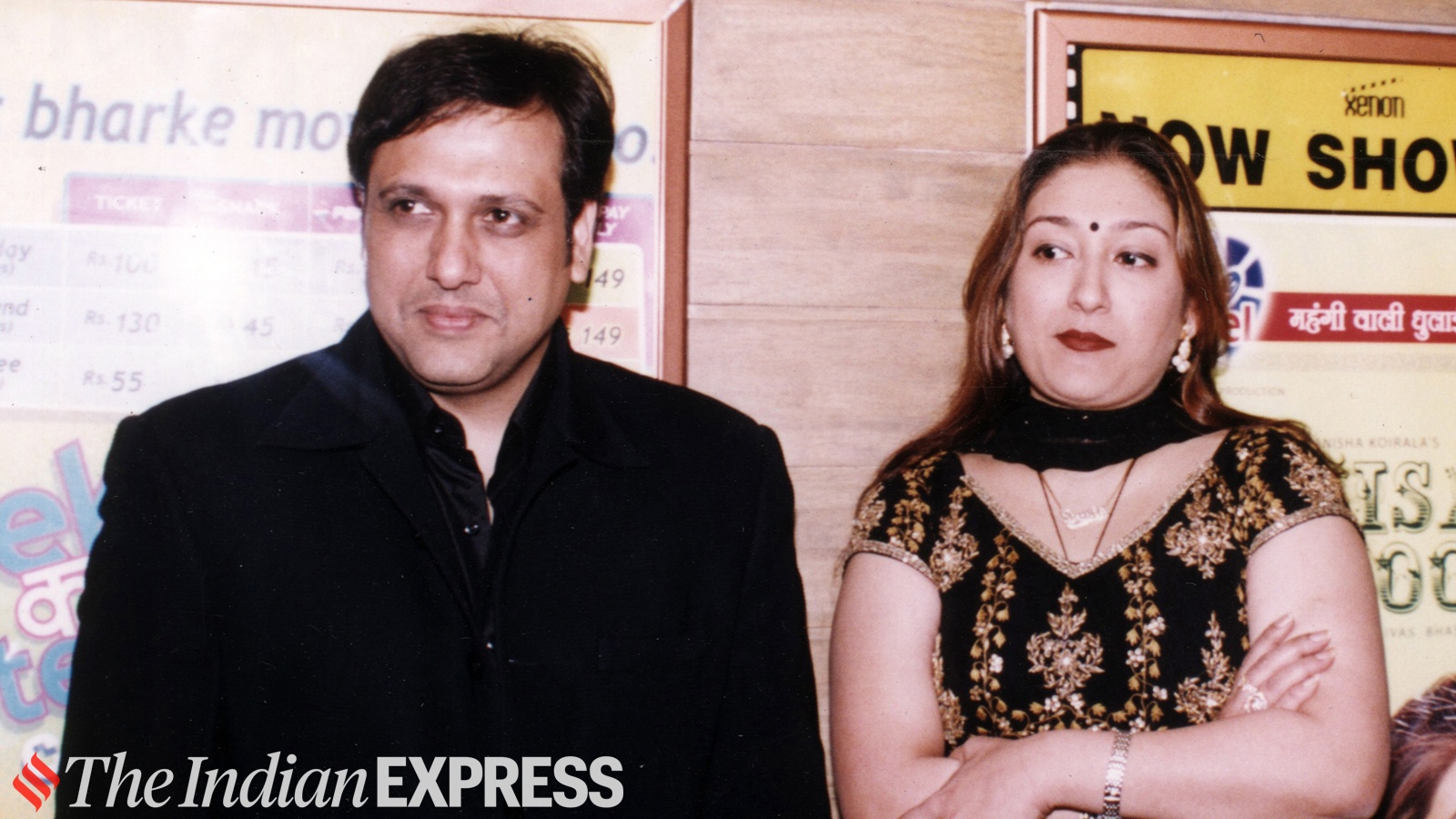
Actor Govinda and his wife Sunita Ahuja have long been known for their candid dynamic, and Sunita’s latest remarks have once again drawn attention to the complexities of long-term relationships. Speaking on a YouTube channel during a conversation with Abhishek Vyas, she offered a personal reflection on her marriage.
In the interview, Sunita spoke openly about how she perceives Govinda in different roles, saying, “Beta bohot achcha hain, bhai bohot achcha hain, but as a husband jo mujhe chahiye… jaise mujhe na thoda shauk hain party karne ko, bahar dinner ke liye jaao, holiday ke liye jaao… But uska zindagi sivaay apne parivaar ke seva mein, uss aadmi ne kabhi mewai nahi khaya. Woh 60 saal ka ho gaya woh apne liye jiya hi nahi aaj tak. Woh mujhe dukh hota hain (Govinda is a good son and brother). But, as a husband, what I want.. I love going to parties, for dinners, on holiday, but he got so indulged in providing for his family, that he never enjoyed it. He is 60 but has never lived for himself. That makes me sad).”
DISCLAIMER: This article is based on information from the public domain and/or the experts we spoke to.
She further added, “Aap jab itne badey superstar ho, aap ne kya zindagi dekha? Kuch nahi dekha. Mujhe beta chahiye Govinda ke jaisa, pati nahi chahiye. Ab regret karne ka faayda hi kya hain? Chhod toh nahi sakte na abhi? Ab 40 saal beet gaya hain ab toh sochna bhi gunaah hain (You are such a big superstar, what have you seen in life? Nothing. I always say that I want a son like Govinda, not a husband. There’s no point even regretting it now. I can’t leave him now. It has been 40 years now, even thinking about it would be a crime).”
So, how can couples navigate differences where one partner prioritises duty, while the other values shared experiences?
Psychologist Rasshi Gurnani tells indianexpress.com, “In long-term partnerships, differences in priorities often reflect contrasting value systems rather than incompatibility. One partner may derive meaning through responsibility, caregiving, financial security, or duty, while the other may feel emotionally nourished through shared experiences, novelty, recreation, or quality time. The challenge begins when each person interprets love only through their own lens. Psychology often refers to this as a mismatch in relational needs and emotional currencies.”
She mentions that healthy navigation requires “moving from blame to translation, where each partner understands what the other’s behaviour represents.” Duty may express love for one person, while presence and shared memories may represent love for the other. Couples who manage this well develop intentional rituals of connection, negotiate non-negotiables, and create a more balanced relational ecosystem where responsibility and joy can coexist rather than compete.
Healthy step to take to find personal fulfilment or improve emotional connection
It is rarely too late to change dynamics, notes Gurnani, but it may be necessary to redefine what change looks like. Many couples assume transformation must be dramatic, when in reality, meaningful change is often incremental. Emotional reconnection can begin through small acts of responsiveness, curiosity, appreciation, and honest dialogue. If certain dreams cannot be recreated, new forms of fulfilment can still emerge through companionship, friendship, shared routines, or renewed emotional intimacy.
Story continues below this ad
“Individually, people can also pursue self-expansion by exploring hobbies, travel, friendships, learning, or personal growth outside the relationship. This reduces the pressure of expecting one person to meet every unmet need from the past. From a psychological perspective, acceptance and agency are powerful together: accepting what was missing, while still exercising agency over what can be built now. Even late-stage relationships can become warmer, more respectful, and more emotionally meaningful when both people are willing to engage differently,” concludes Gurnani.
DISCLAIMER: This article is based on information from the public domain and/or the experts we spoke to.
View original source — Indian Express ↗
Related stories

Deadline
EntertainmentJun 15, 2026 · 1 min
How Fox’s $22B Deal For Roku Raises The Floor For Its Content, Advertising Revenue & Creator Division
Deadline

Deadline
EntertainmentJun 15, 2026 · 1 min
Lin-Manuel Miranda Writes New Song For Live-Action ‘Moana’ With Dwayne Johnson, Auli’i Cravalho & Catherine Laga’aia…
Deadline

Rolling Stone
EntertainmentJun 15, 2026 · 1 min
The Best Photos From Warped Tour 2026
Rolling Stone

E! Online
EntertainmentJun 15, 2026 · 1 min
Off Campus' Belmont Cameli Just Made Reebok Sneakers Even Cooler
E! Online