Times of Israel
New poll sees Eisenkot sail past Bennett to tie with Netanyahu’s Likud
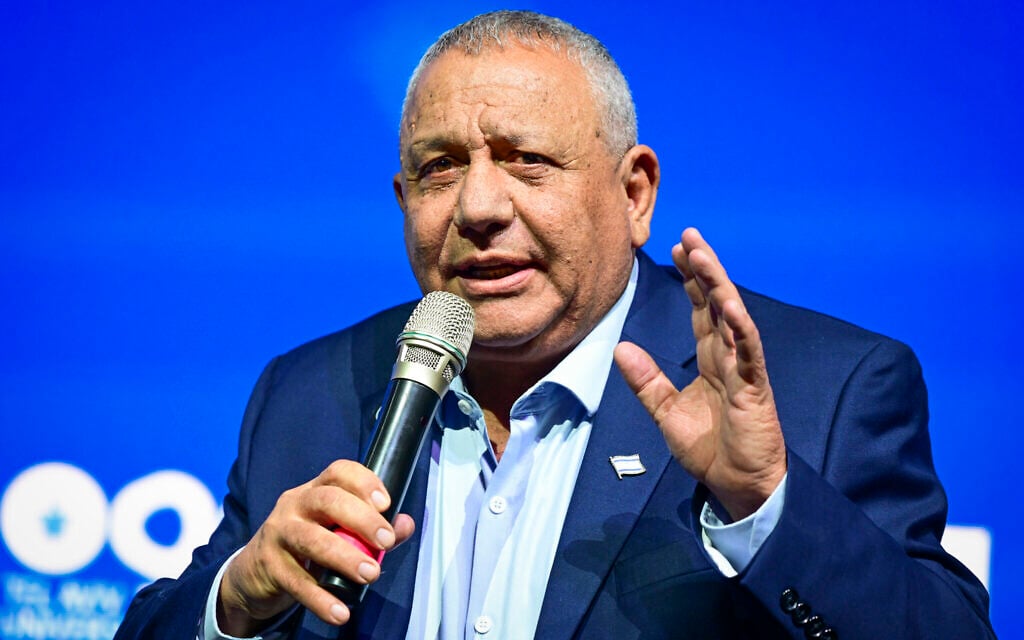
Former IDF chief Gadi Eisenkot’s Yashar party has rocketed past former premier Naftali Bennett and Yair Lapid’s Together and is running neck and neck with Prime Minister Benjamin Netanyahu’s Likud, according to a Thursday poll by Zman Yisrael, The Times of Israel’s Hebrew-language sister site.
According to the survey, Yashar and Likud would each win 23 of the Knesset’s 120 seats if elections were held today. The result represented a one-seat drop for Likud and two-seat rise for Yashar over last week’s Zman Yisrael poll.
Together would win 19 seats, down two seats from last week.
The Zionist opposition bloc, which includes Yashar and Together, would still be a seat short of forming a government without support from either Netanyahu’s bloc, which would win 50 seats, or from Arab parties, which nab a cumulative 10 seats, the poll showed. Unlike Bennett, Eisenkot has not explicitly rejected a government based on Arab support.
In Netanyahu’s bloc were Sephardic Haredi party Shas with 10 seats; National Security Minister Itamar Ben Gvir’s extremist Otzma Yehudit party with nine seats, up one from last week; and Ashkenazi ultra-Orthodox party United Torah Judaism with eight seats, the same as last week. Finance Minister Bezalel Smotrich’s far-right Religious Zionism failed for the second week running to pass the electoral threshold.
Get The Times of Israel's Daily Edition
by email and never miss our top stories
By signing up, you agree to the terms
In the opposition were MK Avigdor Liberman’s hawkish secularist Yisrael Beytenu party with 10 seats, and former deputy IDF chief Yair Golan’s left-leaning Democrats with eight seats, both the same as last week. Both Arab parties in the Knesset, the traditionalist Ra’am and communist secularist Hadash-Ta’al, also held steady at five seats each.
A fourth Arab party, the nationalist Balad, failed to pass the electoral threshold.
Looking at potential mergers, a Yashar and Together alliance could win 40 seats, with Hadash-Ta’al-Balad at 10, and Religious Zionism and Otzma Yehudit at 11.
In that scenario, the Zionist opposition would win just 56 seats, Netanyahu’s bloc would win 49 seats, and Ra’am and the joint Arab party would win a cumulative 15 seats.
Ra’am was a member of the short-lived government that Bennett and Lapid led in 2021-2022. But Bennett has said that following the Hamas-led onslaught of October 7, 2023, there is no public mandate for a government with an Arab party.
The Zman Yisrael poll was conducted on June 17-18 by Tatika Research and Media in collaboration with the Agenda panel. The sample size was 500, and the margin of error was ±4.4 percent.
A separate poll published by Channel 12 on Thursday also found Eisenkot passing Bennett for the first time, but still had him running just behind Netanyahu.
According to that poll, Netanyahu’s Likud won 22 seats; Eisenkot’s Yashar 21; Bennett’s Together 19; The Democrats 10; Shas 9; Yisrael Beytenu 9; Otzma Yehudit 9; UTJ 7; Hadash-Ta’al 5; Ra’am 5; and Religious Zionism 4.
In total, the Zionist opposition would receive 59 seats, Netanyahu’s bloc would receive 51 seats, and Arab parties would receive 10 seats, according to Channel 12.
The Channel 12 survey was conducted by the Midgam polling firm in collaboration with iPanel. The network did not provide a sample size or margin of error.
The next election is scheduled for October at the latest.
View original source — Times of Israel ↗
Related stories
Times of Israel
NewsJun 4, 2026 · 1 min
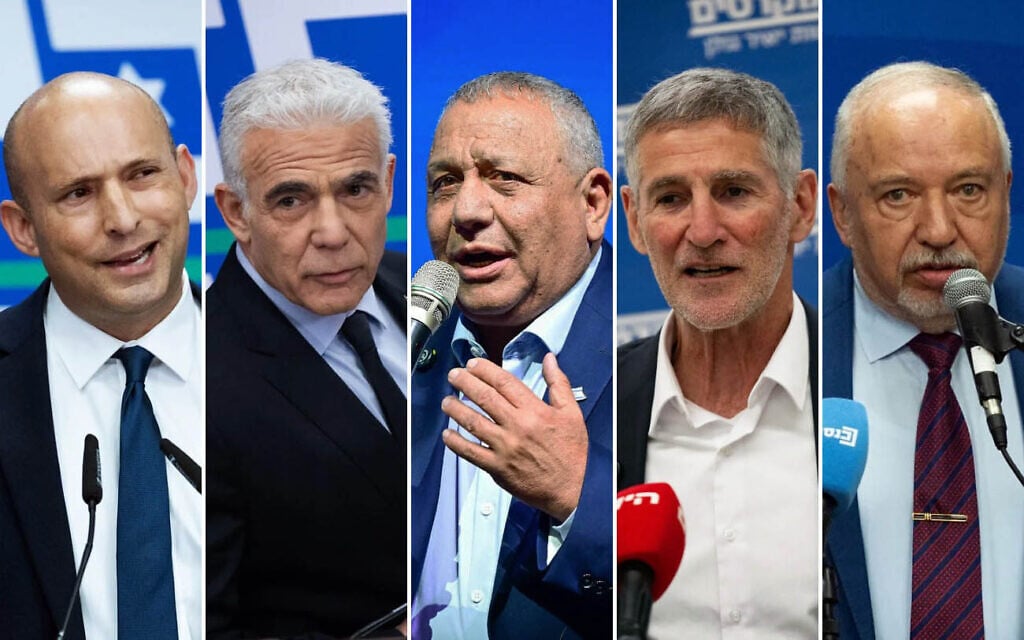
Poll shows anti-Netanyahu bloc winning majority; Eisenkot seen as best fit to be PM in separate survey
Times of Israel

Deadline
EntertainmentJun 10, 2026 · 1 min
Steve Hilton To Advance To November Election In California Governor’s Race, AP Projects; Former Fox News Host Will Face…
Deadline

RNZ
NewsJun 16, 2026 · 1 min
Surge in Greens' support could put left bloc into government - poll
RNZ
Times of India
PoliticsJun 18, 2026 · 1 min
Jharkhand Rajya Sabha poll defeat: Who ditched Congress - its own MLAs or INDIA bloc allies?
Times of India