
Indian Express
Indian Express··3 min read
‘No PUCC, no fuel’ double parking fees: Delhi’s plan to beat pollution this witner
No fuel for vehicles without a valid Pollution Under Control Certificate (PUCC) at petrol pumps in Delhi from November 1, and doubled parking charges at authorised facilities: these measures are part of the ‘Proactive Winter Air Quality Management Framework’ notified by the Delhi government with an eye on curbing pollution in peak season.
Chief Minister Rekha Gupta announced on Friday that the framework lays down a series of measures that may be implemented between November and February to tackle seasonal air pollution, including staggered office timings and limits on physical attendance at offices, and tighter controls on construction activities.
The entry of non-BS-VI commercial vehicles registered outside Delhi will be restricted from November 1 to January 31. Exemptions will be provided to CNG and electric vehicles, emergency service vehicles, and those engaged in government work, according to a statement from the Chief Minister’s Office.
Parking charges at authorised parking facilities will be doubled from November 1 to February 28. “If necessary, staggered office timings may be implemented and government and private offices may operate with up to 50% physical attendance,” Gupta said.
Residents and stakeholders, the CM pointed out, were usually informed about restrictions and measures only after air quality deteriorated during winter or when the Graded Response Action Plan (GRAP) came into force.
“This often left citizens, industries, institutions and commercial establishments with insufficient time to prepare, leading to inconvenience.
This year, the government has decided to change that approach. We have notified the framework as early as June for pollution control during winter so that citizens, industries, institutions, commercial establishments and construction agencies get sufficient time to prepare well before November, and Delhi residents do not face any unnecessary inconvenience,” she said.
Story continues below this ad
The framework has been notified under the Environment (Protection) Act, 1986, and will function as a complementary mechanism to the revised GRAP issued by the Commission for Air Quality Management (CAQM), Gupta said.
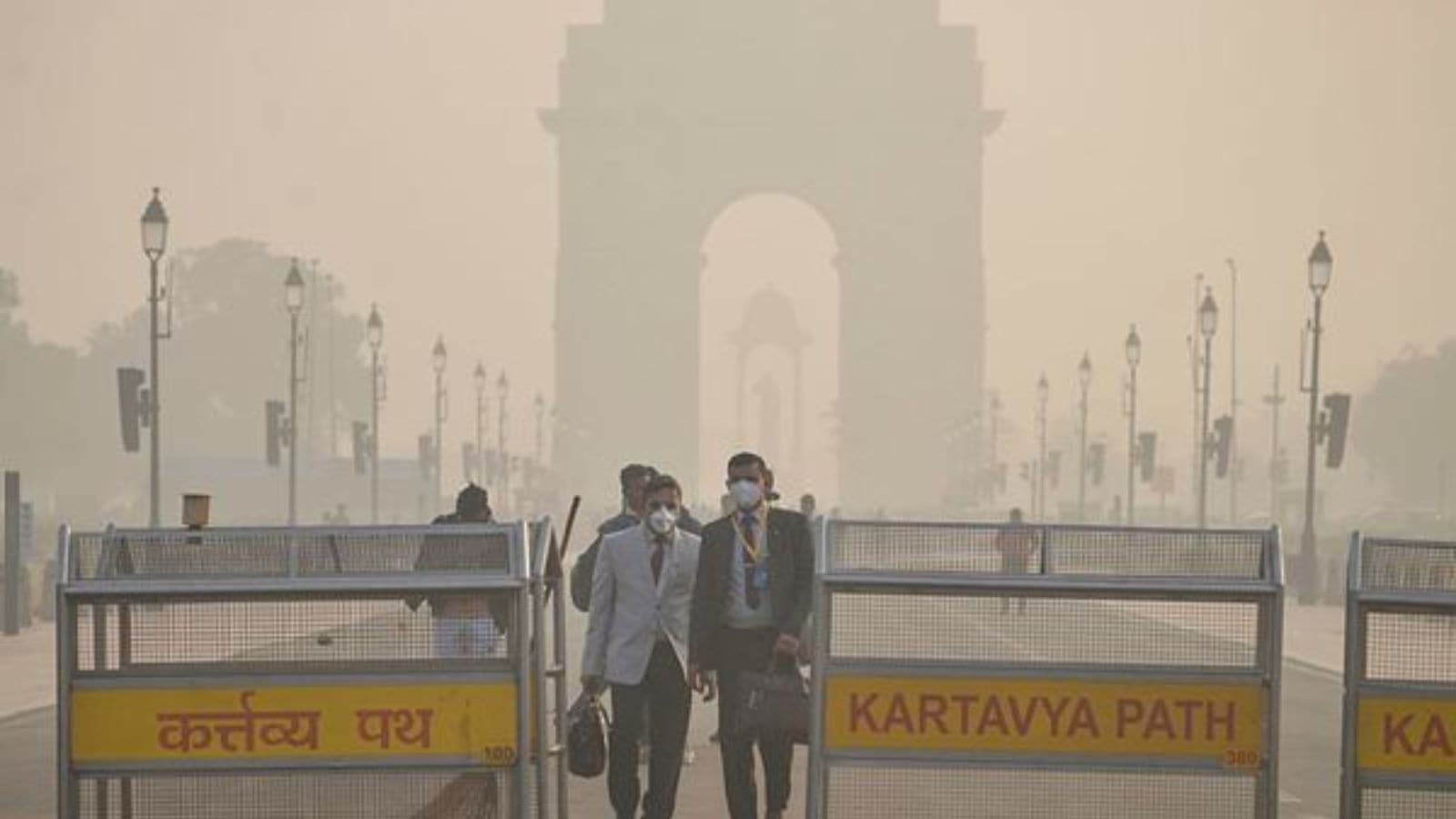
She noted that Delhi’s air quality has remained severely affected between November and February for several years, with the Air Quality Index (AQI) frequently ranging between ‘Very Poor’ and ‘Severe’ categories. Since these conditions recur every year, the government has adopted a strategy based on advance preparedness, timely interventions and better coordination rather than relying solely on emergency responses, she said.
From November 1 to January 31, strict compliance with dust-control norms at construction and demolition sites will be mandatory. “If required, additional restrictions on construction activities may also be imposed between December 10 and January 20,” she said.
Emphasising the need to curb dust pollution, Gupta said construction and demolition activities were essential for urban development, but controlling dust pollution during winter was equally important. “We have encouraged contractors and others involved in this sector to plan their activities in advance so that additional pollution loads are not created during the critical period,” she said.
Story continues below this ad
Accordingly, all construction and demolition activities between November 1 and January 31 will be required to comply with prescribed environmental standards and dust-control measures. Essential and emergency projects may be exempted. The movement of vehicles carrying construction material may also be regulated during periods of elevated pollution.
In addition, anti-smog guns, mist suppression systems and other dust-control measures will be mandatory at large commercial high-rise buildings and major construction sites, Gupta said.
She added that field surveillance and drone-based monitoring would be strengthened to prevent incidents of open burning during the period.
“Those violating the rules will face environmental compensation charges as well as other penal action under applicable laws. The notified guidelines will generally remain in force every year from November 1 to February 28 and will operate alongside GRAP,” she said.
Story continues below this ad
“Improvement in air quality cannot be achieved through government efforts alone. It requires active participation from citizens, RWAs, institutions, commercial establishments and industries. The advance notification of these measures is intended to ensure that all stakeholders have sufficient time to prepare and can contribute meaningfully to pollution-control efforts,” the Chief Minister added.
View original source — Indian Express ↗
Related stories
Indian Express
PoliticsJun 3, 2026 · 1 min
Tackling air pollution in focus: Cabinet nod for Rs 9,585 crore scheme to replace old trucks, buses in Delhi-NCR
Indian Express

The Punch
NewsJun 9, 2026 · 1 min
Plateau FRSC: Cycling answer to rising fuel cost
The Punch

Stuff
NewsJun 17, 2026 · 1 min
Transport Minister will not rule out petrol tax increases
Stuff

Philippine Daily Inquirer
NewsJun 4, 2026 · 1 min
LTFRB studying petition for land-based PUVs to collect fuel surcharge
Philippine Daily Inquirer