Indian Express
Five questions may be all it takes to identify TB patients who need urgent care
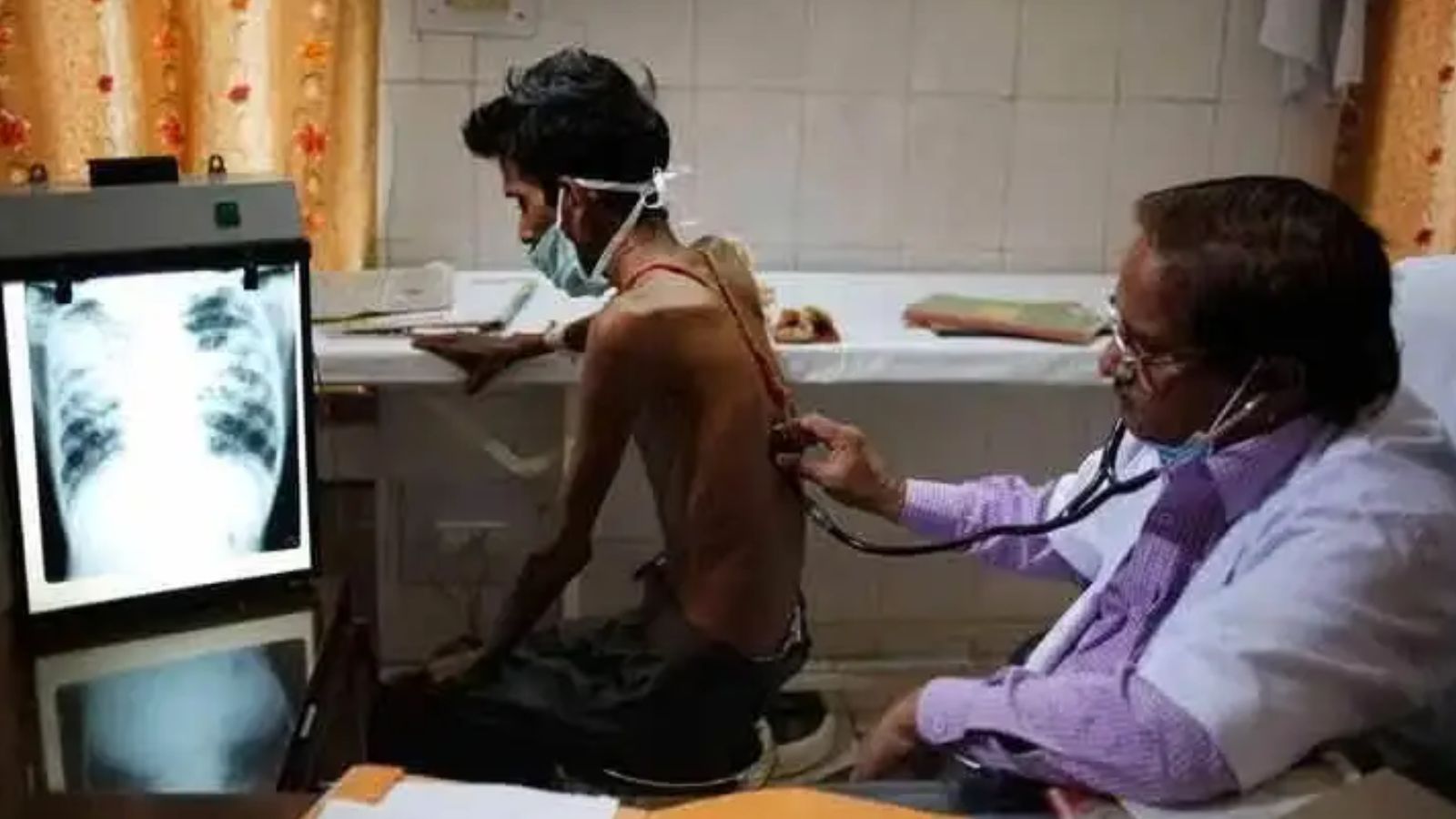
A simple five-question tool that requires no laboratory tests can help health workers quickly identify tuberculosis (TB) patients who are most likely to become severely ill and need urgent hospital care, according to a study published recently in BMJ Open.
Researchers found that the bedside assessment performed as well as the more elaborate triage information routinely collected under the national TB programme in preventing deaths. Its accuracy improved further when combined with basic patient details already recorded on the Ni-kshay portal, such as age, sex, the site of infection and whether the patient had previously been treated for TB.
The tool assesses if the patient is severely undernourished using body mass index (BMI), whether they have swelling in the legs, whether they are breathing unusually fast, whether their oxygen levels are low and whether they are able to stand on their own.
The study also examined whether adding more information — such as whether a patient has diabetes or HIV, or even whether they have a bank account — could improve the model further. It found that these additional details did not significantly enhance the tool’s ability to identify patients at the highest risk.
The five-question model, developed by the ICMR-National Institute of Epidemiology (NIE) and implemented in Tamil Nadu, was designed to simplify what public health experts call “differentiated TB care” — ensuring that the sickest patients are identified early and receive hospital-based care as quickly as possible.
What is differentiated TB care and why is it necessary?
Differentiated TB care is based on a simple principle: not all TB patients are equally sick. While many patients can be treated safely at home, some are severely undernourished or critically ill and require immediate hospital care, oxygen support, nutritional rehabilitation and closer monitoring. Identifying these patients early is crucial because the majority of TB deaths occur soon after diagnosis.
“Almost 70 per cent of TB deaths happen during the first two months after diagnosis,” said Dr Hemant Shewade, one of the authors of the study and a senior scientist at ICMR-NIE. “These deaths usually occur in patients who are severely undernourished or severely ill. The sickest TB patients are four to five times more likely to die of the disease. A triage tool can help health workers easily identify the low-hanging fruits, so to say, where interventions will have the highest impact,” he said.
The need for such a system is particularly acute in India, which accounts for the highest burden of TB globally.
How does the five-question tool work?
A patient is considered “triage positive” and may require hospital admission if they meet any one of the following criteria: they have a BMI below 14, or a BMI below 16 along with swelling in the feet; they have a respiratory rate of more than 24 breaths per minute; their oxygen saturation is below 94 per cent; or they are unable to stand without support.
The simplicity of the tool is one of its biggest advantages.
While the national programme also has a differentiated TB care tool for identifying patients who need immediate attention, it requires health workers to fill in 16 to 20 parameters, some of which depend on laboratory tests.
In many resource-constrained healthcare facilities, where a large proportion of TB patients are diagnosed, these parameters are either not available immediately or are not recorded consistently. As a result, health workers are often unable to accurately estimate a patient’s risk at the time of diagnosis.
What were the different models that were studied?
Researchers tested four different models using data from more than 55,000 TB patients in Tamil Nadu.
The first model relied on basic information routinely collected by health workers and uploaded to the national Ni-kshay portal at the time of diagnosis. The second model used only the five bedside indicators developed by ICMR-NIE. Interestingly, researchers found that this simple five-parameter tool performed as well as the first model, despite relying on far less information.
The third model combined the five bedside indicators with some routinely captured data from Ni-kshay, including age, sex, whether the infection had been microbiologically confirmed, the site of infection and whether the patient had previously received treatment for TB. This model performed significantly better than the previous two.
The fourth model added even more information, including HIV status, diabetes status and whether the patient had a bank account — a variable often used as a marker of socioeconomic vulnerability.
However, researchers found that these additional details did not improve prediction any further. The fourth model performed at par with the third.
The findings suggest that a relatively small amount of information may be sufficient to accurately identify patients who need urgent care.
Why is there a need for simpler models?
According to researchers, the current system often delays risk assessment because many variables are captured only after treatment has begun.
“Currently, most of these variables are routinely captured at a treatment facility and there is a delay of three weeks in using them for triage and death prediction,” said Dr Shewade. “In resource-constrained settings, risk stratification and death prediction should be possible using easily measurable and available variables at TB diagnosis,” he added.
The Tamil Nadu experience suggests that simplifying the process can have tangible benefits. According to the researchers, the use of the five-question triage tool has helped reduce TB deaths by 30 to 50 per cent across different districts in the state.
Will these recommendations be implemented nationally?
That question remains open. ICMR-NIE has shared its findings with the national TB programme and recommended that the Tamil Nadu model be scaled up across the country. All four models tested in the study have also been made available online by the institute as simple calculators that health workers can use to estimate a patient’s risk.
The appeal of the model lies not in technological sophistication, but in its practicality.
View original source — Indian Express ↗
Related stories

The New York Times
TechnologyJun 22, 2026 · 1 min
Here’s the latest.: The prime minMr
The New York Times

Indian Express
TechnologyJun 22, 2026 · 1 min
Microsoft to end support for Office 2021 soon: Here’s what it means for users
Indian Express

Portugal Resident
TechnologyJun 22, 2026 · 1 min
State contemporary art collection opens new public centre in Cascais
Portugal Resident

Lovin Malta
TechnologyJun 22, 2026 · 1 min
Watch: 65 New Gunners Join Armed Forces Of Malta
Lovin Malta