Indian Express
Indian Express··3 min read
Haryana changes transfer rules: Age weightage slashed, spouse benefits doubled
4 min readChandigarhUpdated: Jun 22, 2026 09:07 PM IST
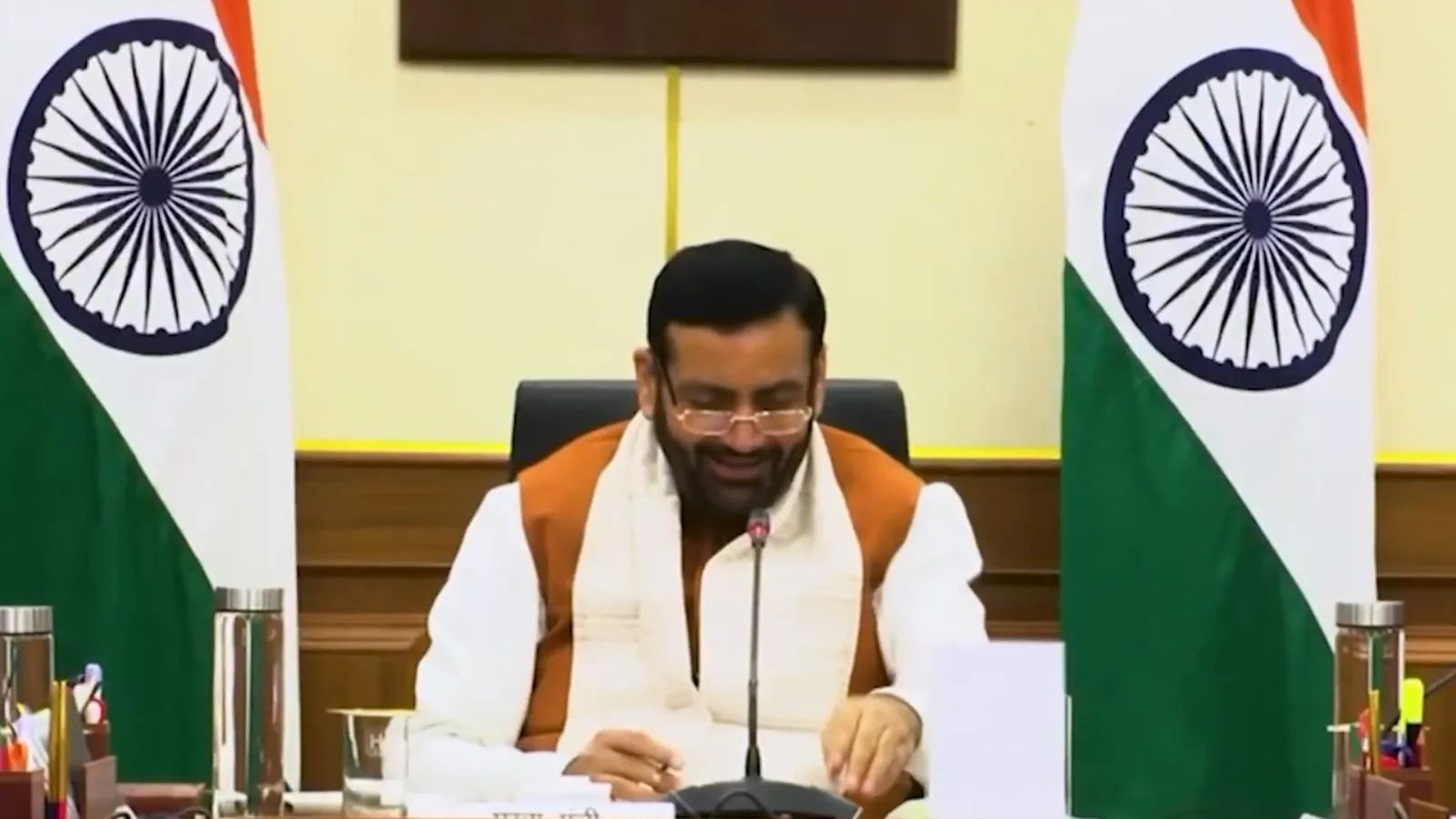
The Cabinet met under the chairmanship of Chief Minister Nayab Singh Saini and approved the revised policies.(Credits: X/ CMO Haryana)
In a significant overhaul of the state’s transfer framework, the Haryana Cabinet on Monday approved the Model Online Transfer Policy (MOTP), 2026, and the Teachers Transfer Policy (TTP), 2026, introducing major changes in employee ranking criteria, expanding welfare provisions and strengthening safeguards for government employees and teachers.
The Cabinet, which met under the chairmanship of Chief Minister Nayab Singh Saini, approved the revised policies with the stated objective of ensuring optimal utilisation of human resources, promoting employee satisfaction, improving administrative efficiency and strengthening public service delivery.
According to officials, the revised policies have been formulated after taking into account observations made by the Punjab and Haryana High Court as well as feedback received from various stakeholders. The High Court had expressed concerns regarding certain aspects of the previous transfer framework, including the weightage assigned to age and the relatively low merit points available under the couple-case category.
Under the new framework, employee ranking for transfer purposes will be determined through a revised 120-point composite scoring system. One of the key changes is the reduction in the weightage assigned to age from 75 per cent to 25 per cent. To recognise professional experience and continuity of service, a new parameter, “Experience in Cadre”, has been introduced with a weightage of 25 per cent.
The weightage assigned to special factors has also been significantly increased from 25 per cent to 50 per cent. Officials said the move is intended to provide greater consideration to employees facing genuine hardships and special circumstances, making the transfer process more equitable and responsive.
The new policies also expand employee welfare provisions by broadening the list of recognised debilitating diseases. Muscular dystrophy, Behçet’s disease and specified organ transplant cases, including pancreas and bone marrow transplants, have now been included under the eligible categories.
Another major safeguard relates to employees approaching retirement. Under the new rules, no employee or teacher within one year of superannuation will be transferred without his or her explicit written consent.
Story continues below this ad
Support for government-serving couples has also been strengthened. The merit points available under the couple-case category have been doubled from five to 10. In addition, the definition of eligible organisations has been expanded to include regular employees serving under any government, provided they are posted in Haryana, Chandigarh or Delhi.
To improve transparency and procedural efficiency, the policies prescribe streamlined timelines for transfer drives and introduce the concept of “Category”, enabling a clearer distinction between participating and non-participating employees during the transfer process.
Officials said that with the notification of the new policies, any transfer drives initiated under the Model Online Transfer Policy, 2025, and the Teachers Transfer Policy, 2025, will stand discontinued. This, they said, would ensure that all eligible employees are considered under the fairer and more balanced criteria laid down in the 2026 framework.
The Cabinet has also authorised the Human Resources Department to issue necessary instructions regarding the first online transfer drive under MOTP, 2026, particularly in relation to the Notional Category and cadres where Current Duty Charge (CDC) arrangements are currently in operation.
Story continues below this ad
According to officials, the reformulated policies reaffirm the state government’s commitment to a fair, transparent, objective and technology-driven transfer mechanism while balancing administrative efficiency with employee welfare.
View original source — Indian Express ↗
Related stories

The Punch
SportsJun 22, 2026 · 1 min
Ghanaian priest vows to ‘work on’ Harry Kane ahead of England clash
The Punch
The Punch
NewsJun 22, 2026 · 1 min
Delta varsity student stabs younger brother to death in hostel fight
The Punch
The Punch
NewsJun 22, 2026 · 1 min
Police arrest man for selling expired powdered milk in Katsina
The Punch
The Punch
NewsJun 22, 2026 · 1 min
Police recover slain ex-OGTV broadcaster’s stolen car
The Punch