Indian Express
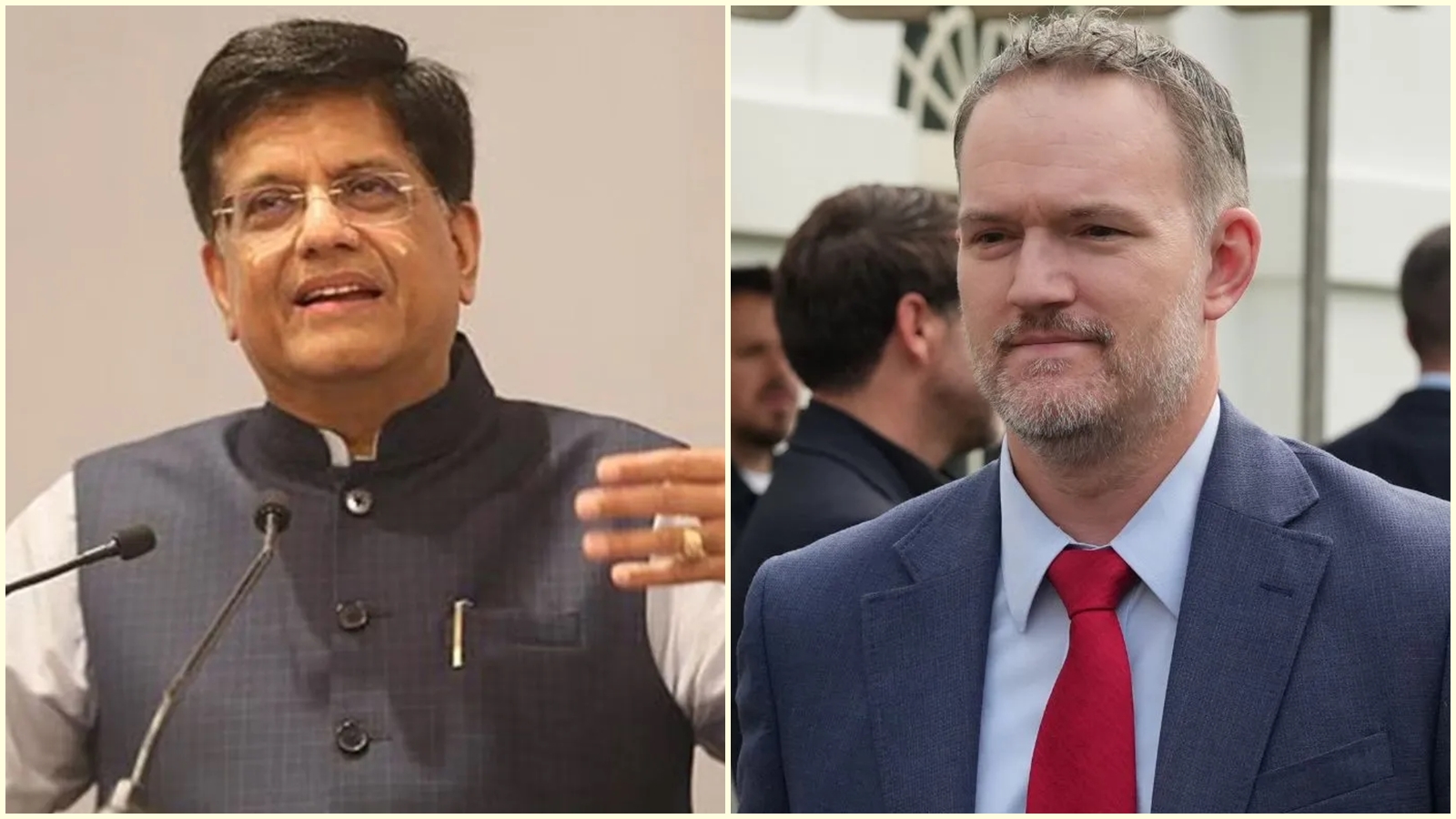
Piyush Goyal-Greer talks start today, trade surplus with US down over 40%
While Commerce Minister Piyush Goyal is scheduled to begin the two-day talks with United States Trade Representative Jamieson Greer on Tuesday to conclude a trade deal by next month, data shows that India’s trade surplus with the US has slipped by over 40% since the negotiations began last year, following Prime Minister Narendra Modi’s meeting with US President Donald Trump on February 13, 2025.
The high-level talks come as the US is set to complete its Section 301 investigation by next month and come out with a new tariff architecture, which could act as an alternative to reciprocal tariffs. After over a year of trade tension between India and the US, government officials said Goyal and Greer are expected to give “the final touch” to the first tranche of the trade agreement.
Meanwhile, data released by the Commerce and Industry Ministry showed that India’s export surplus slipped over 40% to $2.94 billion in May this year, from $5.02 billion in May 2025. Data suggests that India’s surplus has been declining in multiple categories beyond energy.
Ahead of Greer’s visit, several farm groups have reiterated that the US has one of the largest farm subsidy programmes, and the government should stick to its stance in the World Trade Organisation (WTO) and refrain from commitment on farm imports, which could hurt the interests of apple, almond, walnut, soybean, cotton and rubber growers.
Declining export surplus
The fears of higher imports from the US come as India’s export surplus is already declining due to various concessions that India agreed to during the negotiations. Right before Modi’s visit to the US last year, India reduced duty on American bourbon whiskey and slashed tariff on Harley-Davidson motorcycles.
Last November, Indian public sector refiners also signed a one-year deal for American liquefied petroleum gas (LPG) imports, marking the first structured contract of US LPG for the domestic market. The deal stated that India would import around 2.2 million tonnes per annum (MTPA) of LPG from the US, which is close to 10% of India’s annual imports. Amid disruption in LNG imports from West Asia, US turned into India’s top source for LNG in May, as per data shared by commodity market analytics firm Kpler.
Explained
Across sectors
From petroleum products to electronic components, motor vehicles to fresh fruits, data shows Indian exports are declining while imports from the US are on the rise.
A push for higher imports from the US came as India, for the better part of 2025, was bargaining to get lower tariff rates. However, the US imposed 50% duty for months until the US Supreme Court declared it illegal in February this year.
Competition from the US
Story continues below this ad
Data showed that several Indian exports have been declining in the same categories where US imports are on the rise, signalling potential competition. Government officials have claimed that US goods are not price-competitive as compared to Indian manufacturers.
In March this year, India’s petroleum product exports to the US slipped by 24.02% to $235.47 million, as compared to $309.91 million in March 2025. India’s imports in March under the same category increased by 130.95% to $321.73 million, as compared to $139.31 million in March 2025.
Another high-volume product category where US imports have been gaining ground is electronic components. While India’s exports of electronic components in March this year slipped by 33.41% to $135.54 million, from $203.54 million in March 2025, India’s imports under this category jumped by 136.30% to $431.89 million in March 2026 as compared to $182.77 million in March 2025.
A similar trend was visible in organic chemicals, copper products, motor vehicles and fresh fruits, where exports slipped between 10 to 40% and imports jumped between 15 to 1285%. India’s imports of scientific instruments have also been increasing.
Farmers’ appeal
Story continues below this ad
The most sensitive element in the US-India trade dynamics continues to be agriculture trade. Modi, during his Independence Day speech last year, had said that India would not compromise on the well-being of its farmers, fisherfolk, and cattle-keepers.
Harish Chauhan, Convenor, Hill States Horticulture Forum, said on Monday that the proposal for permitting apple imports from the US above a Minimum Import Price (MIP) does not appear to provide adequate protection to Indian apple growers, as imports from the US are already taking place at prices above the proposed threshold.
“Given the unique agro-climatic conditions of Himachal Pradesh, Jammu & Kashmir and Uttarakhand, growers of apples, almonds and walnuts have limited opportunities to shift to alternative crops. Any significant increase in imports resulting from tariff reductions would therefore have severe consequences for their livelihoods and the rural economy of these hill states,” Chauhan said.
K V Biju, National Coordinator, Rashtriya Kisan Mahasangh, in a letter to Modi on Monday, said the biggest concern was US agricultural subsidies as the US Farm Bill allocated $956 billion in 2014 and $1.5 trillion in 2024. According to the OECD (2024), the Producer Support Estimate (PSE) is +7.1% in the US, while Indian farmers face a negative PSE of –14.5%, effectively amounting to implicit taxation.
Story continues below this ad
“Allowing imports of heavily subsidised US agricultural products will destroy domestic production in affected sectors. India has historically opposed US farm subsidies at the WTO. Permitting subsidised imports now would undermine that long-standing position and the solidarity of countries that supported India in challenging such subsidies,” Biju said.
View original source — Indian Express ↗
Related stories
CNA
BusinessJun 23, 2026 · 1 min
Dollar firms on hawkish Fed bets, oil rebound; yen near 40-year low
CNA

Japan Times
BusinessJun 23, 2026 · 1 min
SpaceX readies its $20 billion bond debut to fund AI ambition
Japan Times

Philippine Daily Inquirer
BusinessJun 23, 2026 · 1 min
OIL PRICE WATCH as of June 23, 2026
Philippine Daily Inquirer

Japan Times
BusinessJun 23, 2026 · 1 min
Nvidia seeks to make humanoid AI robots safer around humans
Japan Times