Indian Express
Delhi’s new EV policy may offer tax relief for strong hybrid cars: Debate intensifies ahead of cabinet nod
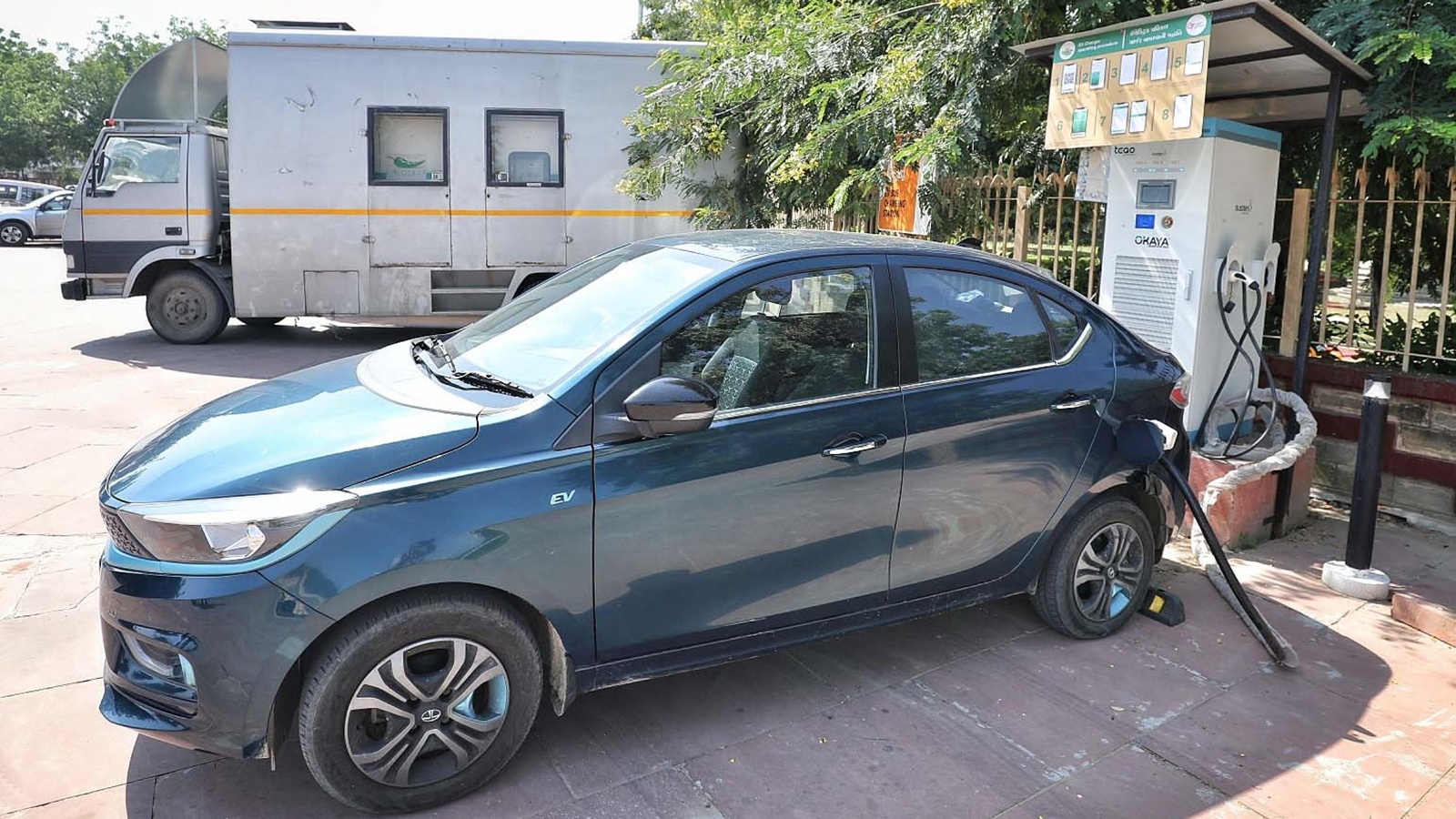
Provisions relating to strong hybrid vehicles in Delhi’s new Electric Vehicle (EV) Policy continue to be debated as the existing policy, which has already been extended multiple times, nears expiry. The new EV Policy 2026-30 is expected to be placed before the Cabinet at its next meeting.
Over the past couple of months since the draft policy was put in the public domain, the Delhi Transport Department has received more than 700 responses, and the suggestions are under review, officials said.
There is a clear divergence of opinion over exempting strong hybrids from road tax. A strong (or ‘full’) hybrid vehicle combines a traditional internal combustion engine with a powerful electric motor and a larger battery, which enables it to run entirely on electric power at low speeds, and to switch automatically to the engine for higher speeds.
A mild hybrid, by contrast, has a smaller electric motor and battery, and cannot run on electricity alone. The electric motor in mild hybrids acts only to boost acceleration and smoothen stop-start systems.
“The government wants to provide road tax exemptions on buying strong hybrid vehicles at least for the first couple of years so that the public can gradually switch to electric vehicles… Several stakeholders have also backed the policy and the proposed incentives on strong hybrid vehicles. However, there is resistance from some quarters,” a senior Transport officer told The Indian Express.
Critics have argued that instead of providing incentives to strong hybrids, the government should invest in charging infrastructure and push the adoption of pure EVs.
The draft EV Policy has proposed a 50 per cent exemption on road tax and registration charges for strong hybrids with an ex showroom price up to Rs 30 lakh.
Story continues below this ad
Several top institutes and consultants working to promote electric mobility, such as the IITs and the International Road Federation (IRF), have backed the government’s plan to incentivise strong hybrids, the officer said.
“The incentives on strong hybrids have been proposed after proper research and studying similar policies implemented in other states. For instance, Uttar Pradesh allowed 100 per cent exemption on strong hybrid vehicles for almost a year and a half, and both the government’s revenues and vehicle registrations increased during this period, even as Delhi lost out to UP in revenues,” the official said.
Auto industry data show that before strong hybrids were exempt from road tax in UP in July 2024, an average of 538 such vehicles were registered in the state every month; this number increased by 175 per cent on average after the incentives were introduced. Also, the state’s monthly revenues under this head increased by 60 per cent from an average Rs 29 crore per month to Rs 47 crore per month.
“In just one year, UP collected revenue of Rs 500 crore by incentivising strong hybrid vehicles,” the official said.
Story continues below this ad
According to officials, incentivising strong hybrids will also help bridge the adoption gap as the EV charging infrastructure is gradually strengthened in the capital. “Giving incentives will gradually nudge the public towards switching to electric mobility,” the official said.
In its submission to the government, CUTS International, a public policy research and advocacy organisation, has said: “…The [proposed] 50% road tax waiver recognizes the role of strong hybrids as an effective transition technology. Self-charging hybrids operate in electric mode for around 60% of urban driving and deliver about 25-35% reduction in CO2 emissions compared to conventional vehicles, offering immediate benefits without dependence on charging infrastructure.”
It has also pointed out that “in the absence of such incentives earlier, consumers were registering hybrid cars in neighbouring states such as Uttar Pradesh and Haryana, leading to an estimated annual revenue loss of Rs 400-500 crore for Delhi. By rationalizing the tax structure, the policy effectively reverses this trend, turning a revenue leakage into a revenue-positive outcome while simultaneously supporting cleaner technologies…”.
IRF, a global nonprofit based in Washington DC, has commended the Delhi government for proposing the incentive. “…The decision to extend a 50% road tax waiver for strong hybrid cars is a timely and progressive step… They offer an immediate and practical pathway for reducing emissions without dependence on external charging infrastructure,” the IRF has said.
Story continues below this ad
Nat Zero Energy Transition Association (NETRA), a global nonprofit that works on promoting cleaner energy, has argued that “a 50% waiver of road tax on SHEVs (strong hybrid electric vehicles) is not likely to result in revenue loss to the exchequer vis-à-vis a petrol equivalent vehicle but will resolve the anomaly of higher tax being paid by consumers on a cleaner technology (SHEV) as compared to a petrol car.”
According to Nomura Research Institute (NRI), “inclusion of hybrids in the road tax exemption policy signals a phased approach by the government, with hybrids acting as a bridge to curb vehicular pollution till the full EV transition goal can be realized.”
View original source — Indian Express ↗
Related stories

OnlineKhabar
PoliticsJun 23, 2026 · 1 min
Tourists visiting Mustang increase by 81 per cent
OnlineKhabar

OnlineKhabar
PoliticsJun 23, 2026 · 1 min
Stipend handed over to students losing parents to human-wildlife conflict
OnlineKhabar
Indian Express
PoliticsJun 23, 2026 · 1 min
‘Hormuz will never return to pre-war status’: Iran Speaker asserts permanent control over strait after US talks
Indian Express

Antara News
PoliticsJun 23, 2026 · 1 min
Prabowo launches 1,151-km regional road development in 37 provinces
Antara News