Indian Express
Indian Express··3 min read
Main Vaapas Aaunga: The distance between memory and home
I see in the film a lesson about memory’s role in intergenerational dialogue. It teaches us to value shared cultures, and to recognise that healing can be a lifelong pilgrimage.
Written by: Rukmini Sen
4 min readJun 23, 2026 04:46 PM IST
First published on: Jun 23, 2026 at 04:45 PM IST
Like most of Imtiaz Ali’s films, Main Vaapas Aaunga is an immersive journey. In fact, it is a film of many journeys: Carefree ones on bicycles, brutal ones on trains, anxious ones in planes and ambulances, on horse-drawn carts in Independence Day processions, crossings through barbed-wire borders on foot, and hopeful rides in cars. Yet beyond these physical movements lie deeper, transformative voyages — of desire, waiting, grief, and remembrance — that create some of the film’s most beautiful cinematic moments.
I want to focus on four images, though. The first of writing. A young woman lying in an open green field writing; a young man and an elderly man, at their desks, committing memories to paper. They write to romance, to remember, to resist, to resurrect, to redeem, and ultimately, to inhabit a world that is slipping away. Their writing becomes an act of preservation, ensuring that future generations can read about them. Running through these scenes are glimpses of the Progressive Writers’ Association, evoking Saadat Hasan Manto, Amrita Pritam, and Ismat Chughtai, reminding us that the pen can outlast the sword.
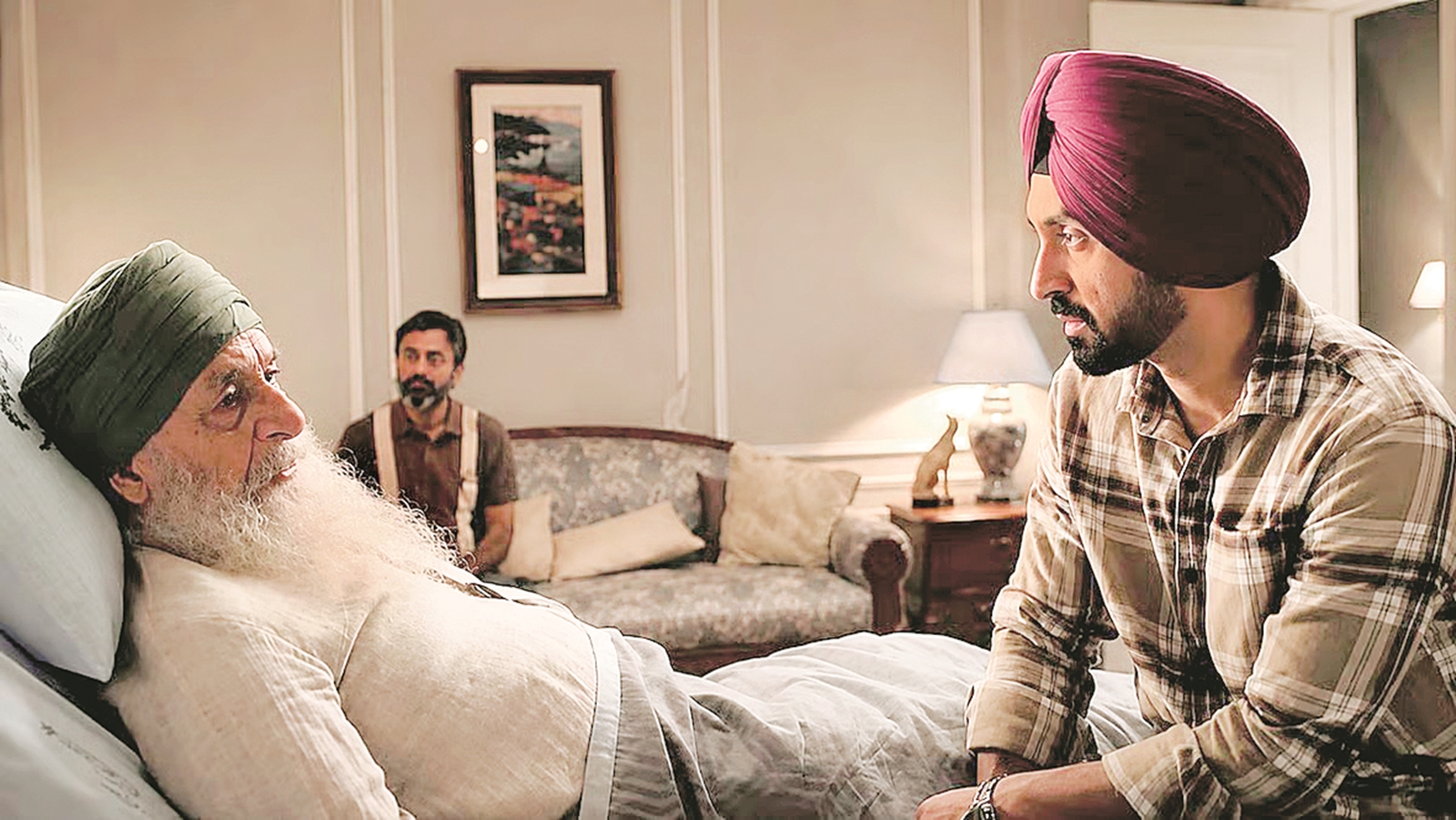
This commitment to remembering also shapes the film’s emotional core and leads to the second imagery. At a time of incessant noise, when hearing one another has become a lost art, Ali lends listening a quiet gravitas. The way Nirvair tries to patiently piece together what Ishar’s fractured words signify is deeply moving. Life, the film suggests, is an assemblage of fragments, much like Jiya’s lost earring, that gets soaked in the bloodshed of violence. It becomes a powerful symbol of the breakdown of harmony. Like the pen, the earring is trampled upon, broken, lost.
The drawing of the Radcliffe Line through Jiya’s courtyard crystallises this loss. For Keenu — and indeed for any love divided by Partition — it symbolises the loss of both a home and a land. The search for a lost home, or the longing to return to it through language, music, and memory, becomes eternal. Partition is, therefore, not merely an event to be mourned in retrospect; it plants a desire that continues to haunt the future. The closing-credits song, “Kya kamaal hai”, gives this longing its most poignant expression.
Equally affecting is the fact that Jiya is also called Afsana, meaning fable or legend. We first hear the name when Keenu returns six years after Partition, only to discover that she is now someone else’s wife. Although he attempts to bury the past, memory — maazi — has always occupied a central place in Ali’s cinema. Afsana remains real yet unreachable, alive only in memory, much like the impossibility of returning to Sargodha, a truth Ishar understands.
Main Vaapas Aaunga is not simply a film about Partition. It urges us to remember so that future generations know that homes were lost even as the yearning to return endured. As a sociologist with roots in the “other side” of Bengal, and as someone with a father affected by dementia — who longed to and could return to his home in Jamshedpur one final time — I see in the film a lesson about memory’s role in intergenerational dialogue. It teaches us to value shared cultures, and to recognise that healing can be a lifelong pilgrimage. While scholars such as Urvashi Butalia, Ritu Menon, and Kamla Bhasin have written powerfully about rape, abduction, and recovery during Partition, Main Vaapas Aaunga moves beyond the language of trauma alone. It imagines a world sustained by sublime love and longing, echoing Kabir’s timeless question: Haman hai ishq mastana, haman ko intezaari kya?
The writer is professor, Dr BR Ambedkar University, Delhi. Views are personal
View original source — Indian Express ↗
Related stories

The Punch
NewsJun 23, 2026 · 1 min
INEC presents certificates of return to June 20 by-elections winners
The Punch
The Punch
NewsJun 23, 2026 · 1 min
Sowore’s remand dangerous for democracy — Peter Obi
The Punch
The Punch
NewsJun 23, 2026 · 1 min
Suspect in viral abuse video now in custody, 18-year-old taken as child — Activist
The Punch
The Punch
NewsJun 23, 2026 · 1 min
Lagos seals i-Fitness gym over pollution
The Punch