Indian Express
Meet the narwhal — ‘unicorn of the sea’ famous for its long tusk
3 min readNew DelhiJun 23, 2026 04:59 PM IST
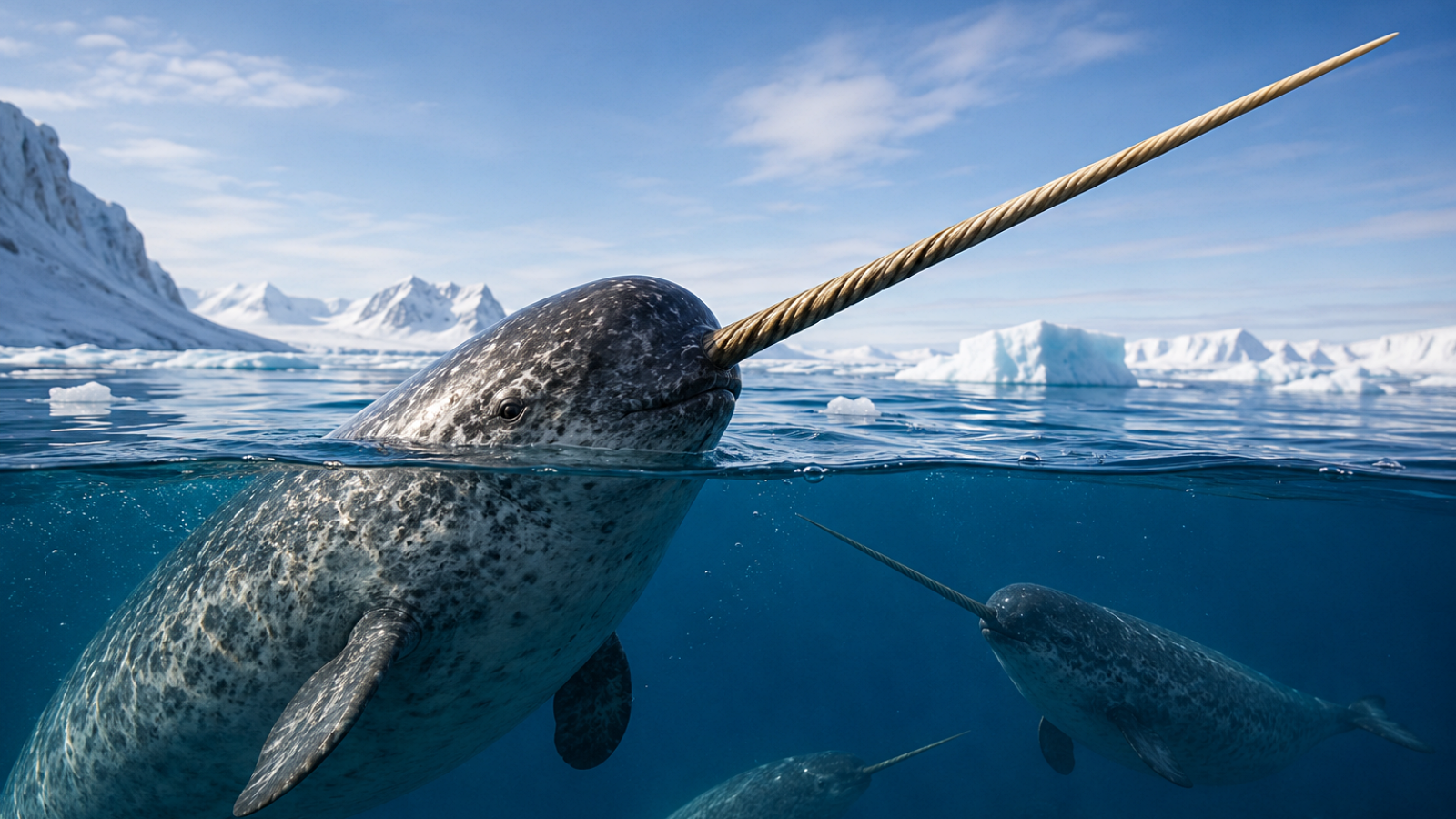
The tusk is hollow and packed with up to 10 million nerve endings (Ai generated image)
A whale with a horn-like tusk sticking out of its head sounds like something from a fantasy novel. But the narwhal is very real!
Found in the icy waters of the Arctic, this unusual marine mammal is often called the “unicorn of the sea” because of its long, spiral tusk, which can grow up to 3 metres in length. For centuries, the tusk fascinated explorers and even inspired myths about unicorns.
But despite appearances, the narwhal’s famous tusk isn’t a horn at all. It’s actually an enlarged tooth that grows through the whale’s upper lip.
Most male narwhals develop a single tusk, though a few grow two. Females can occasionally develop tusks as well, but this is much less common. For years, scientists debated what these tusks were used for. Research now suggests they serve several functions. Packed with millions of nerve endings, the tusk can help narwhals detect changes in their environment, including water temperature and salinity.
Researchers have also observed males rubbing their tusks together, a behaviour known as “tusking”, which may play a role in communication or social interactions.
Native to the waters around Greenland, Canada, and Russia, narwhals spend much of their lives navigating ice-covered Arctic seas. They feed mainly on fish, squid, and shrimp, often diving deep beneath the sea ice in search of food.
These whales are remarkable divers. They can plunge to depths of more than 1,500 metres, making them among the deepest-diving marine mammals in the world.
Story continues below this ad
Despite being one of the most recognisable whales on the planet, narwhals remain surprisingly mysterious. Their remote Arctic habitat makes them difficult to study, and scientists are still uncovering new details about their behaviour and biology.
Like many Arctic species, they also face growing threats. Climate change is altering sea ice patterns, while increased shipping and industrial activity can disturb the habitats they depend on.
Still, the narwhal remains one of nature’s most fascinating animals. Its long spiral tusk may have earned it comparisons to a mythical unicorn, but the reality is just as extraordinary.
After all, not every day do you come across a whale with a giant tooth growing out of its head!
Story continues below this ad
View original source — Indian Express ↗
Related stories

Variety
EntertainmentJun 23, 2026 · 1 min
Brothers Quay Talk ‘Humble Craft’ of Animation, Tease New Project: ‘There’s No Script Yet, but We’re Getting There’
Variety

Variety
EntertainmentJun 23, 2026 · 1 min
‘Toy Story 5’ Smashes Franchise Records With Massive Debut at U.K. and Ireland Box Office
Variety

Variety
EntertainmentJun 23, 2026 · 1 min
Olivia Rodrigo’s Daisy Chain Fields Festival: Every Artist in the Lineup Is ‘Doing It for Free’
Variety

E! Online
EntertainmentJun 23, 2026 · 1 min
Taylor Swift Supports Travis Kelce at Tight End University Party
E! Online