Indian Express
Once champions of indie films, OTT giants are now acquiring them for as less as Rs 30 lakh
When streaming entered in India 10 years ago, it brought along with it promise. The promise of discovering new talent, both behind and in front of the camera. The promise of character development — letting the characters unravel over multiple hours of storytelling instead of condensing their arcs to two or three hours. Then there was also the promise of telling stories that otherwise rarely make it to the big screen — of an India less explored, about Indians less known, and brought to fruition by talent that’s considered too offbeat to co-exist with the mainstream.
A couple of years into Indian programming, Netflix came up with Ivan Ayr’s cop drama Soni — a lived-in account of two women cops in Delhi. In many ways, it served as a palate-cleanser for Richie Mehta’s International Emmy Award-winning drama Delhi Crime, which released a couple of months later. The following year, Netflix backed Sooni Taraporewala’s film Yeh Ballet, another heartwarming indie that probably wouldn’t have found a home in the absence of the streaming platform.
Even when Netflix India and its fellow OTT platforms — Amazon Prime Video India, ZEE5, and JioHotstar — were not putting their might behind indie cinema, they at least had good taste and the conviction to acquire these films, not only giving them a platform to shine, but also making them their own. But something shifted within the pandemic. One would imagine when people across the world, holed up in their homes, flocked to the television and smartphone screens, they’d watch anything and everything that’s thrown at them.
With Soni on Netflix India, came the promise of streaming platforms saving indie cinema.
That’s the argument that’s put forth when one argues the crisis theatrical exhibition is undergoing since then — the audience is now more informed and exposed, thanks to the consumption of world, indie, and regional cinema on OTT, triggered by the pandemic. That’s why they don’t think twice before rejecting anything mainstream that’s substandard, leading to all-time low footfalls in cinema halls. So, are they then staying back at home and marvelling at indie gems on streaming? No. Because there aren’t too many of them that OTT platforms are championing now, as much as they used to when they first entered India.
“I felt the streaming service was the answer for an independent film to find a home because indie films have never found proper distribution. I’ve done films which have found just two shows in Mumbai, and never got an adequate release. That happened initially, but now the clutter is so much that it’s difficult for a film that’s not commissioned to find a home,” Rasika Dugal told SCREEN. The actor’s indie film Fairy Folk, which released in cinemas in March 2024, hasn’t found a streaming platform yet despite her reputation as a leading OTT star with shows like Mirzapur and Delhi Crime.
As she pointed out, the “clutter” is a major hurdle. After OTT giants witnessed what India, a population of 1.48 billion, can do to its subscription and viewership numbers sitting at home during the pandemic, the mandate shifted from carving out a niche in the country to conquering the nation’s voluminous masses. Acquisition of tentpole films helped further, since they couldn’t find a theatrical release during the pandemic. As a result, streaming became the only go-to distribution channel for films big and small. And we all know who comes out on top in that face-off between David and Goliath.
Want an OTT release? Go to the theatres first
So, then streaming platforms devised a new criteria for choosing films for acquisition — a qualifying theatrical release first, the performance of which would determine whether you get acquired or not, on what terms, and most crucially, at what price. For reference, when Netflix India acquired Chaitanya Tamhane’s 2020 Marathi film The Disciple, it was one of the most accomplished indie films in recent memory, winning key awards at both the Venice International Film Festival and the Toronto International Film Festival. The price of acquisition was in the Rs 2 crore to Rs 4 crore bracket. But now, that figure has reduced by one-eighth or more.
Story continues below this ad
Chaitanya Tamhane’s The Disciple was one of the last indie films acquired by a streaming platform at a fair price.
Is that because the indie films being made today aren’t upto the mark? Or is it because streaming platforms’ coffers have run out of money? Several indie filmmakers feel it’s just a mechanism devised by these corporate giants to corner them to accept unprecedented low prices for their films. Firstly, irrespective of how impressive or historic the international film festival run has been, an indie film must release in Indian cinemas first, for them to even secure an audience with the acquisition team. While many of them don’t mind going that route, so that their films also qualify for the eligibility criteria for the selection of India’s Oscars entry, several smaller films have to bear the brunt of this lengthy, tedious process.
“Releasing an indie film in theatres has always been an uphill climb, but more so now because theatre owners and distributors are used to getting quick results. Look at the numbers Dhurandhar did in the opening weekend itself. Why would they entertain smaller indie films like ours when all they want is the big buck,” says an indie filmmaker on condition of anonymity. He points out that his film, despite getting unanimous praise across preview screenings, was barely allotted enough shows in enough cities. “And whatever shows there were, they were either at odd timings like 11 pm and/or priced as high as Rs 250. No matter how promising a film is, we still don’t have the audience who’d burn a hole in their pocket, sacrifice on sleep, and travel across the town to watch an indie film without stars, action, and scale,” he adds.
Issues faced by Kanu Behl’s Agra led to the formation of Independent Filmmakers Association of India.
Clearly, if releasing in theatres is a formality for indie filmmakers to qualify for a potential streaming release, it’s also treated like one by exhibitors and distributors, who just benefit from their compulsion for a tokenistic positioning. Having already raised funds for the production, the filmmakers have to pay at least Rs 10 lakh upfront to distributors to secure even a basic release. But that’s not enough — there are multiple hidden costs involved, from facilitating the CBFC application process to mastering the DCP (Digital Cinema Package) to the virtual print fees (VPF), which is often charged per show per week. So, the wider and longer the release, the more is the financial burden on the filmmaker.
This added hidden cost adds up to between Rs 60 lakh and Rs 1 crore. If an indie filmmaker, who’s made the film in just Rs 5-10 crore, is spending over 10% or 20% cost on only an extremely compromised distribution, what funds would be left for them to promote the film and register its presence in a saturated market dominated by big-ticket star vehicles. Sure, they also spend upto 50% of their total budget only on the marketing, but at least they have the financial muscle as well as the scope for returns to be able to invest so heavily on that front. For an indie film, it merely remains another hoop they have to jump through in order to get that evasive meeting with OTT platforms.
Story continues below this ad
Stolen benefitted from onboarding four established filmmakers as Executive Producers.
Another dent that some tentpole films have caused in the theatrical exhibition system is block booking or corporate booking. “The exhibitors and distributors are so used to that industry malpractice now that they even ask indie filmmakers like us to pay up if we want to retain our films in even the second or third week of release,” says another director, whose film could manage to stay put in theatres for less than a week. “When it released, there was a strong word-of-mouth on social media. That’s the only marketing strategy we had because we’d already exhausted our budget in getting the film released. But by the time the potential audience made up their mind to visit a theatre, the film was already out of cinemas,” he added.
That’s why some filmmakers adopt a staggered theatrical release. Instead of even entertaining the intention to go big, they locate specific markets where the film is likely to do well. That not only reduces the exhibition costs, but also helps in targeted marketing. But the director of a recent, critically acclaimed Marathi indie film laments that now, exhibitors and distributors have reserved these strategies only for bigger films. Staggered release, BOGO (Buy One Get One) offers, Tuesday discounts, paid previews, and longer advance booking windows — all of these come with a price tag attached. So, it’s clear that a theatrical release can only be customary for an indie movie. The divide is clear — if you’re not a tentpole, knock on a streaming platform’s door. Even the middle-of-the-road films have been wiped out of the theatrical market.
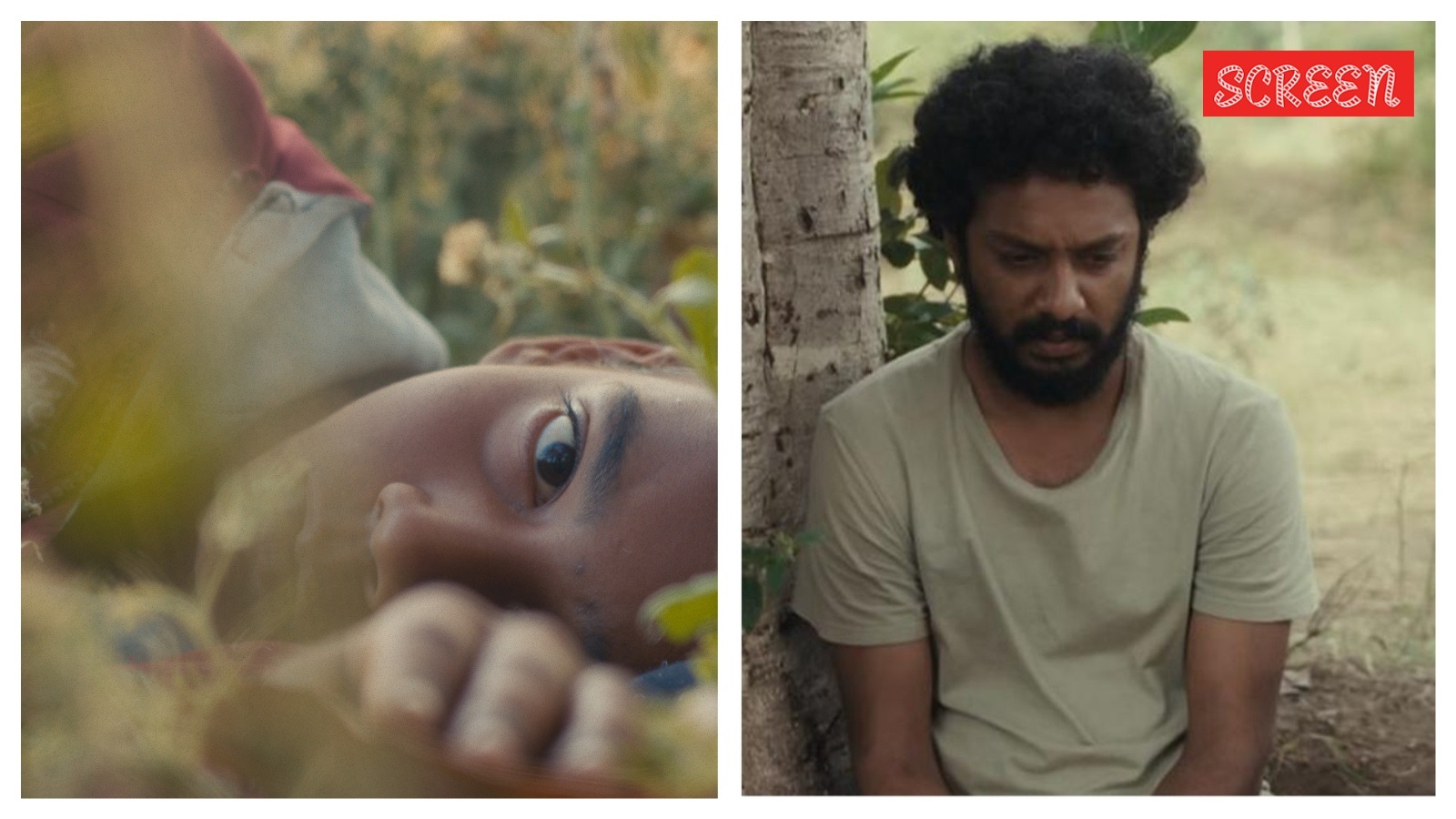
The Shape of Momo was backed by Zoya Akhtar, Reema Kagti, Payal Kapadia, and Rana Daggubati.
OTTs offering all-time low prices to indie gems
By the time that mandatory theatrical release is secured and a permanent home on an OTT platform is sought, an indie film is already in a compromised position. The indie filmmaker, who has already spent Rs 70 lakh on average on just getting the film released in cinemas is desperate to get their film a streaming release in order to repay the debt. Having earned barely one-third of that amount through the theatrical run, they need Rs 50 lakh to at least recover the distribution costs. So, they clearly don’t enjoy any bargaining power during the negotiations with the OTT platforms.
So, the average price of acquisition of an indie film has now slipped down to as low as Rs 50 lakh for a Hindi film and Rs 30 lakh for a regional film. “It’s not like we can negotiate. The offer after months of chasing and stalling is, ‘Take it or leave it,'” says an indie director, whose film was one of the top contenders for India’s Oscars entry. “There’s a wide chasm between how my film was received internationally and the price it got in India. But the sad fact is we’re making these films for our home audience. The international validation is just a way to spread the word. Ultimately, we all crave for validation from our own,” he adds.
Story continues below this ad
All We Imagine As Light did India proud at the Cannes Film Festival.
In order to escape this vicious cycle of exploitation by both the streaming and theatre ecosystems, more than 120 indie filmmakers came together to form the Independent Filmmakers Association of India. Anshuman Jha, a key member of the association who represented it at the Cannes Film Festival last month, tells SCREEN, “I feel that pre-Covid and post-Covid are two completely different worlds for independent cinema in India. The biggest challenge today is theatre discoverability — getting audiences to step into cinemas for smaller films. I feel we need to start exploring differentiated ticket pricing models for independent films versus large-scale studio spectacles.”
He admits that indie films have sunk in viewership when it comes to OTT platforms, thanks to the clutter. “This is honestly the toughest phase I’ve seen. The economics no longer seem aligned with viewership logic. Earlier, if a Rs 2 crore indie film could deliver 10 million views compared to a Rs 30 crore film delivering 30 million views, there was still clear value in backing independent cinema. Today, there’s a disconnect in that math, and it has created a real vacuum for indie filmmakers trying to survive sustainably,” adds Anshuman. That explains why the platforms are coming up with arbitrary and exploitative viewership-based compensation systems like Rs 3 per view.
Anshuman Jha’s Lord Curzon Ki Haveli found a theatrical release, followed by a home on JioHotstar.
What’s the way out?
The Independent Filmmakers Association of India, triggered by the issues faced by Kanu Behl’s Agra at the time of its theatrical release last year, is busy figuring out how to build a sustainable ecosystem for indie cinema in the country. Rana Daggubati, whose production house Spirit Media backed gems like Payal Kapadia’s All We Imagine As Light and Rohan Kanawade’s Sabar Bonda, feels along with filing the gaps in distribution, there’s also an urgent need to inculcate a different movie-watching culture in India.
“There’s an audience out there who wants to watch, but there’s not a consistent stream of this cinema. It’s not like we have films like Sabar Bonda releasing every week or every month. But we need to find that balance and make it a habit. Say, the second or third week of every month, you have cinema like this, even the distributors would realize that there’s another audience we can consistently cater to. It’s the beginning of a journey that’s going to last a long period of time,” says Daggubati.
Story continues below this ad
But Anshuman Jha believes that it’s not just the audience or the distributors’ responsibility, but also that of the filmmaker itself. “One thing we independent filmmakers must embrace is that marketing and distribution are not separate from filmmaking anymore — they are a part of the creative process itself. We spend years asking, ‘What film do I want to make?’, but not enough time asking, ‘Who is this film for and how do I mount it for that audience?’ Producers need to have those answers,” says the filmmaker, whose latest directorial Lord Curzon Ki Haveli managed to get a theatrical release, followed by a home on JioHotstar, because of it “sharp marketing and positioning strategy” as an immersive crime thriller.
Another indie producer points out that it’s often the “indie filmmaker ego” that prevents them from seeing the film through till its release. “It’s not a filmmaker’s job to just make a film, leave it to fate, and then crib about it when it doesn’t get watched. It’s your baby, you’ve to raise it till it’s an adult, and even beyond,” she argues. Just as every child has different needs, every indie film requires a tailored strategy rather than a one-size-fits-all approach. For instance, assembling four established filmmakers as Executive Producers for a film like Karan Tejpal’s Stolen may have secured it a direct-to-Prime Video release, the same marketing model did little for Ritwik Pareek’s Dug Dug. A more customized approach is likely to help, as in the case of assembling women EPs (Zoya Akhtar, Reema Kagti, and Payal Kapadia) for Tribeny Rai’s Nepali-language film The Shape of Momo.
Also Read — ‘Pay me Re 1 more than Akshay Kumar’: Sanjeev Kapoor on why he rejected MasterChef India
Similarly, even if streaming platforms refuse to negotiate the price, the terms can always be discussed. For instance, divide the compensation into a fixed component and a viewership-based component. Or limit the time or geography of the licensing, and find another platform that’s willing to offer a better price for a film that’s already caused a stir on its first home. “The system has always been skewed against indie films. It may be worse than before now,” says the producer, adding, “But if there’s anything we’ve learnt from telling stories is that the underdog also gets their fair place in the sun, even if that takes a while. But if we intend to show a mirror to the world, let’s show it to ourselves first.”
View original source — Indian Express ↗
Related stories
CNA
EntertainmentJun 24, 2026 · 1 min
Preschool director charged with cheating ECDA into disbursing S$14,000 in childcare subsidies
CNA
Indian Express
EntertainmentJun 24, 2026 · 1 min
‘Slowly finding my way back’: Alka Yagnik on hearing loss battle after Padma Bhushan honour
Indian Express

Philippine Daily Inquirer
EntertainmentJun 24, 2026 · 1 min
Thai pageant winners fall victim to alleged ‘taxi scam’ in Manila
Philippine Daily Inquirer

Philippine Daily Inquirer
EntertainmentJun 24, 2026 · 1 min
NBI to file human trafficking complaint vs Mike Defensor Friday
Philippine Daily Inquirer