Antara News
Antara News··2 min read
Indonesia develops palm oil by-product crafts for business growth
Jakarta (ANTARA) - The Ministry of Industry is strengthening the development of palm oil by-product handicraft industries to improve the competitiveness of the national creative industry.
This initiative aims to expand community business opportunities and support a sustainable circular economy.
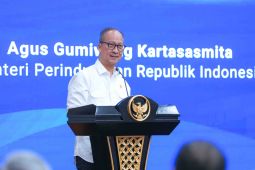
"The handicraft industry is a sector with great potential for further development, as it can create high added value, expand employment opportunities, and strengthen regional economies," Industry Minister Agus Gumiwang Kartasasmita said in a statement received in Jakarta on Thursday.
According to Kartasasmita, the government continues to strengthen the handicraft industry ecosystem by improving human resources capacity, developing product innovation, and expanding market access.
He said that the development of the handicraft industry also aims to optimize the use of domestic raw materials and support the implementation of a circular economy.
This step is expected to strengthen industrial supply chains while creating new and sustainable business opportunities for communities.
The ministry recorded that the export value of the handicraft industry in the first quarter of 2026 reached US$165.27 million or around Rp2.97 trillion.
The number increased by 4.08 percent compared with the same period last year, reflecting growing international market appreciation for Indonesian handicraft products.
Head of the Ministry of Industry's Standardization and Industrial Services Policy Agency (BSKJI), Emmy Suryandari, emphasized that improving the competitiveness of the national handicraft industry requires synergy among the government, business players, and stakeholders.
"Skills development, the use of alternative raw materials, and the implementation of circular economy principles are important factors in creating high-value-added and sustainable handicraft products," Suryandari said.
Through various mentoring and capacity-building programs, Suryandari said, the Ministry of Industry continues to encourage the production of creative products that can meet market needs while providing economic benefits to communities.
As part of efforts to strengthen the national handicraft industry, the Samarinda Center for Standardization and Industrial Services (BSPJI) collaborated with the Indonesia Plantation Fund (BPDP) to hold a workshop on palm oil-based woven crafts and art paper in Tanjung Selor, Bulungan District, North Kalimantan.
The workshop held from June 22 to 26, 2026, received full funding support from BPDP through a palm oil-based green economy program aimed at increasing the economic value of handicraft products by optimizing the use of palm oil waste and by-products in small and medium handicraft industries in N Kalimantan Province.
The workshop was attended by 30 handicraft business players from Bulungan, Malinau, Nunukan, and Tana Tidung districts.
Participants received theoretical and practical training in making woven crafts and art paper by utilizing palm oil waste and by-products as the main raw materials.
Head of BSPJI Samarinda Ransi Pasae said the development of handicrafts based on oil palm waste and by-products is a strategy to realize a circular economy in plantation areas while improving community welfare.
"Utilizing palm oil waste and by-products to produce handicrafts with economic value is a concrete step toward supporting sustainable industry. In addition to reducing waste, this activity is expected to create leading creative products that can strengthen local economies," he said.
Related news: Indonesia sends first eco-friendly crafts shipment to US
Related news: Indonesia launches ASIK program to boost creative exports
Translator: Bayu Prasetyo
Editor: Arie Novarina
Copyright © ANTARA 2026
View original source — Antara News ↗
Related stories

CNA
NewsJun 25, 2026 · 1 min
The new frontier in the US-China AI race: Talent
CNA

ESPN
SportsJun 25, 2026 · 1 min
Caglianone hits 40 homers? Contreras brothers hit ...
ESPN

The Punch
NewsJun 25, 2026 · 1 min
NECO releases 2026 BECE results
The Punch
The Punch
NewsJun 25, 2026 · 1 min
Court to rule on fresh Mohbad probe suit September 29
The Punch