Times of India
What June 25 deadline means for ‘California Billionaires Tax’ that made tech execs leave
The June 25 deadline is here, and it could decide whether California's billionaires face a one-time 5% wealth tax this November—or whether Governor Gavin Newsom manages to bargain it off the ballot first.
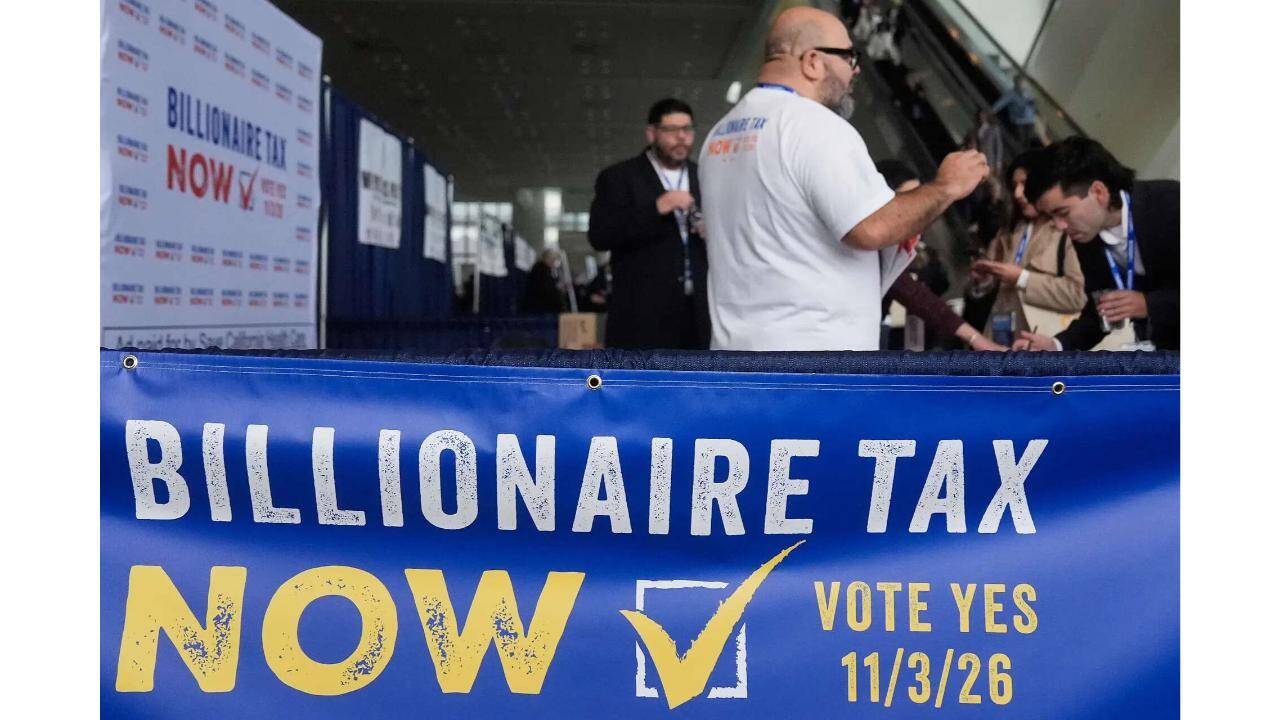
The SEIU-United Healthcare Workers West gathered roughly 1.6 million signatures, nearly double what was needed, to put the California Billionaire Tax Act before voters. Now the state Legislature has until today to pass a compromise bill that satisfies the union, or the measure heads to the November 3 ballot.The threat alone has already redrawn the map for some of the richest people in tech. Larry Page and Sergey Brin started pulling their business entities out of the state.
David Sacks opened shop in Austin. Peter Thiel went all the way to Buenos Aires. None of them waited to see how voters feel in November, which tells you how seriously California's billionaire class is taking a measure that targets roughly 200 of them.
The “California billionaire tax” is a 5% tax on roughly 200 people worth $2 trillion
The proposal is narrow by design. It applies only to Californians worth more than $1 billion—about 200 residents—and asks for a one-time payment equal to 5% of their net worth.
Anyone who lived in the state on January 1, 2026 would owe it, with five years to pay. A resident worth $20 billion, for instance, would owe $1 billion spread across that window. Supporters say it would raise around $100 billion to backfill deep federal healthcare cuts, with 90% going to healthcare and 10% to K-14 education and food assistance.
The union frames it as a way to keep hospitals, ERs and clinics open as roughly $100 billion drains from California healthcare over five years.
Why Larry Page, Sergey Brin and David Sacks headed for the exits
The richest Californians did not wait for the vote. In the days before Christmas, entities tied to Google co-founder Sergey Brin moved or terminated 15 California LLCs, shifting some to Nevada. Co-founder Larry Page went further, with more than 45 associated LLCs filing to leave the state or go inactive, while a trust linked to him bought a $71.9 million mansion in Miami. Their combined net worth tops $518 billion, which is exactly why the moves drew attention.
Sacks, the venture investor and White House AI and crypto adviser, opened a new office for Craft Ventures in Austin. Thiel, meanwhile, decamped to Buenos Aires, drawn partly by President Javier Milei's anti-tax politics and partly by the California measure. Not everyone fled—Nvidia's Jensen Huang said he was "perfectly fine" paying it.
What happens after the June 25 ratification deadline for California billionaire tax
The campaign against the tax has been loud, expensive and largely unsuccessful.
A Signal group chat of tech titans—Brin, Marc Andreessen, Garry Tan, Brian Armstrong and others—brainstormed everything from buying the union's signature-collection firm to recruiting candidates for office. Those candidates flopped. Matt Mahan, the San Jose mayor they backed for governor, took just 3.7% in the June 2 primary. The challenger drafted against Representative Ro Khanna came fourth.
The best remaining hope for opponents is not a billionaire at all but Newsom, who is reportedly lining up unions and healthcare groups to oppose the measure and broker a deal before the deadline.The numbers explain the stakes. Polling puts support near 50%, enough to qualify but vulnerable to well-funded attacks once campaign season begins in earnest. Building a Better California, seeded largely by Brin, has raised more than $100 million and qualified two counter-initiatives. Whether the tax reaches voters at all comes down to what the Legislature does today—and whether Newsom can find a compromise the union will accept.
View original source — Times of India ↗
Related stories

Al Jazeera
PoliticsJun 25, 2026 · 1 min
Hard-headed pragmatism: Israel’s war backfires as Gulf backs US-Iran MoU
Al Jazeera

The Hill
PoliticsJun 25, 2026 · 1 min
What the dates printed on your food actually mean
The Hill

Philippine Daily Inquirer
PoliticsJun 25, 2026 · 1 min
Marcos orders faster rehabilitation of quake-ravaged areas
Philippine Daily Inquirer

TASS
PoliticsJun 25, 2026 · 1 min
Russia hopes US shares biolabs findings with public — diplomat
TASS