CNA
Commentary: Why is getting to a World Cup game so hard?
Commentary
Fans travelling to the stadium in New Jersey are having to contend with high train fares, limited bus seats and a ban on walking or cycling, says Gregory Meyer from the Financial Times.
26 Jun 2026 05:59AM
NEW YORK: The Maracana stadium, scene of the 2014 World Cup final, opens on to a neighbourhood in Rio de Janeiro. Park paths surround the Moscow site where the 2018 championship was played. Reaching the gates of Lusail stadium in 2022 required a walk under the Qatar sun.
Then there is this year’s venue. If you were considering a saunter to New Jersey’s MetLife Stadium, think again: Walking and biking are “illegal”, according to local authorities.
The site sits more than 6km from the nearest Manhattan river ferry at the edge of a densely populated New Jersey county whose finely grained street grid is lined by pavements. But while that grid was laid down in the late 19th century, the sports complex that surrounds the stadium was built in the car-dominated 20th century.
The arena is hemmed in by high-speed freeways. A chain-link fence lines a concrete median to block would-be pedestrians from crossing the road. Signs inside hotels surrounding the stadium warn guests about the dangers of walking there.
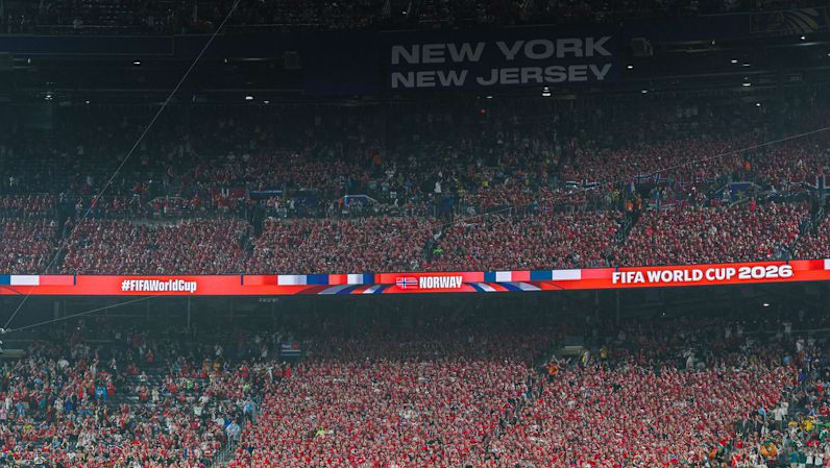
MetLife, renamed New York New Jersey Stadium for the duration of the tournament, is located in the Meadowlands, an area of marshland once known for pig farms, mafia hits and rubbish dumps before state officials pushed to develop it in the 1970s.
“It was built as a suburban-style drive-in, park, drive-out stadium,” says Moses Gates, vice-president at the Regional Plan Association, a non-profit policy group. “From a transportation accessibility standpoint, it’s a bit of a relic.”
FEW TRANSPORT OPTIONS, AND FOR A PRICE
Making the area more accessible is not an outlandish proposition. An analysis published in 1978 by the Hackensack Meadowlands Development Commission identified an “unprecedented opportunity for development of a comprehensive bikeway network”. When MetLife opened in 2010, replacing an older stadium, builder Skanska declared that “bicycle racks have been installed to encourage visitors to cycle to the stadium”.
But the bike network was never joined together, and the stadium’s press office contradicts the contractor.
“Bike racks have never been installed at the stadium, nor have visitors ever been encouraged to cycle,” I was told. “It sits in the middle of three major highways on which bicycles are banned, so bicycling to it is not possible.”
The idea of walking or cycling to the stadium has received outsized attention this year because FIFA football’s governing body, has also banned people from driving there in order to set aside room for security and booths of corporate sponsors dispensing beer, fizzy drinks and crisps. (Full disclosure: I attended the France-Senegal match last week as a guest of PepsiCo, manufacturer of said crisps.)
The remaining transport options include parking at a shopping mall connected by footbridge to the stadium (US$225); taking a shuttle bus (US$20, but with limited seats); or taking at least two trains on New Jersey Transit (US$98). That last figure is marked up from the regular fare of US$12.90, as New Jersey state governor Mikie Sherrill has claimed that FIFA “will not cover the cost of transporting its fans despite making US$13 billion from the World Cup”.
THE EXPERIENCE
On my visit, I took the train from my home in New Jersey almost 13km away. The journey was festive if leisurely, with carriages full of fans in green and blue jerseys.
The trip back after the game began well as our train snaked through the reeds and truck terminals of the Meadowlands. French fans celebrated their team’s 3-1 win, while the Senegal fans took it all in good part.
Spirits soon deflated at our transfer station in Secaucus, however. I watched my westbound train blow past without stopping, another train was a no-show and a third sparked a scramble up the escalator after pulling in at the wrong platform. I was reminded of the tourism adverts my state posted in advance of the World Cup: “New Jersey: Where the World Meets Its Match”. Journey time: 123 minutes.
Legally or not, as an experiment I pumped up my bike tyres a few days later and pedalled to the stadium, staying on the pavement for the final mile alongside a busy highway. A state trooper idling in an SUV ignored my arrival. Journey time: 36 minutes.
Source: Financial Times/zw(sk)
Related stories

ESPN
SportsJun 26, 2026 · 1 min
Xander Zayas-Jaron 'Boots' Ennis: Picks, predictio...
ESPN

ESPN
SportsJun 26, 2026 · 1 min
Luther Burden III among 11 players who will score ...
ESPN

ESPN
SportsJun 26, 2026 · 1 min
Jonathan Taylor among 12 players who will score fe...
ESPN

ESPNcricinfo
SportsJun 26, 2026 · 1 min
Nuwanidu fifty keeps Sri Lanka A in the contest after Jurel's 141*
ESPNcricinfo