OnlineKhabar
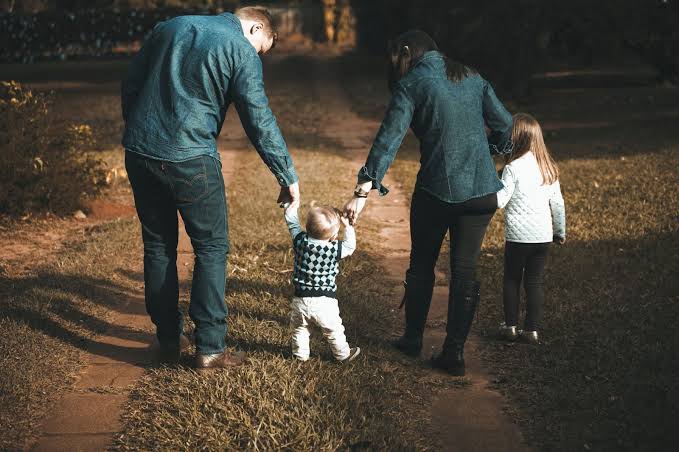
Parenting shapes the adults our children become
Every day, I meet teenagers and young adults struggling with trust issues, fear of abandonment, emotional dependency, commitment issues, people-pleasing tendencies, and difficulties in maintaining healthy relationships. While many factors contribute to these struggles, one common thread often appears in the background: parenting.
This is not about blaming parents. Parenting is one of the most difficult responsibilities a human being can undertake. There is no perfect manual, no guaranteed formula, and no parent gets everything right. However, acknowledging the influence of parenting is essential if we want to raise emotionally healthy individuals.
Psychology has long emphasised the importance of attachment. The relationship a child develops with their primary caregivers becomes the blueprint for how they perceive love, safety, and relationships throughout life. A child raised in a secure environment often develops confidence in themselves and others. On the other hand, inconsistent, neglectful, or emotionally unavailable parenting can contribute to anxious, avoidant, or insecure attachment styles.
What fascinates me is that many parents believe children are too young to understand what is happening around them. The reality is quite the opposite. Children are extraordinary observers.
They may not understand the complexities of marital conflict, but they notice who raises their voice and who remains silent. They notice whether affection exists in the household or whether tension dominates the atmosphere. They watch how their father treats their mother, how their mother responds, and how disagreements are handled.
Long before children learn about relationships through books or social media, they learn about them at home.
This is why healthy expressions of love between parents matter.
In many households, affection is hidden from children under the assumption that it is unnecessary or inappropriate. Yet seeing parents communicate respectfully, hug, express appreciation, apologise, and support one another teaches children valuable lessons. It helps them understand that love is not merely a word but a collection of actions rooted in respect, understanding, and emotional expression.
A child who witnesses healthy relationships learns that expressing needs is not weakness. They learn that disagreements do not have to end in hostility. They learn that care can coexist with boundaries.
Unfortunately, another common challenge appears when parenting becomes transactional.
Many parents unintentionally remind their children of every sacrifice they have made: “I worked so hard for you.” “I gave up everything for you.” “After all I’ve done, this is how you treat me?”
While these statements often emerge from exhaustion and disappointment, they can create emotional debt within a relationship.
Children do not choose to be born. Parenthood is a responsibility voluntarily accepted by adults. When sacrifices become tools for guilt and control, children often feel burdened rather than loved.
The result is something many parents fear but unintentionally contribute to: emotional distance.
As children enter adolescence and adulthood, they begin seeking independence. This developmental stage is natural and necessary. Yet when every decision is monitored, criticised, or guilt-tripped, children learn to protect themselves by withdrawing emotionally.
Parents often interpret this distance as disrespect. In reality, it may simply be self-preservation.
Another challenge unique to today’s generation is the rise of the “iPad kid.”
Screens have become babysitters, entertainers, and companions. While technology itself is not the enemy, unrestricted screen dependency often limits opportunities for real-world learning and connection.
The solution is not merely taking devices away.
The solution is involvement. Invite children into everyday life. Let them help in the kitchen. Teach them how to grow plants. Allow them to make small decisions. Give them age-appropriate responsibilities. Encourage curiosity, creativity, and problem-solving. Children develop confidence not by being constantly entertained but by being actively engaged.
A child who learns accountability at home becomes an adult capable of responsibility. A child who experiences independence gradually develops resilience. A child who feels heard learns how to communicate effectively with others.
Parenting is not simply about raising obedient children. It is about raising emotionally intelligent adults. Adults who can form healthy relationships. Adults who can regulate their emotions. Adults who can communicate their needs without fear. Adults who understand that love is not control, sacrifice is not manipulation, and care is not ownership.
Perhaps the greatest misconception about parenting is the belief that children are being raised solely through instruction. In truth, children are being raised through observation.
They watch everything. They learn from everything. And one day, they become a reflection of everything they repeatedly experienced. Another aspect of parenting that deserves serious attention is the pressure surrounding academics.
Some parents become so focused on grades, ranks, and achievements that they unintentionally forget there is a child behind the report card. A child scoring 70% may come home terrified because they know the conversation will not begin with, “How was your exam?” but rather, “Why didn’t you get 90% like others?”
Somewhere along the way, learning becomes less about curiosity and growth and more about performance and validation.
The problem is not that parents want their children to succeed. Every parent dreams of a bright future for their child. The issue begins when love, appreciation, and acceptance appear conditional upon achievement.
Children start believing that their worth is measured by marks, certificates, and rankings. They learn that mistakes are failures instead of opportunities to learn. They become afraid to disappoint rather than motivated to improve.
This pressure becomes even heavier when comparison enters the household.
Many families have two or more children, each born with different personalities, talents, interests, and learning styles. Yet parents often expect them to perform identically.
One child may excel in academics, while another shines in sports, art, leadership, communication, or creativity. One child may need structure, while another learns best through exploration.
Despite these differences, statements such as “Look at your brother.” “Your sister never behaves this way.” “Why can’t you be more like them?” continues to echo in many homes.
What parents may see as motivation is often experienced as rejection.
Comparison teaches children that who they are is not enough. Instead of building confidence, it creates resentment, sibling rivalry, insecurity, and feelings of inadequacy.
Ironically, children raised under constant comparison often stop competing with others and start questioning their own value.
The reality is simple: two flowers in the same garden can bloom differently and still be beautiful. The purpose of parenting should not be to create identical children. It should be to help each child become the healthiest version of themselves.
Not every child will become a doctor, engineer, lawyer, or topper. Some will become artists, entrepreneurs, social workers, athletes, caregivers, and innovators. Success looks different for different individuals, and good parenting recognises that difference rather than punishing it.
The question is not whether children are learning from us. They are. The real question is: what are we teaching when we think they are not watching?
View original source — OnlineKhabar ↗
Related stories

Lovin Malta
PoliticsJun 26, 2026 · 1 min
Momentum Raises Questions Over KM Malta Airlines’ Missing Accounts
Lovin Malta

Philippine Daily Inquirer
PoliticsJun 26, 2026 · 1 min
Prosecution dares ‘Mary Grace Piattos’ to attend VP Duterte trial
Philippine Daily Inquirer
OnlineKhabar
PoliticsJun 26, 2026 · 1 min
Monsoon influences entire areas of Koshi, Madhesh and Bagmati provinces
OnlineKhabar

TASS
PoliticsJun 26, 2026 · 1 min
IN BRIEF: Civilian injured, damage reported as air defenses down 660 drones over Russia
TASS