Indian Express
Minister got subsidy, under own ministry’s scheme: How projects are cleared – Explained
3 min readNew DelhiUpdated: Jun 27, 2026 12:57 PM IST
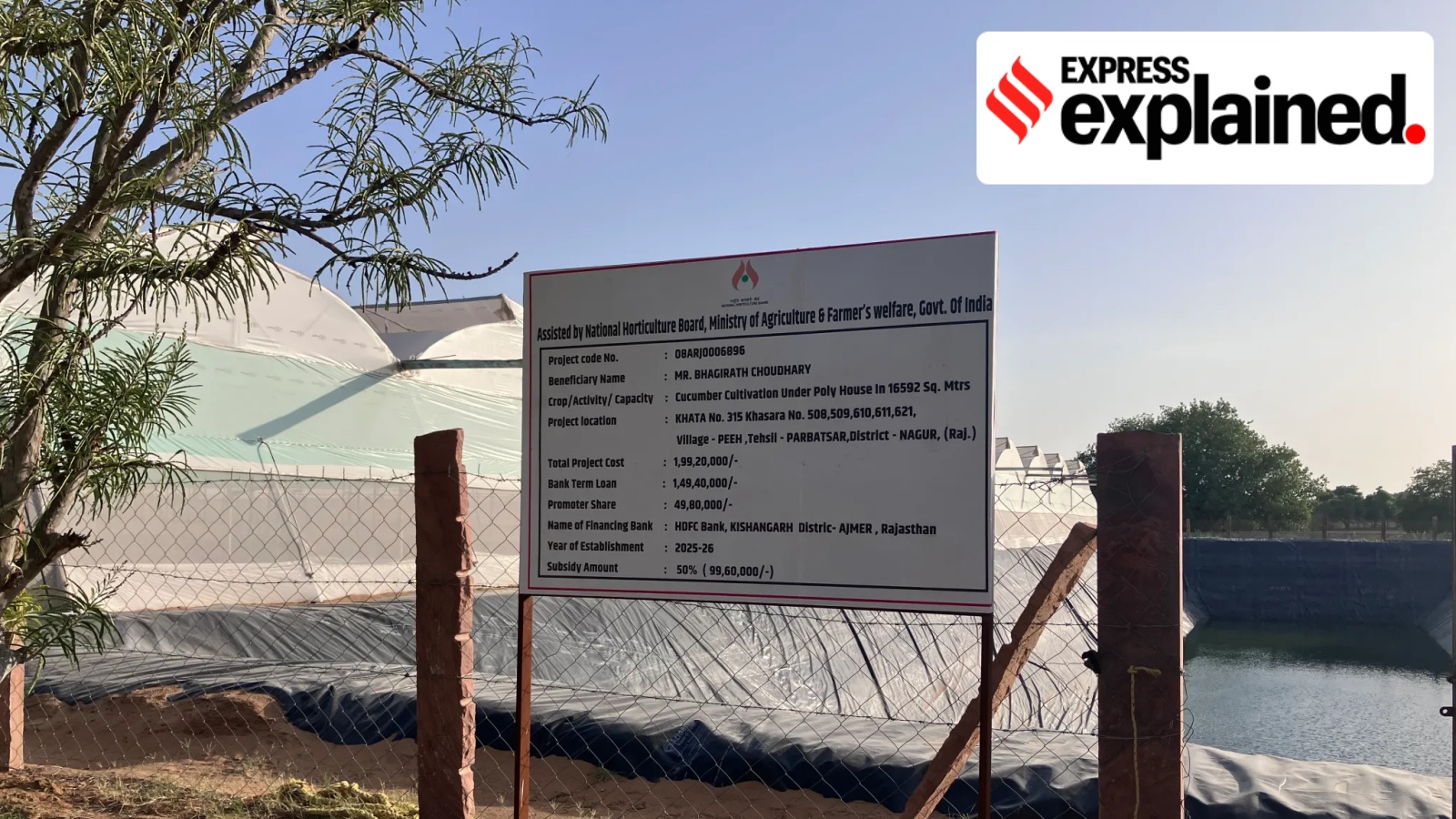
Signboard at Union Minister of State Bhagirath Choudhary’s farm at village Peeh in Parbatsar tehsil of Deedwana Kuchaman district in Rajasthan. (Photo credit: Harikishan Sharma)
Bhagirath Choudhary, the Minister of State in the Union Ministry of Agriculture and Farmers’ Welfare, was among the beneficiaries in Rajasthan of a scheme under his own ministry to promote commercial farming, records investigated by The Indian Express show.
The scheme to promote “commercial farming” — on a large scale for profit — of select vegetables and flowers comes under Mission for Integrated Development of Horticulture (MIDH), which was launched in 2014-15 and is administered by the National Horticulture Board (NHB), an autonomous organisation under the administrative control of Choudhary’s Ministry.
What is the scheme?
‘Development of Commercial Horticulture through Production and Post-Harvest Management of Horticulture Crops’ is a sub-scheme under National Horticulture Board’s Mission for Integrated Development of Horticulture (MIDH).
Its purpose is to promote commercial farming (for profit) of horticultural crops on a large scale. The crops under the scheme are three types of vegetables: capsicum, cucumber and tomato; and eight varieties of flowers: anthurium, orchid, rose, lilium, chrysanthemum, carnation, gypsophila and gerbera.
Upto 50 per cent of the project cost, capped at Rs 1 crore per family, is available as subsidy under the scheme.
Beneficiaries: Individuals, self-help groups, associations or groups of growers, trusts, cooperative societies, companies, farmer producer organisations, cooperative marketing federations, agricultural produce marketing committees, marketing boards, municipal corporations, agro-industries corporations, state agriculture universities and R&D organisations.
What are the key conditions to avail subsidy?
The applicant must own or hold registered lease records for a minimum of 10 years on at least 4,000 sq m (1,000 sq m in northeastern states).
Story continues below this ad
The subsidy is linked to the “term loan” taken for the project. A term loan is a one-time amount (no top-up) with a fixed repayment period.
“The time limit for completion of the project would be a maximum of 18 months from the date of disbursement of first installment of the term loan,” the scheme’s guidelines state.
The subsidy is deposited in the loan account within three months of completion of the project (Note: The minimum loan taken should be more than the estimated subsidy being proposed).
How to obtain the subsidy?
Step 1: Apply online through the NHB portal for “In-Principle Approval cum Letter of Comfort” for the project, with all necessary documents, including PAN and land records, detailed project report, site layout plan, final loan sanction letter along with detailed appraisal note from lending bank.
Story continues below this ad
Step 2: In-principle approval is followed by an on-site check by a Joint Inspection Team comprising NHB and bank representatives, state horticulture officials, and experts.
Step 3: The final approval is granted by an NHB project approval committee that does not include the board’s president or vice-president.
Step 4: Subsidy is deposited in the loan account of the applicant within three months of completion of the project.
Harikishan Sharma, Senior Assistant Editor at The Indian Express' National Bureau, specializes in reporting on governance, policy, and data. He covers the Prime Minister’s Office and pivotal central ministries, such as the Ministry of Agriculture & Farmers’ Welfare, Ministry of Cooperation, Ministry of Consumer Affairs, Food and Public Distribution, Ministry of Rural Development, and Ministry of Jal Shakti. His work primarily revolves around reporting and policy analysis. In addition to this, he authors a weekly column titled "STATE-ISTICALLY SPEAKING," which is prominently featured on The Indian Express website. In this column, he immerses readers in narratives deeply rooted in socio-economic, political, and electoral data, providing insightful perspectives on these critical aspects of governance and society. ... Read More
Tags:
Express Explained
View original source — Indian Express ↗
Related stories

NPR
TechnologyJun 27, 2026 · 1 min
Inside a secretive Ukrainian team launching deep drone strikes at Russia
NPR
Indian Express
TechnologyJun 27, 2026 · 1 min
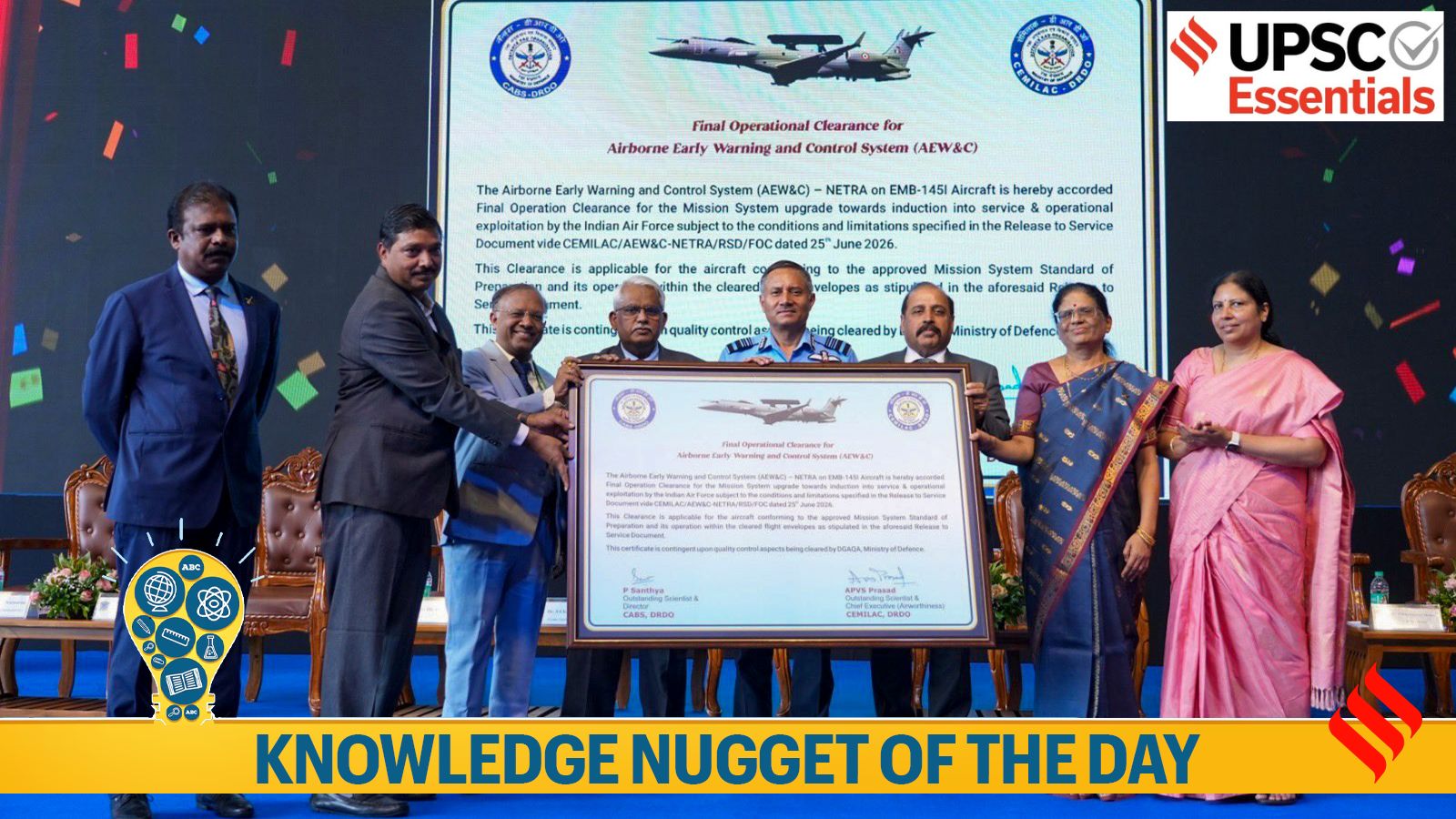
Knowledge Nugget | What is Netra, India’s indigenous ‘eye in the sky’?
Indian Express

The New York Times
TechnologyJun 27, 2026 · 1 min
This Trap Wants Ants to Take a Bite
The New York Times
TechRadar
TechnologyJun 27, 2026 · 1 min
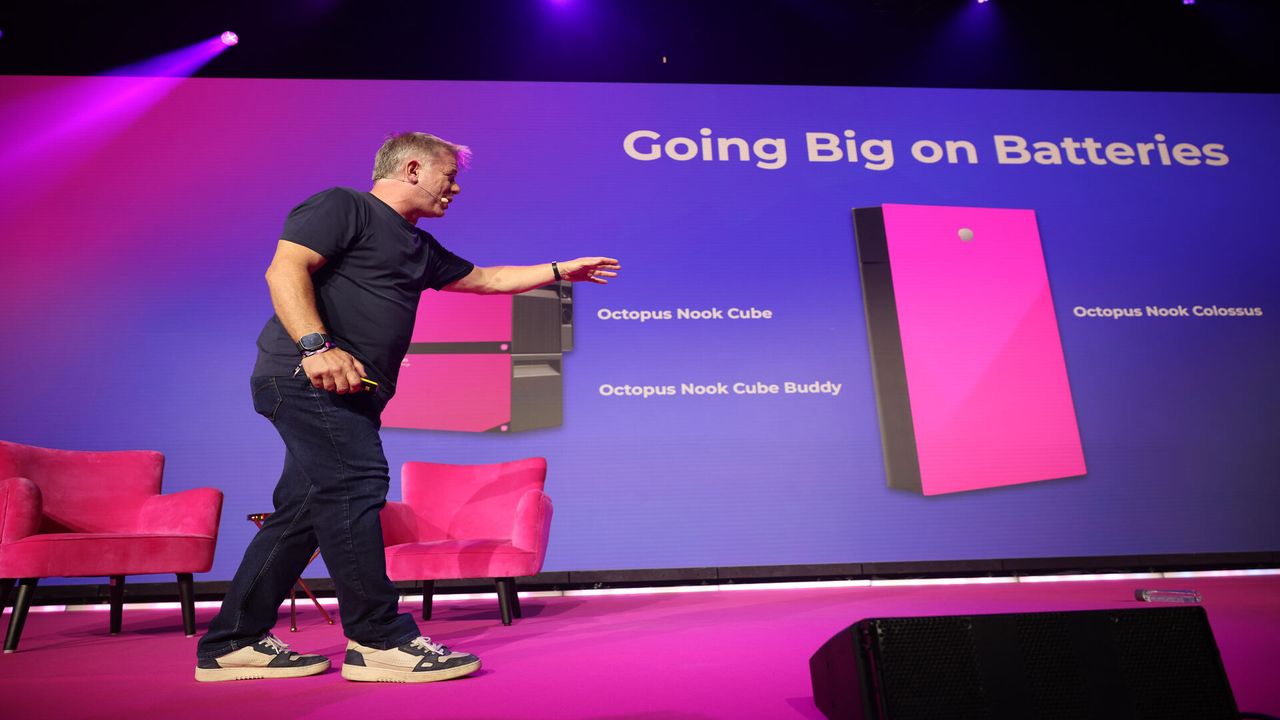
Octopus Energy just announced 30kWh home batteries to compete with Tesla Powerwall — but they won't go on sale till 2027
TechRadar