Indian Express
As Pakistan projects peace abroad, 3 events in one week expose fault lines within
4 min readNew DelhiJun 29, 2026 06:52 AM IST
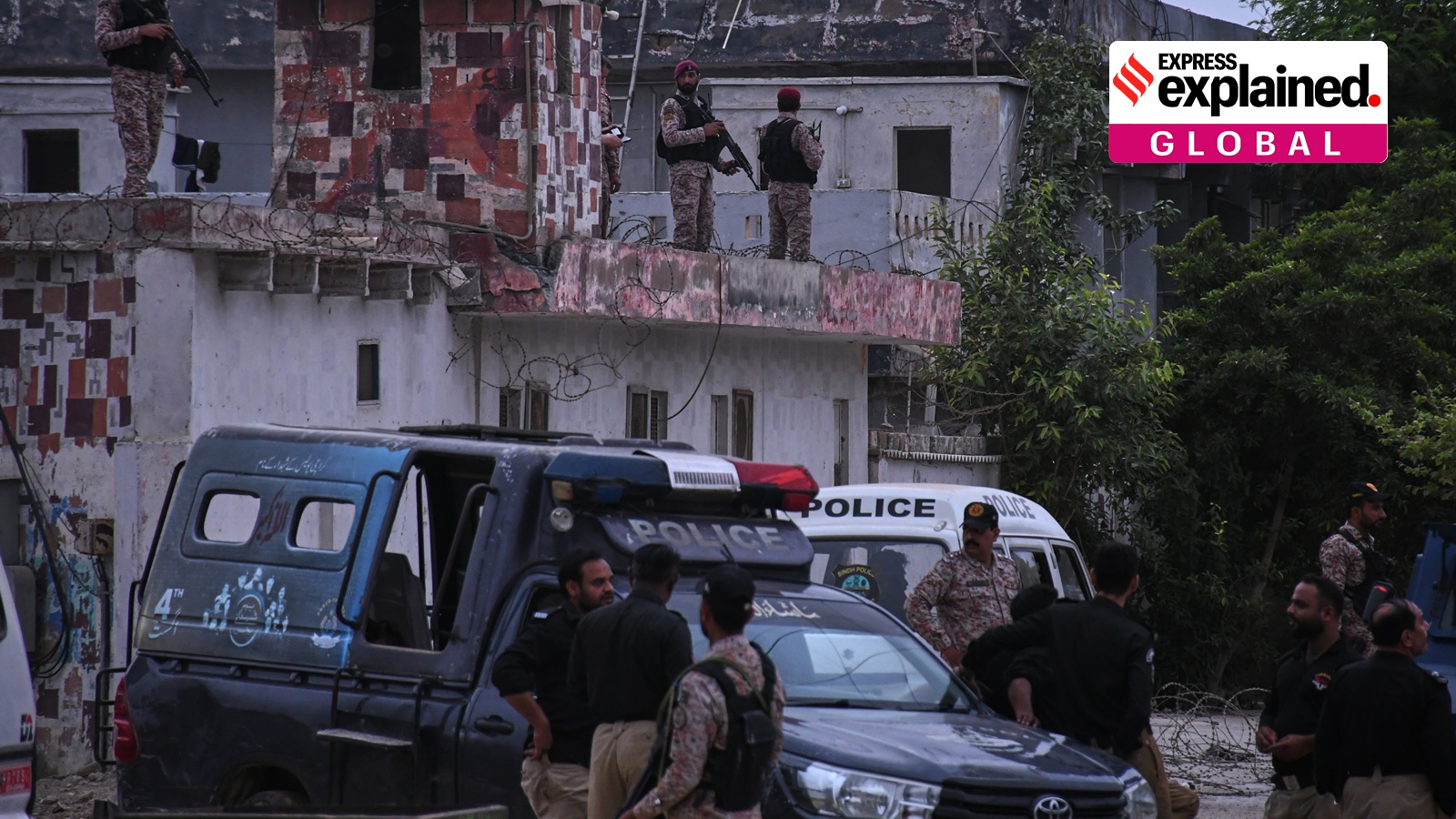
Paramilitary soldiers examine a damaged area after a militant attack at the provincial headquarters of the paramilitary Pakistan Rangers in Karachi, Pakistan, Sunday, June 28. (AP Photo)
Just about a fortnight ago, Pakistan was riding high. The US and Iran had signed an MoU to pause their dangerously spiralling war, and each had made a point of specially appreciating Pakistan’s negotiation efforts.
Yet, in the past week alone, three developments have served as a reminder that some of the country’s deepest domestic challenges remain unresolved: insurgency and terrorism, the weaponisation of blasphemy allegations, and persistent accusations of state repression. Pakistan has tried to blame India for one of the incidents, allegations India has rejected.
Sentencing of Mahrang Baloch
The most consequential was the sentencing of Baloch rights activist Mahrang Baloch to life imprisonment by an anti-terrorism court in Balochistan. Mahrang Baloch, one of the most prominent voices highlighting enforced disappearances and alleged human rights abuses in the province, was convicted in connection with the death of a paramilitary soldier during a protest in Gwadar in 2024.
Pakistani authorities say the verdict followed due process and demonstrates that violence against state officials will be punished. Rights groups, however, have condemned the proceedings, arguing that the trial raises serious concerns about due process and freedom of dissent. Baloch and her supporters had boycotted parts of the proceedings.
The case touches a particularly sensitive fault line in Pakistan. Balochistan has long been the site of a separatist insurgency, militant violence and allegations of enforced disappearances. The state frames activists such as Baloch as figures operating in an environment shaped by militancy; her supporters argue that peaceful political mobilisation is increasingly being criminalised.
Geo News ban
The second controversy centred on Geo News, one of Pakistan’s largest television networks. The channel was reportedly taken off air in parts of the country after outrage over remarks made during a programme that some groups alleged were blasphemous, even though Geo News promptly apologised.
Although the suspension was temporary, the episode underscored the extraordinary power that blasphemy accusations continue to wield in Pakistan. Even allegations can trigger public fury, regulatory action and threats of violence. Successive governments have struggled to address the issue because of the political and security risks involved. The latest episode is a reminder that, despite repeated promises of reform, blasphemy remains one of the most volatile forces in Pakistani public life.
Story continues below this ad
Karachi attack
The third development was a deadly attack on a Rangers facility in Karachi. Militants detonated an explosive and opened fire on the compound, killing three paramilitary personnel. Pakistani authorities said the assault was carried out by Jamaat-ul-Ahrar, a faction associated with the Tehrike Taliban Pakistan (TTP) or the Pakistan Taliban, highlighting the continued threat posed by militant groups even in major urban centres.
According to the United Nations Security Council, “Jamaat-ul-Ahrar (JuA) is a splinter terrorist group of Tehrik-e Taliban Pakistan (TTP) based in Lalpura, Nangarhar Province, Afghanistan. JuA was formed in August 2014 after a merger of TTP’s faction in Mohmand Agency and Ahrar-ul-Hind. Most of JuA commanders and operatives hail from Mohmand Agency of the Federally Administrated Tribal Area, Pakistan. Dispersed after Pakistan’s military operation Zarb-e- Azb [In 2014], Remnants continue to launch terrorist attacks inside Pakistan.”
In the aftermath, some Pakistani officials and commentators sought to link the attack to India. New Delhi swiftly rejected the allegations, calling them baseless and accusing Islamabad of attempting to deflect attention from its own internal security failures. The exchange echoed a familiar pattern in which Pakistan blames India for funding and supporting terrorists acting on its soil.
Taken together, the three episodes offer a snapshot of the pressures Pakistan continues to face beneath the surface of its diplomatic messaging. For a country eager to present itself as a force for regional stability, these are reminders that some of its most difficult battles remain domestic.
© IE Online Media Services Pvt Ltd
View original source — Indian Express ↗
Related stories

The Guardian
TechnologyJun 29, 2026 · 1 min
Shares in chipmakers underpinning AI boom rocket in first half of 2026
The Guardian

South China Morning Post
TechnologyJun 29, 2026 · 1 min
AI agents that provide ‘economic value’ are next frontier, says Meta AI research chief
South China Morning Post

Antara News
TechnologyJun 29, 2026 · 1 min
Indonesia promotes deep learning approach for digital era
Antara News
Dawn
TechnologyJun 29, 2026 · 1 min
US weighs shifting Gulf bases after strikes
Dawn