Indian Express
Indian Express··4 min read
‘Education no bar for maintenance’: Court confirms Rs 20,000 monthly sum to woman
4 min readNew DelhiUpdated: Jun 29, 2026 01:11 PM IST
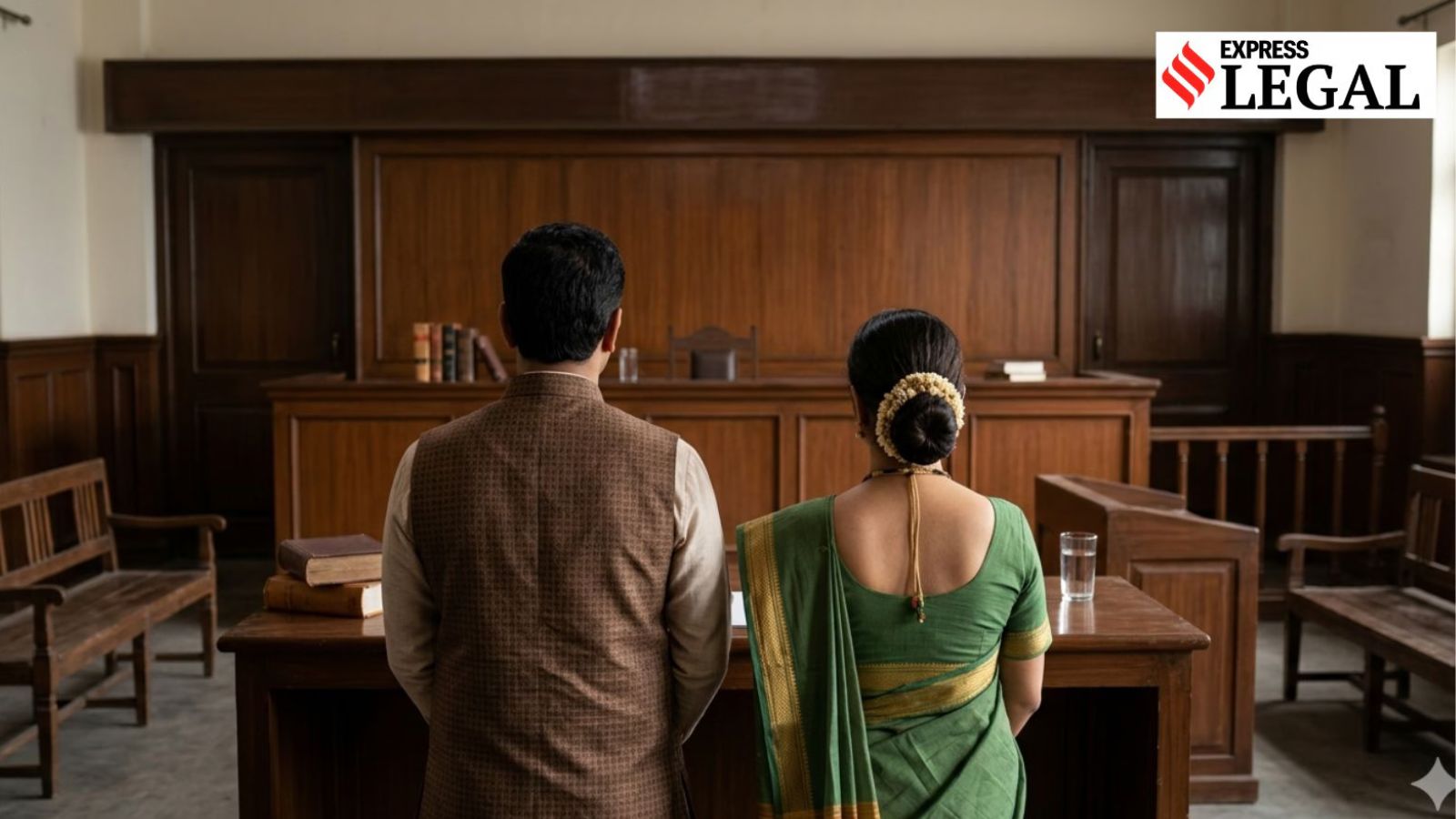
The husband had argued that his wife is an educated, employable, and financially independent lady. (Image generated using AI)
The Allahabad High Court recently upheld a family court’s order directing a man to pay Rs 20,000 as monthly maintenance to his estranged wife, observing that the wife’s educational qualifications or earning capacity alone cannot disentitle her from claiming maintenance.
Justice Garima Prashad dismissed a plea filed by the man challenging the family court’s order granting maintenance to his wife under Section 125 of the Code of Criminal Procedure.
“The mere fact that opposite party no 2 (wife) is educated cannot disentitle her from maintenance. Education and earning capacity are relevant considerations, but they cannot be equated with actual and sufficient income,” the order dated June 17 read.
The court held that a wife cannot be denied maintenance merely because she is qualified when there is no evidence that she is actually earning sufficient income.
Arguments
The husband had argued that his wife is an educated, employable, and financially independent lady, having sufficient means to maintain herself, and therefore, she is not entitled to maintenance.
He urged that his wife earn from tuition and coaching work and is also supported by her mother’s pension and properties.
He further claimed that after losing his job, he was working only as a freelance chartered accountant with irregular income, making the maintenance amount excessive.
Story continues below this ad
Opposing the plea, the counsel for his wife submitted that she was ‘compelled’ to reside separately due to ‘cruelty, harassment and neglect’ by her husband.
It was further submitted that her husband is a qualified Chartered Accountant, has been working at different places, has undertaken consultancy work, and has failed to produce his income tax returns and complete financial documents.
No evidence
The court observed that despite being a Chartered Accountant and despite having special knowledge of his income, the husband failed to produce income tax returns, complete accounts, professional receipts, bank statements or other reliable financial documents which could have disclosed his true income.
“Facts relating to income, professional earnings and financial capacity are matters especially within the knowledge of the person concerned. Where such a person withholds the best evidence, the court is justified in drawing an adverse inference,” the high court held.
Story continues below this ad
It further observed that the mere fact that the wife is educated cannot disentitle her from maintenance.
“A wife cannot be denied maintenance merely because she is qualified, when there is no evidence that she is actually earning sufficient income,” the order read.
It held that the pension of the mother or properties allegedly belonging to the mother cannot be treated as the independent income of the wife.
No relief to husband
On the husband’s financial capacity, the court noted that he admitted being a qualified chartered accountant who had worked at several places and had undertaken consultancy assignments.
It also took note of his admissions regarding owning a car, travelling with his wife by air to destinations and staying in hotels during the marriage.
After examining the matter, the court held that the husband had neglected to maintain his wife and that he failed to prove that his wife had sufficient independent income.
“This court finds that opposite party no.2 is the legally wedded wife of the revisionist; she had sufficient cause to reside separately; the revisionist neglected to maintain her; no sufficient independent income of opposite party no.2 was proved; and the revisionist, being a qualified Chartered Accountant with admitted professional engagement and earning capacity, is under a legal obligation to maintain her,” the order read.
Observing that the quantum of Rs 20,000 per month is just and reasonable, the court dismissed the plea and directed the husband to continue paying the maintenance.
Ashish Shaji is a Senior Sub-Editor at The Indian Express, where he specializes in legal journalism. Combining a formal education in law with years of editorial experience, Ashish provides authoritative coverage and nuanced analysis of court developments and landmark judicial decisions for a national audience.
Expertise
Legal Core Competency: Ashish is a law graduate (BA LLB) from IME Law College, CCSU. This academic foundation allows him to move beyond surface-level reporting, offering readers a deep-dive into the technicalities of statutes, case law, and legal precedents.
Specialized Legal Reporting: His work at The Indian Express focuses on translating the often-dense proceedings of India's top courts into clear, actionable news. His expertise includes:
Judicial Analysis: Breaking down complex orders from the Supreme Court and various High Courts.
Legal Developments: Monitoring legislative changes and their practical implications for the public and the legal fraternity.
Industry Experience: With over 5 years in the field, Ashish has contributed to several niche legal and professional platforms, honing his ability to communicate complex information. His previous experience includes:
Lawsikho: Gaining insights into legal education and practical law.
Verdictum: Focusing on high-quality legal news and court updates.
Enterslice: Working at the intersection of legal, financial, and advisory services. ... Read More
Tags:
allahabad high court
View original source — Indian Express ↗
Related stories

The Punch
SportsJun 29, 2026 · 1 min
Barcelona sound out Harry Kane as Lewandowski nears MLS move
The Punch
The Punch
PoliticsJun 29, 2026 · 1 min
Atiku alleges fresh plot to block ADC from 2027 elections
The Punch
The Punch
SportsJun 29, 2026 · 1 min
Cape Verde captain, Ryan Mendes, under probe for raping translator
The Punch
The Punch
PoliticsJun 29, 2026 · 1 min
Xenophobia: FG resumes fresh evacuation of Nigerians in South Africa
The Punch