The Guardian
We have spent 30 years meeting Pauline Hanson’s anger with our own. What if we tried this instead? | Peter Lewis
Australians have had a gutful. Across this wide brown land the waves of anger generate their own source of energy as we raise the one-fingered salute to the government, corporate elites and, increasingly, each other.
I get it. I’ve had it up to here with climate backsliding. I’m appalled at the genocide in Gaza. I’m outraged that one man’s stupidity is dragging the world into recession. I’ve nothing but contempt for the tech-Bros selling their AI snake-oil, the consultancy firms gaming the system and grifters like Kyle and Karl sucking up all the oxygen.
Most of all I’m angry that One Nation is taking so much space in the political discourse and that my polls are among those charting this rise so that every time I write a column, I have to focus in on Pauline and her populist humbug rather than the pressing issues facing our nation.
But here we are. According to the latest Guardian Essential Report, One Nation is maintaining its meteoric rise in the polls, albeit with a slight flattening. Whether this is the beginning of a deeper decline or merely a plateau to build from remains to be seen.
What we do know is that there are now so many people looking at One Nation that we can get a serious read on what’s driving those who have crossed the Hanson line (29%) and those who have become One Nation curious (23%). Based on our right track/wrong track metric, anger seems to be in the eye of their storm.
Ed Coper, a political strategist has coined a word for this phenomenon. His excellent new book Angertainment lays out the science behind how anger is determining our reality, with algorithms deliberately set to cater to our lizard brain’s adrenal thirst for outrage driving voters to the far right.
On this reading, One Nation is not just tapping into a general sense of grievance with the status quo, it’s harnessing a new centre of gravity in public discourse: anger pills that build their own momentum and shape a darker reality.
For 30 years Hanson has been fixated on race, but it is only now that her messages are travelling beyond the fringes in serving the commercial interests of the big tech platforms. This is something else that I am very angry about.
In that time, we have met Hanson’s sense of outrage with our own. We have condemned her, cancelled her, and poured our righteous scorn upon her. But in asserting Hanson’s illegitimacy for so long we have helped her secure the opposite: she is the angry outsider we have co-created.
But here’s a thought. What if instead of feeding Hanson’s anger machine, we treated her with something closer to equanimity? Rather than letting ourselves get drawn into every outrage, doubling down on everything that reinforces our moral clarity, we retained our composure and engaged with her ideas on their merit?
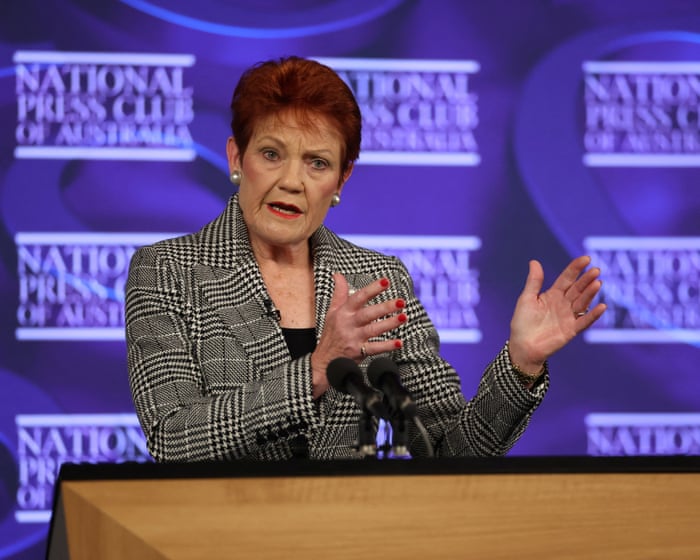
Because it is here where Hanson is most exposed, not her language, not her demeanour, not her clickbait, but her potpourri of half-baked ideas. A second set of responses to proposals she put forward at her National Press Club address earlier this month makes this point.
TLDR: none of her populist policies are actually that popular.
Hanson’s address to the NPC was revealing. Different actors used anger to promote their own ends: Hanson to reinforce her outsider status and hostility towards the mainstream media. The press gallery used it to generate headlines by taking Hanson on and GetUp! used it to energise its activist base.
But almost by accident something else emerged from Hanson’s engagement with this longstanding political institution: genuine scrutiny of her policies revealed how unprepared she is to govern.
The best question posed was how her call to pull out of the UN would invalidate Australia’s shipping and aviation treaties. She had no idea. Other claims like the call to scrap all paid parental leave were swiftly walked back. As for the so-called “mono-culture” panic, by the end of the week Hanson was embracing our rainbow World Cup squad as the cultural model she was championing.
From a distance equanimity can risk looking like acquiescence, that we are pandering to prejudice when we should be calling it out. It is actually the opposite: by choosing to engage we hold her to account rather than rejecting her views outright and allowing them to stand condemned but never actually contested.
A final table on the reason people are concerned about a One Nation vote draws this theory out. A majority of One Nation-curious voters fear the party is not equipped to govern – even those saying they would vote for Hanson are concerned about this.
So, here’s my radical plan to confront Hanson. Let’s embrace her right to participate in the political discourse and engage in good faith; don’t ridicule her, don’t sneer at her lack of sophistication, don’t search for the reasons not to take her seriously. Because with these numbers she is deadly serious.
Rather than taking her outrage bait let’s hold her to the same standards as other participants in our representative democracy. Rather than shutting her down, let’s keep asking her politely to please explain.
By engaging Hanson and her supporters we can channel the political momentum building behind her into something more productive: a genuine, good-faith discussion about Australia’s place in an increasingly unstable world.
In doing so let’s recognise that we all share a desire for a better Australia; that includes Hanson, her candidates and her growing supporter base. Let’s start there, on the point that unites us before we get to the many issues of deep friction.
It’s so much harder to hate on people you have taken the time to listen to, even when you disagree with them vehemently.
As Coper points out, the one thing that travels further than anger is genuine empathy, meeting people where they are and inviting them to be part of something bigger. One nation, indeed.
View original source — The Guardian ↗
Related stories

The Punch
PoliticsJun 30, 2026 · 1 min
“I am not coming to loot public funds”, cleric-turned-politician tells constituents
The Punch
The Punch
PoliticsJun 30, 2026 · 1 min
2026: Osun deserves better governance — APGA candidate
The Punch

TASS
PoliticsJun 30, 2026 · 1 min
Lithuanian president appoints Social Democratic Party leader Sinkevicius as prime minister
TASS

The Hindu
PoliticsJun 30, 2026 · 1 min
Trump nominates acting Labor Secretary Keith Sonderling to be agency's permanent Chief
The Hindu