Indian Express
‘How can you deny the communal angle?’: Rabbi Shergill backs AR Rahman’s controversial claim
5 min readHyderabadUpdated: Jul 2, 2026 09:37 AM IST
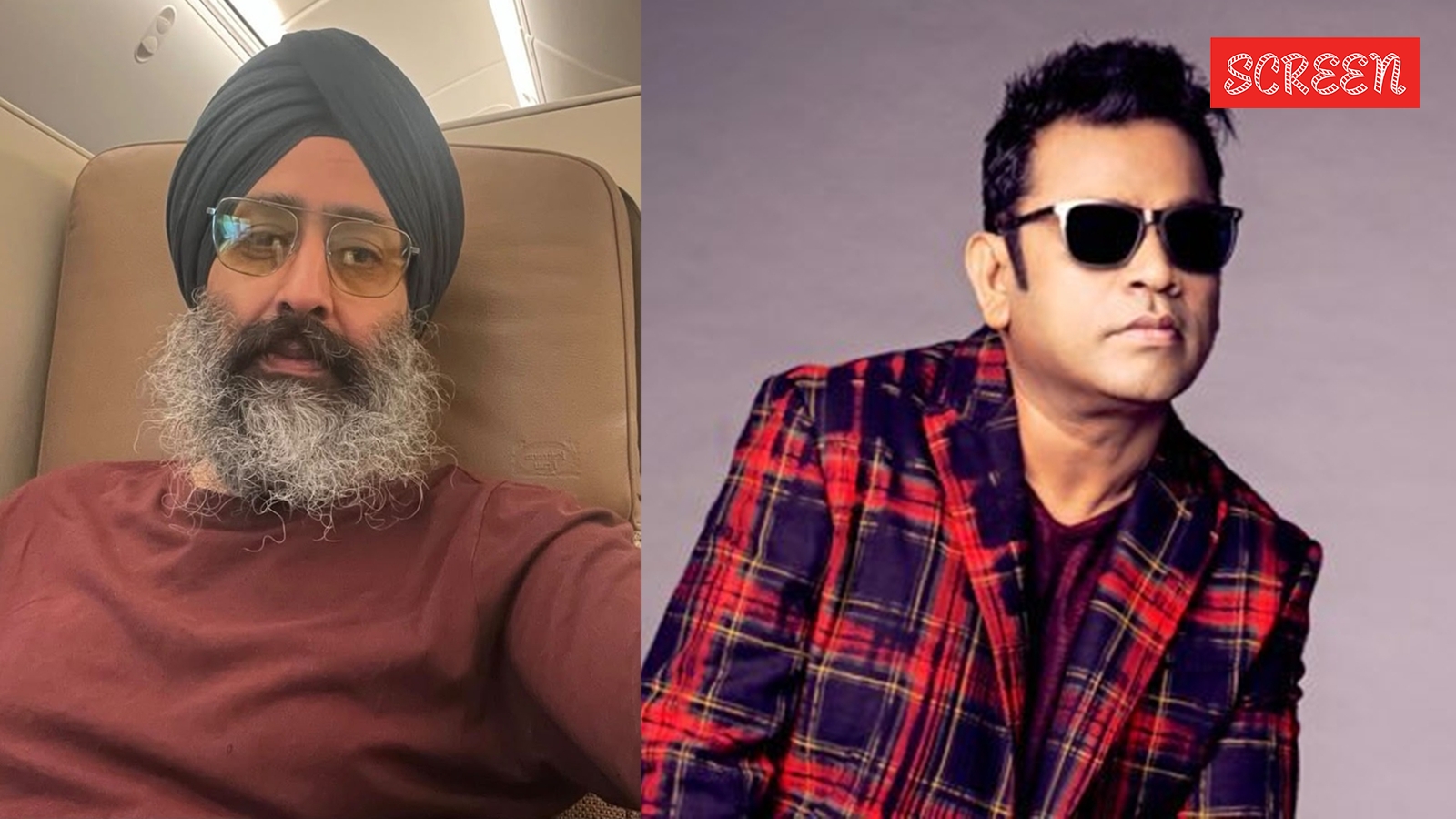
Singer-songwriter Rabbi Shergill, best known for Bulla Ki Jaana and Tere Bin, has shared his views on AR Rahman's communal bias remarks (Photo: @rabbishergill, @arrahman/ Instagram, X)
When AR Rahman recently suggested that communal bias had seeped into India’s entertainment industry, it sparked a wave of reactions from across the music and film world. The latest voice to weigh in belongs to Rabbi Shergill, the artist behind hits like ‘Bulla Ki Jaana’ and ‘Tere Bin’, who says that whatever the precise context of Rahman’s remark, the concern it raises is impossible to brush aside in the current climate.
‘How can you deny the communal angle?’
Rabbi Shergill made the remarks during an appearance on The Life Savers Show, where he was asked to respond to Rahman’s comments. “I don’t know in what context he said it, but how can you deny that right now? How can you deny the communal angle?” he said.
Rabbi then brought up teh term ‘propaganda cinema’ and claimed that a lot of film financing had gone in that direction. “I can’t specifically say it’s there in the music industry because I don’t live in Mumbai or interact with those people daily. But a lot of film financing has gone into what many would call propaganda cinema,” he said.
Also Read: Why Ishan Shukla felt the need to trace Amarendra Baahubali’s afterlife in The Eternal War
As examples of what he meant, Rabbi Shergill pointed to films like The Kashmir Files and The Kerala Story that have attracted significant box office attention in recent years but have also been at the centre of debates about bias and political intent. “These are political films and they don’t necessarily present an unbiased view of things. So if Rahman is saying this, I think you have to take him at his word. It probably does exist, and that’s one of the biggest problems of our times. It’s not just India; it’s happening across the world,” he said.
That last point, about the problem extending beyond India’s borders, led Rabbi Shergill into a broader analysis of the global political mood. Asked whether what he was describing was part of a larger worldwide shift, he said the question answered itself. “Absolutely. If you look back to the 1960s, left-leaning politics was influential across much of the world. Today, if you look around, you see right-wing governments and ideologies becoming more dominant in many countries. Maybe it’s cyclical and things will change again, but right now nobody is immune to these global currents,” he said.
“Just look around our neighbourhood. Pakistan has changed dramatically over the decades. China is deeply ideological. Sri Lanka too has become increasingly driven by ideology. It’s difficult not to conclude that politics everywhere is moving in this direction,” he said.
Story continues below this ad
‘Admire AR Rahman for his creative genius’
In an earlier chat shared on Divas Gupta’s YouTube channel, Rabbi said that after Rahman started working in Hindi films, lyrics became secondary. “I admire Rahman for his creative genius. He is a genius. There is no doubt about it. But Rahman phase is not pro poetry or pro lyrics phase in Hindi film industry. It means that the words in his songs are just ornaments and not the whole thing,” he said and added, “I feel after Rahman came, the lyrics in the Hindi film industry became secondary and if lyrics become secondary, that means expression becomes secondary, it means that somewhere your humanity and existence become secondary, this is my issue with Rahman.”
He also mentioned, “It is not his fault because it is not his language. He doesn’t understand it. The stuff that he does in Tamil music is really representative of him. It is another ball game, at least that’s what I hear.”
What did AR Rahman say?
In an earlier chat with BBC, when AR Rahman was asked whether he had faced any ‘prejudice within the Hindi film landscape’, he said, “Maybe I never get to know of this, maybe it was concealed but I didn’t feel any of this. Maybe in the past eight years because a power shift has happened and people who are not creative have the power now. It might be a communal thing also… but it is not in my face. It comes to me as Chinese whispers that they booked you but the music company went ahead and hired their 5 composers. I say good, I have more time to chill with my family. I am not in search for work. I don’t want to go in search for work. I want work to come to me; my sincerity to earn work. Whatever I deserve, I get.”
© IE Online Media Services Pvt Ltd
View original source — Indian Express ↗
Related stories

Variety
EntertainmentJul 2, 2026 · 1 min
Nagraj Manjule’s ‘Khashaba’ Unveils Teaser, Worldwide Release Date From Jio Studios (EXCLUSIVE)
Variety

Indian Express
EntertainmentJul 2, 2026 · 1 min
Spot the difference: You have 30 seconds to find 5 changes in this kitchen
Indian Express
Indian Express
EntertainmentJul 2, 2026 · 1 min
Diljit Dosanjh says he chose not to undergo surgery after finding stone in gall bladder
Indian Express

Philippine Daily Inquirer
EntertainmentJul 2, 2026 · 1 min
Church in Kalinga backs Balatoc tribe's stance vs mining expansion
Philippine Daily Inquirer