Indian Express
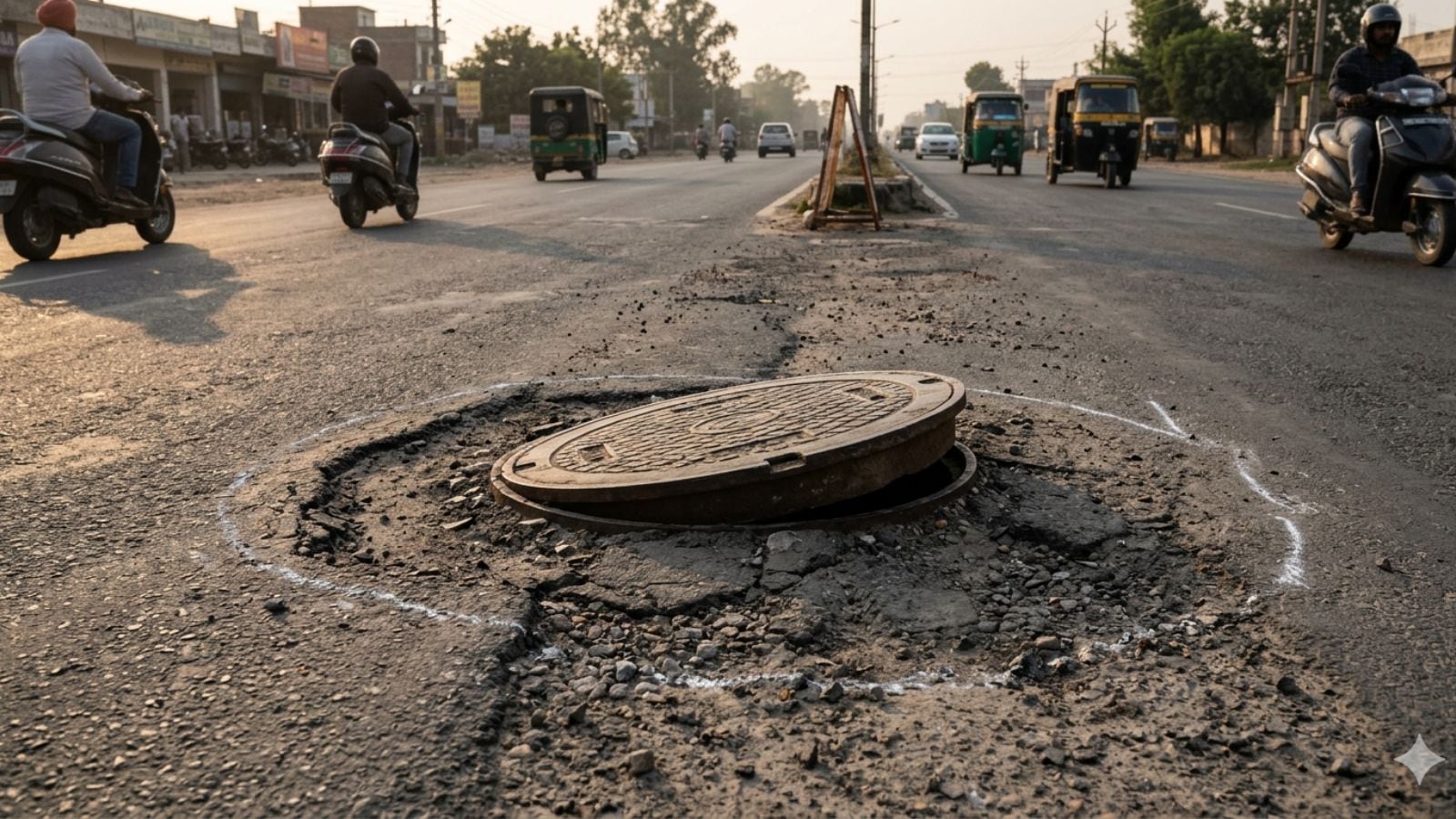
Mumbai’s hidden death traps: Inside the city’s open manhole menace
The death of Aslam Shaikh after falling into an open manhole in Sakinaka on Thursday has yet again brought to fore concerns over Mumbai’s missing manhole covers.
Spurred by over 3,360 manhole cover thefts in the past seven years to opening of covers for maintenance works by agencies – open and unprotected manholes are making the city’s streets increasingly perilous for citizens.
Mumbai is home to a network of 3,400-km long storm water drains and 2,081-km long sewer network. Access to the sewer and storm water drainage is enabled through open portals at regular intervals which are shielded using covers, made in cement or cast iron.
According to records procured from the Brihanmumbai Municipal Corporation (BMC), the city has 73,437 sewer line manhole covers and more than 25,000 covers to shield storm water drains.
Why do manholes turn deadly during monsoons?
Typically, manhole covers are opened by the storm water drainage or sewerage department for carrying out cleaning of the network through an array of machinery. On Thursday, for instance, the manhole in Saki Naka in which 55-year-old Shaikh fell, had been opened to carry out installation of protective grills on a sewer manhole.
Besides this, some storm water drain covers are opened under the presence of civic teams to enable flooded water to run away into the drains.
In situations of unabated heavy downpour, sewer manholes too are opened in chronic flooding points like Hindmata junction and King’s circle to allow accumulated water to discharge.
Story continues below this ad
“During monsoon season, accumulated water from roads is often discharged through grilled roadside entrances. While maintenance work is stalled during monsoon period, the covers are moved under vigilance of teams to allow excess water to run off,” an official explained.
In what makes the manholes perilous, maintenance work is often undertaken without protective barricades as it was observed during the incident in Saki Naka on Thursday.
However, even in cases where manholes are shielded with protective barriers and grills to alarm citizens, the open portal becomes dangerous for commuters and pedestrians plying on the road.
The menace came to light last week during Mayor Ritu Tawde’s inspection at the flooded Gandhi market when a BMC supervisor from F/North ward fell into an open chamber, opened to allow waste and water to drain, despite barricades on all sides.
Story continues below this ad
Civic officials added that during flooding, many citizens ignorantly tend to open manhole covers in a bid to drain the rainwater. “When the covers are opened the locals, these open manholes become deadly for pedestrians as it is invisible specially during water logging.” another official explained.
3,360 manhole covers stolen in 7 years
For the civic body, another challenge lies in tackling the theft of open manhole covers.
Data procured by The Indian Express shows that in the past seven years, Mumbai has recorded 3,360 cases of manhole thefts across the city.
Even as the number of theft has dwindled in the recent years, the stolen covers leave behind open manholes only making Mumbai’s streets unsafer.
Story continues below this ad
According to officials, thefts are typically carried out by thieves and miscreants looking to make a quick buck. Made in cast iron, covers shielding Mumbai’s manholes fetch a sum of anywhere between Rs. 1,000 – 1,200 in the scrap market.
“Even in cases where the thefts are unsuccessful, the botched attempt ends up leaving the covers broken which pose a threat to citizens plying upon them,” an official said.
A scrapped smart manhole cover project to protective grills: BMC’s attempts at tackling the menace
To combat the challenge of missing covers, the BMC in 2023 charted plans to install smart manhole covers across 14 locations in a pilot project. These sensor-based manholes were poised to set off a siren, to raise alarms when the covers were moved.
However, three years on, the project is yet to take off owing to lack of successful prototypes. “Our pilot project did not yield any positive results as we were facing several technical snags. Thereafter, the project was scrapped,” said an official privy to developments.
Story continues below this ad
After the demise of Dr Deepak Amrapurkar in 2018 who slipped into a manhole while wading through the rain water and whose body was recovered nearly two days later in Worli, the Bombay High Court directed the civic body to cover the manholes with permanent covers. Following this, the BMC started installing protective grills across Mumbai’s SWD and sewer drains over the past few years.
Yet, amid lack of adequate safety measures, it was this very drive of grill installation on Thursday that proved fatal for 55-year-old Shaikh.
View original source — Indian Express ↗
Related stories

Philippine Daily Inquirer
TechnologyJul 2, 2026 · 1 min
AI startup picks PH as regional hub
Philippine Daily Inquirer

Dawn
TechnologyJul 2, 2026 · 1 min
Submarine cable fault may cause intermittent internet disruption: PTA
Dawn

Wired
TechnologyJul 2, 2026 · 1 min
Can Cursor Remain a Platform for OpenAI and Anthropic’s Models Inside SpaceX?
Wired

The Guardian
TechnologyJul 2, 2026 · 1 min
Sitting for more than 30 minutes at a time linked to higher risk of cancer death
The Guardian