Indian Express
Tamil Nadu moves SC against Madras High Court on cow slaughter: What do state laws say?
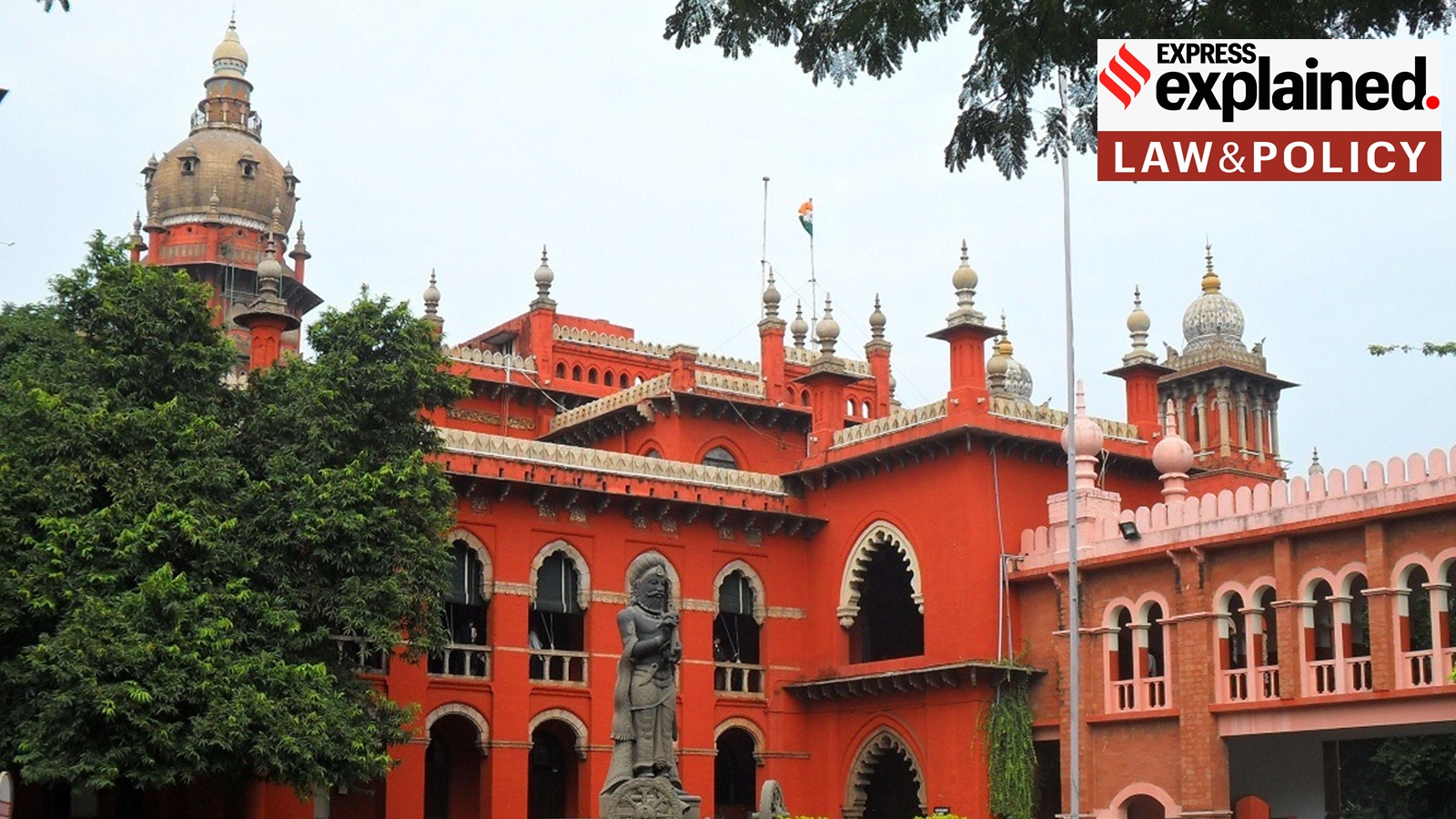
The Tamil Nadu government has moved the Supreme Court against a Madras High Court order directing authorities to ensure that “no cow or calf is slaughtered on the eve of Bakrid or on any other day.”
The state has filed a Special Leave Petition, arguing that the High Court imposed an “absolute and blanket ban” even though the petition before it was confined to preventing cow slaughter in public places.
In its appeal, Tamil Nadu also contends that the order was contrary to the state’s statutory framework, which “only provides for regulation and not prohibition” and amounts to the court “re-writing and re-framing” the law. It argues that the Madras HC travelled beyond the issue before it and granted a relief that was “neither pleaded nor prayed for.”
What the Madras HC said on cow slaughter
Surya, who represented himself as the state general secretary of the youth wing of an unregistered outfit, Indu Makkal Katchi Tamilagam, filed a representation on May 18 asking authorities to prevent cow slaughter “in public places” during Bakrid.
Later, a writ petition was filed seeking a direction to consider that representation and act against slaughter in public places. A single judge sent the matter to a division bench of Justices G R Swaminathan and V Lakshminarayanan, treating it as a public interest litigation.
The police, appearing as one of the respondents, told the court in a counter-affidavit that a temporary shed had already been set up for qurbani “in a non-public area, without causing any obstruction to traffic or offending the religious sentiments of persons belonging to other communities.”
The bench read this as a concession that the arrangements were, in fact, compliant. The order then went further than the compliance question.
Story continues below this ad
Article 48 of the Constitution says that “The State shall endeavour to organise agriculture and animal husbandry on modern and scientific lines and shall, in particular, take steps for preserving and improving the breeds, and prohibiting the slaughter, of cows and calves and other milch and draught cattle.” This is part of the Directive Principles of State Policy (DPSP), which are meant as guiding principles for the state but are not legally enforceable.
The bench held that sacrificing a cow is not obligatory for Bakrid and read out Section 4 of the Tamil Nadu Animal Preservation Act of 1958, which permits slaughter only with a certificate showing that the animal is “over ten years of age and is unfit for work and breeding”. It also invoked the Tamil Nadu Government order GO Ms No. 1715 on banning cow slaughter in slaughterhouses to increase milk production.
The bench held that “the authorities cannot permit slaughter of any animal in a place other than designated slaughter houses” and then noted that “no cow or calf is slaughtered on the eve of Bakrid or on any other day”, thereby creating a blanket direction.
What does the state’s appeal argue?
The petition argues that the HC’s order arose from a petition seeking only a direction to prevent the slaughter of cows in public places. The court, nevertheless, imposed “an absolute and blanket ban on the slaughter of cows and calves”, a relief which was not asked for by the petitioner.
Story continues below this ad
It states that the HC order “runs contrary to the statutory framework governing the practice of animal slaughter in the State of Tamil Nadu” and further “amounts to re-writing and re-framing the governing legislation, which ostensibly and unambiguously only provides for regulation and not prohibition.”
The state has argued that the issue before the HC was limited to whether cows and calves could be slaughtered in places not designated as slaughterhouses during Bakrid. The court, however, “travelled far beyond the controversy that arose for adjudication” and imposed a ban extending beyond the dispute before it.
The appeal also points to what it describes as an inconsistency within the judgment itself. It says one part of the order recognises that slaughter may take place in designated slaughterhouses, while another part prohibits cow slaughter altogether. The HC, the petition says, “contradictorily proceeded to impose an absolute and blanket prohibition and ban on cow slaughter.”
The plea also notes that the GO Ms No. 1715 was never relied upon by the original petitioner and its validity or applicability was never in dispute before the HC. Yet the court relied on it “on its own motion.” The appeal argues that “the State was never put on notice that the Court proposed to rely upon this G.O.” This reliance by the HC “without confronting the affected party with it, betrays a grave violation of the principles of natural justice.”
Story continues below this ad
The petition further argues that “an executive instruction/government order cannot be in contravention or inconsistent with the statutory provisions” and that executive orders cannot override legislation enacted by the legislature.
The appeal also takes issue with the HC’s discussion of whether cow sacrifice is required during Bakrid. According to the state, this question was never raised by either side in the case. It says that it was a “wholly extraneous” issue in relation to the current case.
The petition further points to economic and administrative consequences. “An absolute prohibition will saddle a significant economic burden upon small and marginal farmers, licensed traders and the allied sectors functioning within the statutory framework.” It describes the order as “calamitous in its consequences” and says it could disrupt existing licensing, certification and regulatory systems established under state law.
Without a stay, the state argues, the existing statutory framework could become ineffective and create an “administrative chaos.”
What does the law say
Story continues below this ad
The state’s central argument is that Tamil Nadu’s laws regulate slaughter rather than outright prohibit it. Section 4 of the Tamil Nadu Animal Preservation Act, 1958, states that certain animals cannot be slaughtered unless a competent authority issues a certificate permitting it. The law lays down conditions for granting such a certificate.
Section 6 prohibits slaughter at unauthorised places. The government’s petition argues that these provisions establish a licensing and certification system rather than a complete ban. It says that “from the scheme of the Act, it is crystal clear that what is contemplated is only the regulation of animal slaughter, and that there is no ban on animal slaughter.”
Under municipal law, such as The Tamil Nadu Urban Local Bodies Act, 1998, the petition relied on Section 113, which requires local authorities to provide slaughterhouses and prohibits the establishment or “use of a private slaughter house” or “any place for processing any skin of animals or carcasses without a licence granted by the Commissioner.” The Tamil Nadu Urban Local Bodies Rules, 2023 further prescribe standards for maintaining slaughterhouses and procedures for licensing them.
The state argues that these provisions would make little sense if slaughter itself were prohibited.
Story continues below this ad
Tamil Nadu also relies on central legislation. Under the Prevention of Cruelty to Animals Act, 1960, the Animal Welfare Board is empowered to advise governments and local authorities on the design, maintenance and operation of slaughterhouses. Even under the Act, the petitioner says, “does not prohibit animal slaughter.”
Similarly, the Prevention of Cruelty to Animals (Slaughter House) Rules, 2001 provide that animals within municipal areas may be slaughtered only in recognised or licensed slaughterhouses. “The very fact that the Central Government has framed an exhaustive set of Rules for the purpose of regulating the practice of animal slaughter and the recognition of slaughterhouses shows that animal slaughter is not a prohibited activity,” the petition states.
View original source — Indian Express ↗
Related stories

Euronews
TechnologyJul 3, 2026 · 1 min
What is GLM 5.2? The new Chinese AI model that’s rivalling Anthropic
Euronews

Wired
TechnologyJul 3, 2026 · 1 min
Best Bone Conduction Headphones (2026): Shokz, Suunto, Mojawa
Wired

Portugal Resident
TechnologyJul 3, 2026 · 1 min
Carvoeiro CCTV system awaits government green light
Portugal Resident

TechRadar
TechnologyJul 3, 2026 · 1 min
New report claims companies which embrace AI also add more workers (eventually)
TechRadar