Times of Israel
Push for gas-fired power plants throws rural Israel into turmoil
Rural communities are being thrown into turmoil by a state program to build 13 new gas-fired power plants, which allows developers to negotiate directly with kibbutzim and farming cooperatives for land — even for projects that might never come to fruition.
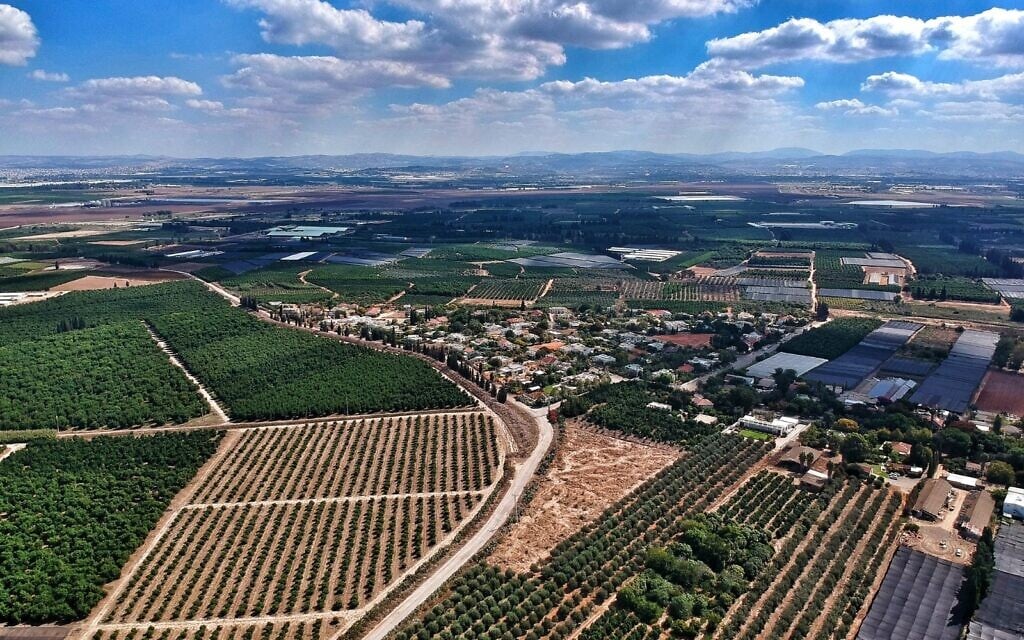
Talks are underway to build four power plants within or along the borders of the Hefer Valley Regional Council in central Israel, and the local government has advised communities approached by entrepreneurs to vote such proposals down.
The dispute has already gotten personal. At Kibbutz Givat Haim Meuhad, located near Hadera in the Hefer Valley, the kibbutz chairman’s 10-year-old son was reportedly ostracized and harassed by schoolmates from other communities because his father supported the establishment of a power plant on kibbutz land. The kibbutz subsequently voted against the move by a slight majority.
The neighboring Kibbutz Givat Haim Ihud (formed in 1952 during a political rift that split the original Kibbutz Givat Haim into two distinct communities) subsequently rejected the same motion by a margin of nearly two to one. The proposed deal for both kibbutzim came from London-based Israeli billionaire Idan Ofer.
Israel is significantly behind its own targets for developing renewable energy sources, especially solar power.
Get The Times of Israel's Daily Edition
by email and never miss our top stories
By signing up, you agree to the terms
The move to build more gas-fired power plants is part of the implementation of Government Decision 2282, approved in October 2024, to ensure energy continuity through 2040. It mandates building infrastructure for renewables mostly in the country’s periphery, and for gas-fired energy primarily in the center, where most of the population lives.
Based on a report by an interministerial team led by the Energy Ministry that was never completed or published, the state decided that up to 13 gas-fired power plants would need to be built in six districts, created specifically for the project, and covering much of Israel, but that plans should be drawn up for 19 plants to encourage competition.
However, instead of defining exactly where those plants should be built, the government decision invited private entrepreneurs to negotiate with landowners and submit those deals to the fast-track planning committee for national infrastructure (known by its Hebrew acronym Vatal). Vatal will decide on the final candidates.
The Hefer Valley Regional Council oversees a narrow tract of land stretching from the Mediterranean Sea east toward the West Bank, near the Palestinian city of Tulkarem.
For the purposes of the power-station plan, the government has placed the area within “District 2,” stretching from Hadera in the north to Rosh HaAyin in central Israel.
Within the Hefer Valley area alone, there are already three efforts to build power stations. The cooperative society that governs Moshav Beit Yanai has approved a proposal from Shamir Energy and forwarded it to Vatal. And the Mekorot water company wants a small power plant in the Emek Hefer industrial zone to support the expansion of a desalination facility.
In the neighboring Menashe Regional Council, two real estate tycoons have already finalized a plan for a 700-megawatt station and submitted it to Vatal.
“As a direct result of the lack of a national planning policy and the unbridled privatization of power station construction, an inconceivable and dangerous situation has been created in Emek Hefer: plans for the construction of four power stations, some of which are being promoted by private developers, within a radius of only 13 square kilometers (five square miles) near the seam line,” said council head Galit Shaul in a statement to The Times of Israel.
Shaul warned that concentrating several gas-fired power plants in the Hefer Valley would create what she called an “unprecedented environmental and health disaster,” as well as a serious security risk because the stations could become targets for missiles, drones, or anti-tank fire from Iran, Lebanon, or terror groups in the West Bank.
The council’s campaign against any gas-fired plants has angered many area residents, according to Erez Magal, who chairs Kibbutz Givat Haim Meuhad and voted in favor of a gas-fired power plant, seeing it as an economic opportunity.
“There’s huge anger about the rhetoric from the council and the protest HQ, mainly organized by people outside of the kibbutz,” he said.
Magal said that while the debate inside his kibbutz remained civil, the wider campaign had become personal, including the harassment of his 10-year-old son by children from neighboring communities at the regional school.
Ron Eifer, the Energy Ministry’s head of sustainable energy, who also manages the electricity sector and represents the Energy Ministry at the Electricity Authority, said that currently, 10 gas-fired power plants supply around 70% of the country’s electricity needs. At least two more will be chosen by 2030 from four already approved in an earlier planning round.
Eifer explained that at least half of the 13 more efficient plants in the current planning round would replace older, more polluting ones.
The aim, he went on, was to ensure that electricity supply kept pace with population growth, improvements in the standard of living, and developments such as the electrification of transportation and the creation of energy-guzzling data centers.
“The Energy Ministry is doing everything it can to advance renewable energy,” he said. “We hope we’ll need fewer than 13 new gas plants by moving ahead faster with renewables and storage, but we can’t bet on it.”
Countering accusations that Vatal was considering projects on an individual basis, without a holistic vision, a spokesman said, “Vatal examines every infrastructure plan in relation to the space, the approved and promoted plans, environmental aspects that are examined in an environmental impact assessment, and additional parameters, so that the outlook is broad.”
View original source — Times of Israel ↗
Related stories

The Punch
WorldJul 4, 2026 · 1 min
Jihadists launch fresh coordinated attacks across Mali
The Punch
The Punch
WorldJul 4, 2026 · 1 min
Pope defends migrants at Mediterranean island frontier
The Punch

Philippine Daily Inquirer
WorldJul 4, 2026 · 1 min
Man stabs brother-in-law over unpaid debt in Bukidnon
Philippine Daily Inquirer

The Moscow Times
WorldJul 4, 2026 · 1 min
Ukraine Denies Russian Capture of Key Eastern City Kostiantynivka
The Moscow Times