Indian Express
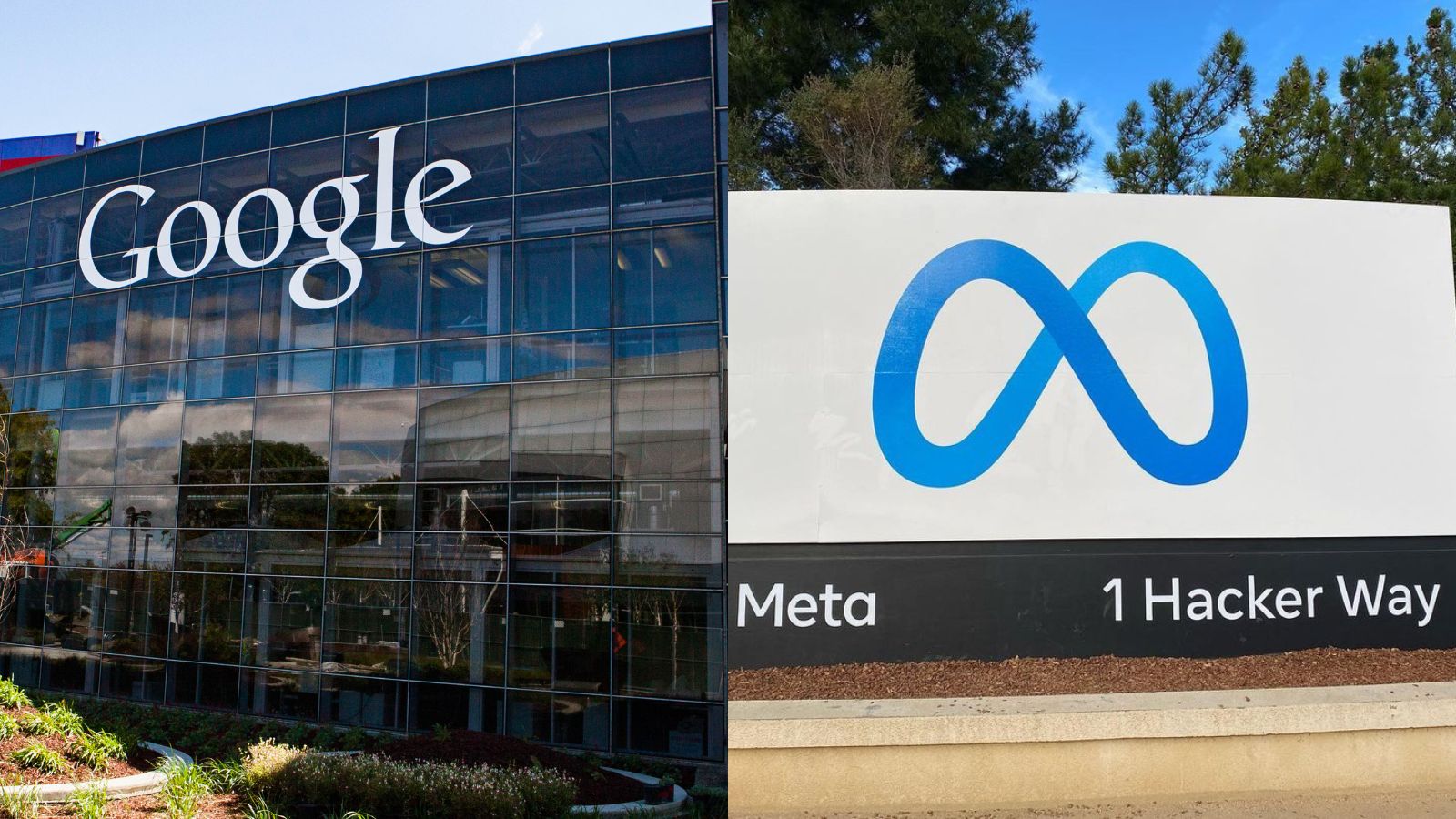
‘Impossible’ to monitor billions of posts: Google, Meta say they’re not ‘super censors’
They termed such an exercise to be “impracticable, if not impossible”, owing to the “huge volume” of content uploaded on its platforms. Meta also said they “would not be able to comply” with any court order to this effect, unless specific URLs of the said unlawful content are flagged.
Both firms have cited provisions of the IT Act as well as the Supreme Court’s position to emphasise that intermediaries “cannot be called upon to actively monitor content or material” uploaded on its platforms or adjudicate on its purported illegality.
The petition
In April, practising advocate Vaibhav Singh filed a petition objecting to the alleged unauthorised and illegal uploading and circulation of audio and video recordings of AAP national convenor and former Delhi Chief Minister Arvind Kejriwal, arguing his plea seeking the recusal of Justice Swarna Kanta Sharma of Delhi HC in the alleged liquor policy scam.
Singh also sought contempt proceedings against Kejriwal, , among others, in his petition.
On April 23, a division bench, while hearing the plea, had raised a larger query on the point of law: whether posts found to violate an existing law — such as in this case, where Delhi HC’s video conferencing rules prohibit unauthorised recording, publishing, or uploading of court proceedings — can be taken down automatically.
What Meta said
Meta, in a written filing on July 4 before the court, opposed Singh’s plea.
Story continues below this ad
“Such determination cannot be made in the abstract and would necessarily require a case-by-case assessment of the source, context, nature and legality of the content, including whether it constitutes an unauthorised recording or rebroadcast of court proceedings and whether it falls within the scope of this Hon’ble Court’s directions. Compelling an intermediary to undertake such an exercise would require it to independently adjudicate the lawfulness of content and effectively become a ‘super censor’ — precisely what the Hon’ble Supreme Court cautioned against…,” it said.
Citing the Information Technology (Intermediary Guidelines and Digital Media Ethics Code) Rules, 2021, which stipulates that intermediaries shall make “reasonable efforts” to ensure users do not violate the law on its platform, Meta said this “cannot be construed as requiring intermediaries to censor all user-generated content prior to publication based on an independent assessment of legality”.
Explaining the impossibility of Meta Platforms, as an intermediary, to undertake proactive monitoring of purported unlawful content, it said, “There are over 2.9 billion users of the Facebook Service worldwide who can post and share content, and register ‘likes’ and ‘comments’ to content available on the Facebook Service. Further, there are more than a billion users of the Instagram Service worldwide who can post and share content, and register ‘likes’ and ‘comments’. In addition, every day, billions of pieces of content are posted and shared on Facebook Service and the Instagram Service. Accordingly, it is impracticable (if not impossible) for Meta to locate or identify the Contested Content allegedly posted on the Facebook Service or Instagram Service without URLs.”
What Google said
Similarly, Google LLC too, in a written filing on July 4, said, “YouTube is a dynamic platform where millions of videos are uploaded every hour throughout the world. Therefore, it is impossible for (Google LLC) to proactively monitor videos uploaded on YouTube… and have any specific knowledge of the contents of each such video or be able to sift through millions of videos to determine which of them contain the subject proceedings, to what extent or in what manner as to be violative of the applicable law.”
Story continues below this ad
Role of intermediary
Meta further highlighted that as per the law and jurisprudence so far, an intermediary is only required to act on alleged unlawful content only if ordered by the court or following a request from any authorised government agency, and not private parties.
Google LLC too has said, “There can be no proxy battle fought with the intermediaries,” adding, that as an intermediary, it has no role to play in what content is uploaded on its platforms., and liabilities lie with the originator or uploader of the content.
Ravish Kumar’s reply
Meanwhile, journalist Ravish Kumar, in a reply filed to the petition on July 2, which is seeking contempt action against him for alleged circulation of the court proceeding recording, has submitted that while he has voluntarily taken down the post as an act of “pure institutional deference”, he cannot be accused of wilfully disobeying the Delhi HC VC Rules.
“The regulatory framework governing recording, sharing and reporting of court proceedings in India is far from uniform and is in a state of rapid evolution… In such a state of rapid regulatory flux, even an Advocate appearing in court could not, without difficulty, navigate the patchwork of overlapping rules across the Supreme Court, 25 High Courts and innumerable subordinate courts. To impute contumacious knowledge of the precise contours of the Delhi High Court’s 2025 Rules to a journalist commenting on material already in widespread public circulation, and to brand his commentary as ‘wilful disobedience’, is wholly unsustainable in law,” Kumar submitted in his affidavit.
View original source — Indian Express ↗
Related stories

The Punch
TechnologyJul 6, 2026 · 1 min
Sam Larry alive, responding to treatment after fatal auto crash, says associate
The Punch
The Punch
TechnologyJul 6, 2026 · 1 min
Microsoft cuts 4,800 jobs in Xbox overhaul
The Punch

The Verge
TechnologyJul 6, 2026 · 1 min
I’m just doing my job, but turns out, it feels lousy holding other people’s privacy in your hands
The Verge

AllAfrica
TechnologyJul 6, 2026 · 1 min
Somalia: A Report Warns Somalia Security Deteriorating Amid Political Divisions
AllAfrica