Indian Express
Rain respite in Pune from today: Light to moderate rain forecast
4 min readPuneJul 8, 2026 01:40 AM IST
The recent rains have resulted in Pune district receiving 438.5 mm rain between July 1 and 7, which is 74 per cent above the normal reading of 252.6 mm. Central Maharashtra, too, has made up for its rain deficit. Since the beginning of the month, it had received 209 mm, just about crossing the normal mark of 205.8 mm.
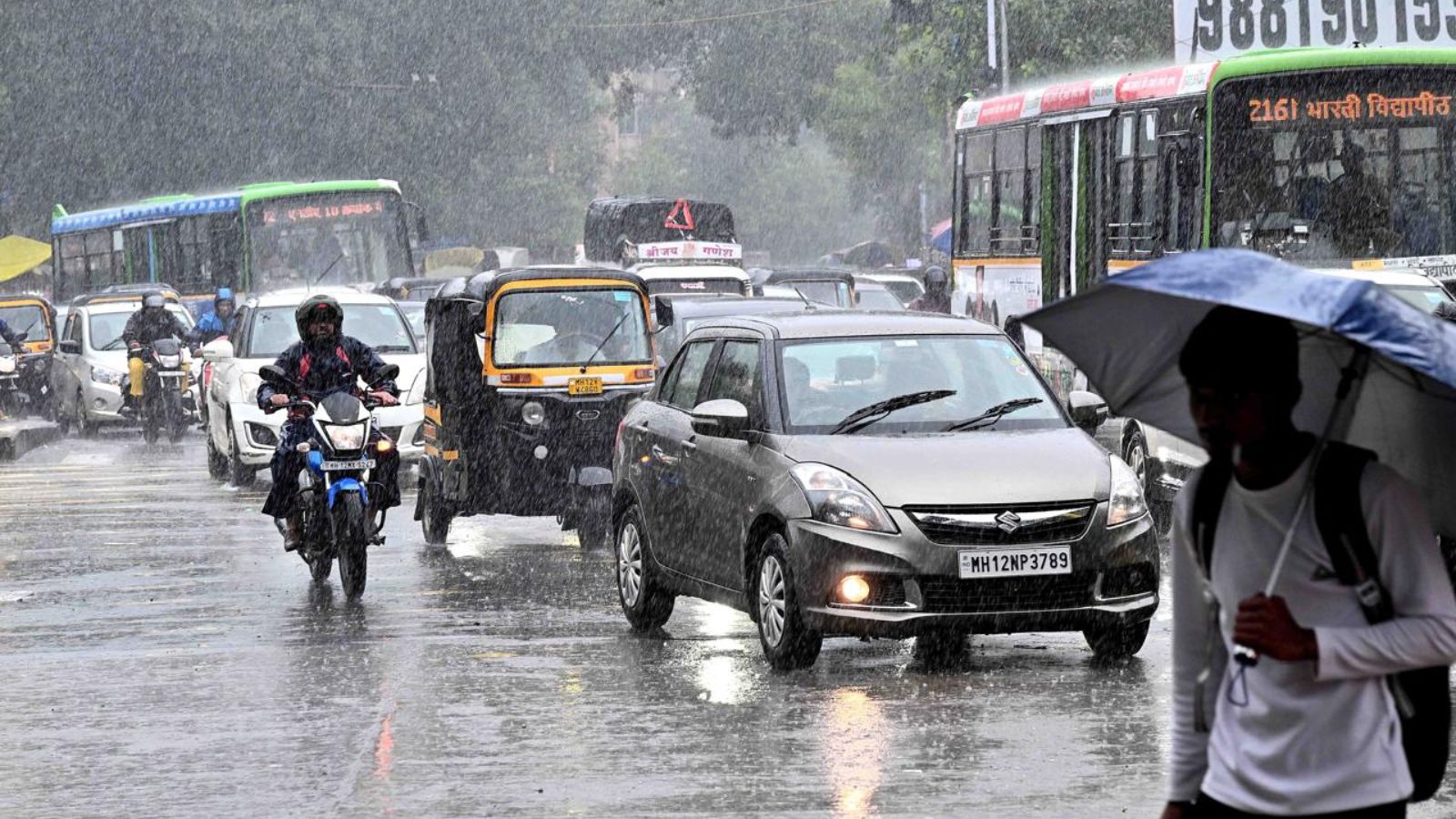
Heavy rainfall continued to drench Pune city and its neighbourhoods on Tuesday, though it was less than on Monday. Shivajinagar recorded 97.5 mm of rain in 24 hours on Tuesday morning. In comparison, the weather station had received 108.4 mm in 24 hours the day before, which was the fourth-highest reading for the month of July since records started being maintained in 1896.
Shivajinagar has received more rain in a week than it has for the entire month of July in years. Between July 1 and July 7 this year, Shivajinagar has recorded 301.1 mm of rain. Last year, the weather station had recorded 130.3 mm by the end of July; in 2023, it had received 154.5mm; in 2021, 193 mm; in 2020 193 mm, and in 2018, 175.6 mm, among others.
In the past decade, it was only in 2024 (394 mm), 2022 (386 mm) and 2019 (369 mm) that Pune’s present rainfall readings of a week were exceeded by total rainfall received by it in the entire July.
A break in the monsoon
The India Meteorological Department (IMD) has forecast “light to moderate rain” in Pune and its suburbs from Wednesday, a break from the heavy rain that had been pelting Pune for the last couple of days.
“The well-marked low-pressure area over East Madhya Pradesh and adjoining areas is expected to move west-northwestwards across Madhya Pradesh and adjoining Uttar Pradesh, weakening during the next 24 hours. Consequently, the Arabian Sea branch of the monsoon will weaken, shifting the rainfall activity northwards. Rainfall over Maharashtra is expected to decrease during the next 48 hours, with a substantial reduction in intensity from July 9,” says S D Sanap, scientist at IMD.
The impact can already be seen in places beyond Shivajinagar as well. Over a 24 hour period, from Sunday to Monday morning, Pashan had been inundated with 113 mm rain. On Tuesday around 8.30 am, Pashan recorded 115.6 mm in 24 hours. But, between 8.30 am and 5.30 pm on Tuesday, Pashan had received 23 mm of rain, lower than the 69 mm that had fallen during the same period on Monday.
By Tuesday evening, NDA had received 14 mm of rain and Lohegaon 9 mm, readings that were substantially lower than the day before. Chinchwad, which was lashed with 132 mm by Monday evening – and 474 mm over 48 hours – recorded 13.5 mm on Tuesday.
Story continues below this ad
Among the exceptions were Hadapsar, which received 8.5 mm of rain on Tuesday and Lavale, where 3 mm of rain was recorded. On Monday, Hadapsar had received 1 mm more rain and Lavale did not receive any rain.
Towards normalcy in the ghats
The ghat regions have borne the brunt of extreme rainfall as the monsoon intensified over Maharashtra. But, from Wednesday, the rain will begin to reduce and likely to become normal, i.e. receiving only moderate rain, by July 10. IMD has downgraded the warning from red alert to orange (heavy to very heavy rainfall in isolated places) for Wednesday and yellow (heavy rainfall in isolated places) for Thursday.
On Tuesday, Lonavala had recorded 620 mm of rain, Davdi 688 mm, Tamhini 539 mm, Bhira 512 mm and Walvan 392 mm. Mahabaleshwar, which was pelted with heavy rain, had received 403 mm in 24 hours by Tuesday morning. By Tuesday evening, it had added another 75 mm.
The recent rains have resulted in Pune district receiving 438.5 mm rain between July 1 and 7, which is 74 per cent above the normal reading of 252.6 mm. Central Maharashtra, too, has made up for its rain deficit. Since the beginning of the month, it had received 209 mm, just about crossing the normal mark of 205.8 mm.
© The Indian Express Pvt Ltd
Dipanita Nath is a Senior Assistant Editor at The Indian Express, based in Pune. She is a versatile journalist with a deep interest in the intersection of culture, sustainability, and urban life.
Professional Background
Experience: Before joining The Indian Express, she worked with other major news organizations including Hindustan Times, The Times of India, and Mint.
Core Specializations: She is widely recognized for her coverage of the climate crisis, theatre and performing arts, heritage conservation, and the startup ecosystem (often through her "Pune Inc" series).
Storytelling Focus: Her work often unearths "hidden stories" of Pune—focusing on historical institutes, local traditions, and the personal journeys of social innovators.
Recent Notable Articles (December 2025)
Her recent reporting highlights Pune’s cultural pulse and the environmental challenges facing the city during the winter season:
1. Climate & Environment
"Pune shivers on coldest morning of the season; minimum temperature plunges to 6.9°C" (Dec 20, 2025): Reporting on the record-breaking cold wave in Pune and the IMD's forecast for the week.
"How a heritage tree-mapping event at Ganeshkhind Garden highlights rising interest in Pune’s green legacy" (Dec 20, 2025): Covering a citizen-led initiative where Gen Z and millennials gathered to document and protect ancient trees at a Biodiversity Heritage Site.
"Right to breathe: Landmark NGT order directs PMC to frame norms for pollution from construction sites" (Dec 8, 2025): Reporting on a significant legal victory for residents fighting dust and air pollution in urban neighborhoods like Baner.
2. "Hidden Stories" & Heritage
"Inside Pune library that’s nourished minds of entrepreneurs for 17 years" (Dec 21, 2025): A feature on the Venture Center Library, detailing how a collection of 3,500 specialized books helps tech startups navigate the product life cycle.
"Before he died, Ram Sutar gave Pune a lasting gift" (Dec 18, 2025): A tribute to the legendary sculptor Ram Sutar (creator of the Statue of Unity), focusing on his local works like the Chhatrapati Shivaji statue at Pune airport.
"The Pune institute where MA Jinnah was once chief guest" (Dec 6, 2025): An archival exploration of the College of Agriculture, established in 1907, and its historical role in India's freedom struggle.
3. Arts, Theatre & "Pune Inc"
"Satyajit Ray, Ritwik Ghatak were not rivals but close friends, says veteran filmmaker" (Dec 17, 2025): A deep-dive interview ahead of the Pune International Film Festival (PIFF) exploring the camaraderie between legends of Indian cinema.
"Meet the Pune entrepreneur helping women build and scale businesses" (Dec 16, 2025): Part of her "Pune Inc" series, profiling Nikita Vora’s efforts to empower female-led startups.
"How women drone pilots in rural Maharashtra are cultivating a green habit" (Dec 12, 2025): Exploring how technology is being used by women in agriculture to reduce chemical use and labor.
Signature Style
Dipanita Nath is known for intellectual curiosity and a narrative-driven approach. Whether she is writing about a 110-year-old eatery or the intricacies of the climate crisis, she focuses on the human element and the historical context. Her columns are often a blend of reportage and cultural commentary, making them a staple for readers interested in the "soul" of Pune.
X (Twitter): @dipanitanath ... Read More
Click here to join Express Pune WhatsApp channel and get a curated list of our stories
Tags:
pune
Pune rains
View original source — Indian Express ↗
Related stories

The Punch
WorldJul 7, 2026 · 1 min
UK party accuses Kemi Badenoch of running scared over MP Farage’s resignation
The Punch
ABC News
WorldJul 7, 2026 · 1 min
Live: Telstra says it's working to resolve network 'issue'
ABC News

BBC
WorldJul 7, 2026 · 1 min
US launches strikes on Iran after tankers hit in Strait of Hormuz
BBC

Straits Times
WorldJul 7, 2026 · 1 min
US military launches strikes against Iran, Central Command says
Straits Times