
Philippine Daily Inquirer
Can a photocopy be treated as an original in court? Here's what the law says
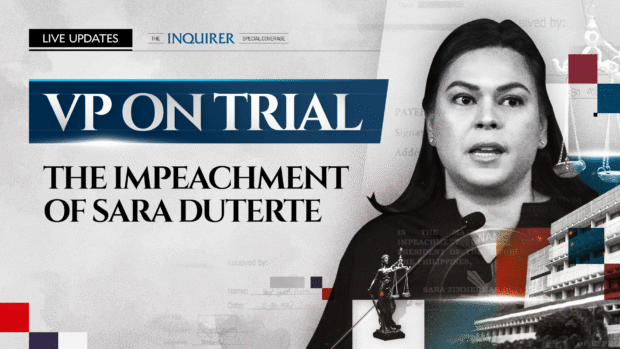
A discussion during the impeachment trial of Vice President Sara Duterte sparked confusion online after Cebuano lawyer Atty. Amando Ligutan said that a photocopy may be treated the same as an original document in court.
Many people questioned whether this meant that photocopies are now automatically considered original documents.
The short answer is no.
READ: For violation, Sara Duterte’s lead counsel called out twice
Under the Supreme Court’s 2019 Revised Rules on Evidence, a photocopy remains a duplicate.
However, a duplicate is generally admissible to the same extent as the original provided there is no genuine question regarding the authenticity of the original copy of the document or no showing that it would be unfair, under the circumstances, to admit the duplicate instead of the original.
READ: Public to get online access to impeachment trial records
The issue gained attention after some objections were raised during the impeachment proceedings, questioning the use of photocopied documents instead of original or certified true copies.
The rule being cited is not new.
In a decision written by Chief Justice Alexander Gesmundo, the Supreme Court explained that duplicates, including photocopies of paper documents and electronic copies, may be admitted as evidence unless someone can show that the original document may be fake, altered, or that accepting the duplicate would be unfair.
The ruling was highlighted in a murder case involving Ybo Lastimosa, who challenged the use of a photocopy of the victim’s death certificate during his trial.
Lastimosa argued that the prosecution failed to present the original death certificate and claimed that the photocopy should not have been accepted as evidence.
The Supreme Court rejected the argument and upheld his conviction. The Court said the photocopy, together with witness testimonies and other evidence, was enough to prove the victim’s death and support the prosecution’s case.
However, the Court also clarified that while a photocopy may be admissible as evidence, its evidentiary weight remains a separate matter. Judges must still determine its probative value in the light of all the evidence presented.
The rule has been in effect since the 2019 Revised Rules on Evidence took effect and was recently reaffirmed by the Supreme Court in a decision written by Chief Justice Gesmundo.
The Court ruled that advances in technology have made duplicates, such as photocopies, scanned copies, printouts, and electronic copies, as reliable as original documents for purposes of admissibility.
Legal experts say that the updated rule reflects modern court practice, where documents are often reproduced or stored electronically.
Instead of automatically rejecting a photocopy, courts now focus on whether there is a legitimate reason to question the authenticity of the original document or whether accepting the duplicate would be unfair.
In simple terms, a photocopy is not considered the original document.
But under the current Rules on Evidence, it can generally be used in court just like the original unless there is a valid legal reason to reject it.
Your subscription could not be saved. Please try again.
Your subscription has been successful.
Read Next
Disclaimer: The comments uploaded on this site do not necessarily represent or reflect the views of management and owner of Cebudailynews. We reserve the right to exclude comments that we deem to be inconsistent with our editorial standards.
View original source — Philippine Daily Inquirer ↗
Related stories
ABC News
PoliticsJul 8, 2026 · 1 min
ICE arrests Australian accused of illegally voting in US elections
ABC News
Philippine Daily Inquirer
PoliticsJul 8, 2026 · 1 min
LIVE UPDATES: Impeachment trial of VP Sara Duterte | July 8, 2026
Philippine Daily Inquirer

CNA
PoliticsJul 8, 2026 · 1 min
Protests break out in Havana as Cuba struggles to restore electricity
CNA

Philippine Daily Inquirer
PoliticsJul 8, 2026 · 1 min
Gloria Arroyo says she'd vote against Ombudsman Remulla’s impeachment
Philippine Daily Inquirer