Indian Express
‘Blot on society’: Bombay High Court orders Rs 60 lakh for Nanded septic tank victims
4 min readMumbaiJul 8, 2026 01:02 PM IST
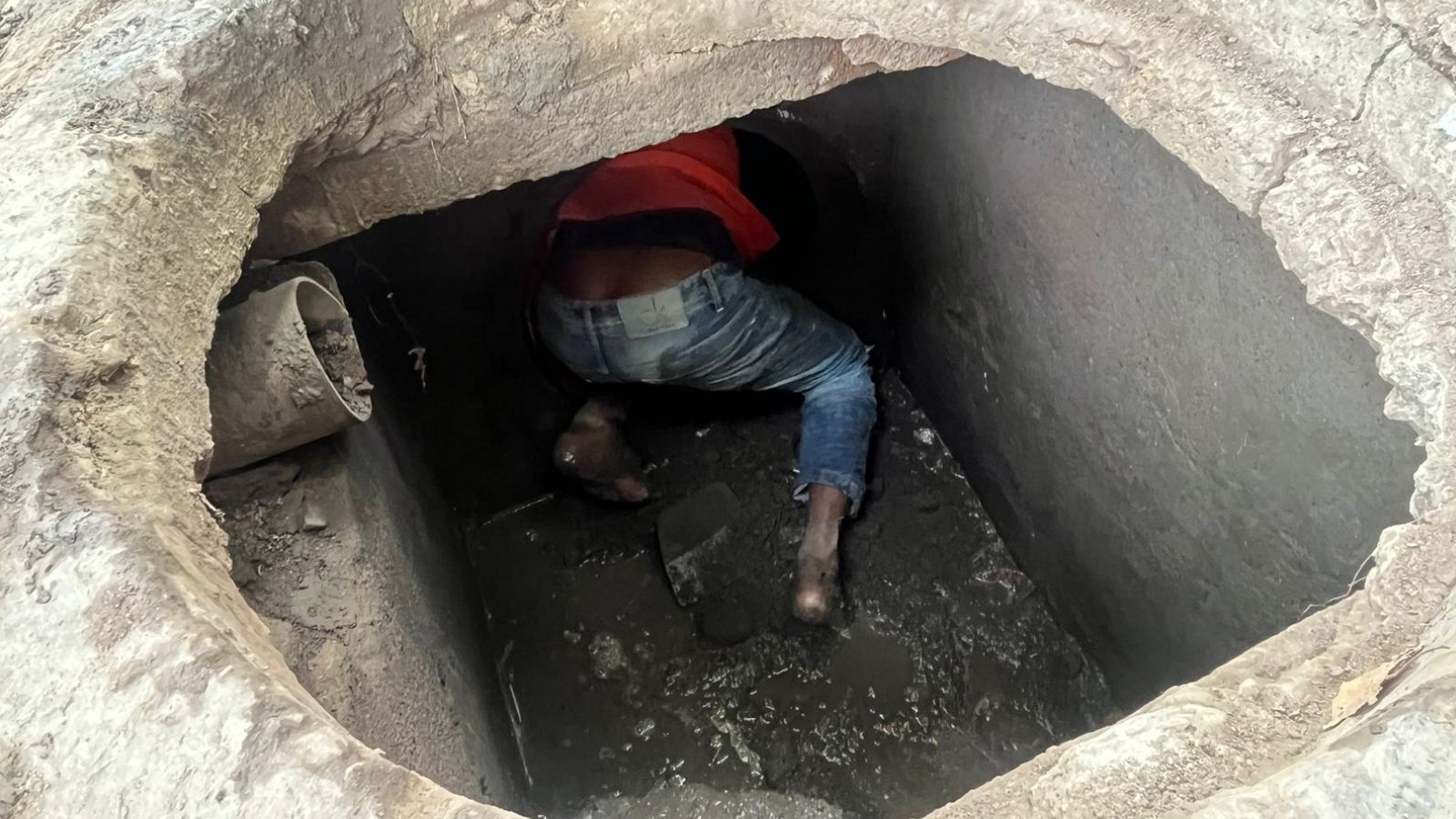
The Bombay High Court observed that despite constitutional mandates and judicial directions, deaths during sewer and septic tank cleaning operations continue to occur. (Representational image)
The Bombay High Court’s Aurangabad bench Monday directed the Maharashtra Government to pay Rs 30 lakh each to the families of two workers who died while cleaning a septic tank in Nanded district in 2021, observing that the continued existence of manual scavenging was a “serious blot on a civilised society”.
A bench of Justices Nitin B Suryawanshi and Vaishali Patil-Jadhav ordered the State Social Justice Department to release the compensation within eight weeks of receiving a proposal from the Nanded district collector. The amount will carry 6 per cent annual interest if the payment is delayed, the bench added.
“The continued existence of manual scavenging is a serious blot on a civilised society and reflects the collective failure to completely eradicate this inhuman and degrading practice,” the bench said in its July 6 judgment.
The bench observed that despite constitutional mandates and judicial directions aimed at ending manual scavenging and protecting workers’ fundamental rights, deaths during sewer and septic tank cleaning operations continue to occur.
“Incidents of death due to manual scavenging compel us to introspect as to how far we have truly realised the constitutional vision of equality, dignity and fraternity,” it added.
The high court was hearing two pleas, which involved a 32-year-old widow seeking compensation for the accidental death of her husband and a 70-year-old mother seeking compensation for her son who died while cleaning a septic tank.
Through advocate Abha Singh, the widow submitted that her late husband worked as a fisherman and also undertook construction and other labour work. He was the sole breadwinner of the family, which included their nine-year-old son. The petitioner added that she was compelled to work as an agricultural labourer on daily wages after her husband’s death.
Story continues below this ad
The other man worked as a daily-wage labourer, engaged in construction and other labour-intensive work. After his death, his parents became dependent on the income of his younger brothers.
Advocate Singh stated that as per the postmortem report, both men died due to asphyxia and drowning while cleaning the septic tank. She said the two had entered the septic tank without any protective gear, and that the owner of the premises had no authorisation from the local authority to carry out the cleaning work.
No compensation despite application to district collector
Singh argued that the petitioners had made a representation to the district collector seeking compensation of Rs 10 lakh each as per the Supreme Court directions in the Safai Karmachari Andolan case, but it had not yet been sanctioned. She added that the men’s family members were facing severe financial hardship after the death of the earning members.
Government lawyer P K Lakhotiya argued that the two men died while cleaning a septic tank in their individual capacity on private premises and that as per a December 2019 government resolution, the liability to pay the compensation was on the private property owner.
Story continues below this ad
However, advocate G R Ingole, appearing for the property’s owner, said his client had already paid Rs 2.25 lakh each in 2022 following an order from the collector, while the liability actually lay on the government authorities.
After hearing submissions and referring to Supreme Court and high court judgments, the bench ordered the compensation and directed authorities to rehabilitate the petitioners within 12 weeks if they are found eligible under the Prohibition of Employment as Manual Scavengers and their Rehabilitation (PEMSR) Act.
View original source — Indian Express ↗
Related stories

The Punch
WorldJul 8, 2026 · 1 min
Borno gov employs 100 graduates to curb thuggery
The Punch
The Punch
WorldJul 8, 2026 · 1 min
Police arrest two suspected armed robbers, recover gun in Oyo
The Punch
The Punch
WorldJul 8, 2026 · 1 min
Police kill two kidnappers in Ondo gun battle
The Punch
The Punch
WorldJul 8, 2026 · 1 min
Soldiers, NDLEA arrest three suspected terrorist drug suppliers in Katsina
The Punch