Indian Express
Centre’s school report: Bihar beats Karnataka, Tamil Nadu on learning outcomes, but infrastructure drags it down
5 min readPatnaJul 9, 2026 07:00 AM IST
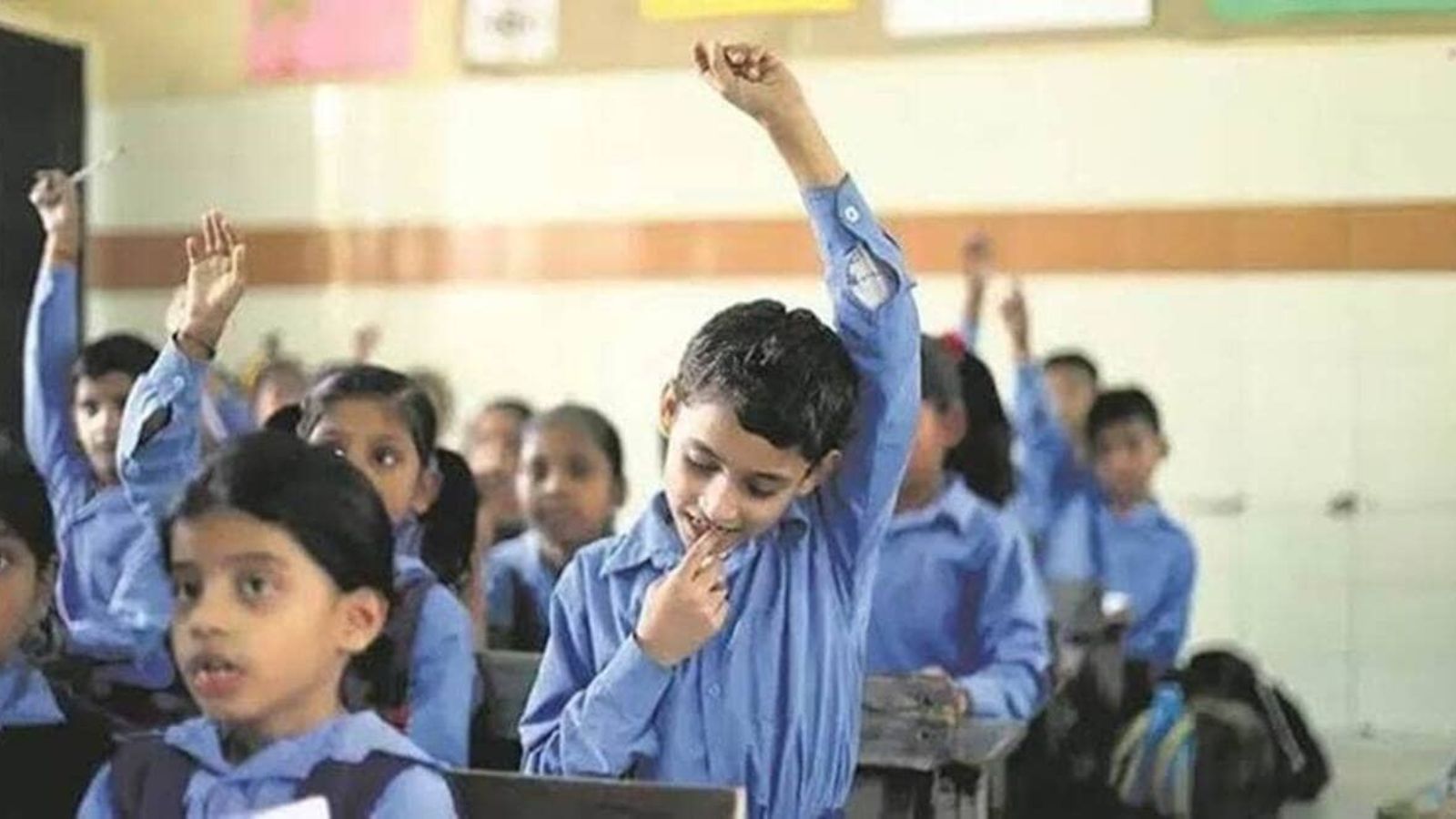
In expanding access and teacher training, the state secured an Uttam-3 grade in both 'Access to Education' (54.7/80) and 'Teacher Education & Training' (67/100), highlighting better student retention and steady progress in foundational teacher qualifications. (File)
As Bihar’s education system remains under constant scrutiny, the Centre’s latest Performance Grading Index (PGI) 2.0 shows the state improving its overall score, outperforming several historically stronger states in learning outcomes and making significant gains in equity, even as poor infrastructure continues to weigh it down.
The PGI report for the 2025-26 academic year, released recently by the Department of School Education and Literacy under the Ministry of Education, places Bihar in the Akanshi-1 grade, with the state securing 564.8 points out of 1,000, up from 507 points in 2024-25. The index evaluates states and Union Territories on 70 indicators to assess the quality of school education, drawing on data from the Unified District Information System for Education Plus (UDISE+), Parakh Rashtriya Sarvekshan 2024, PM Poshan and other government portals.
The 70 indicators are spread across six yardsticks with a total weight of 1,000 points. The system classifies states into 10 grades, starting from a baseline score of 401.
The report indicates Bihar’s school education ecosystem is on an upward trajectory. On school conditions, it notes: “To ensure decent and pleasant service conditions at schools, it is necessary to provide adequate and safe infrastructure, including working toilets, clean drinking water, clean and attractive spaces, electricity, computing devices, internet, libraries, and sports & recreational resources… A pleasant school environment tends to motivate teachers and students, ensuring children of all genders and Children with Special Needs (CWSN) receive a safe, inclusive, and effective learning environment.”
The report adds that the Central government provides financial assistance to states for these critical inputs under the Samagra Shiksha Scheme.
Bihar’s report card reveals standout achievements in inclusivity alongside persistent systemic bottlenecks. The state’s biggest success came in the ‘Equity’ domain, where it scored 221.5 out of 260 points, earning the Uttam-1 grade and indicating a substantial narrowing of performance gaps between boys and girls, rural and urban students, and general and scheduled categories.
In expanding access and teacher training, the state secured an Uttam-3 grade in both ‘Access to Education’ (54.7/80) and ‘Teacher Education & Training’ (67/100), highlighting better student retention and steady progress in foundational teacher qualifications.
Story continues below this ad
Though its learning outcomes are better than those of many peers, the report still points to significant scope for improvement. Scoring 81.9 out of 240 points (Prachesta-3) in this domain, the data shows that basic student proficiency in Language and Mathematics across Classes 3, 6 and 9 remains low. However, Bihar still fared better than Karnataka, Tamil Nadu, Andhra Pradesh, Telangana, Gujarat and Uttarakhand, which scored lower.
The most serious concern for Bihar lies in ‘Infrastructure and Facilities’, where the state scored a meagre 64.8 out of 190 points (Prachesta-3), placing it near the bottom. This highlights a widespread lack of modern facilities such as ICT computer labs, smart classrooms and specialised infrastructure for CWSN.
An education department official said: “While Bihar has successfully laid the groundwork for an equitable and accessible school system, the administration must now urgently pivot its funding and policy focus toward upgrading dilapidated classrooms and radically changing how fundamental concepts are taught on the ground.”
While the progress is a welcome milestone for Bihar’s education department, the state remains in the lower half of the national spectrum. It shares the Akanshi-1 grade with 12 other states and Union Territories, including Uttar Pradesh, Chhattisgarh and West Bengal.
Story continues below this ad
Nationally, Chandigarh emerged as the sole leader in the Uttam-3 category. No state or UT has yet breached the top three tiers (Utkarsh, Uttam-1 or Uttam-2), indicating that school education across the country still has considerable ground to cover.
Reacting to the PGI report, Bihar Education Minister Mithilesh Tiwari told The Indian Express: “It’s heartening to see that we’re doing well with learning outcomes and equity, but we’re aware of concerns over infrastructure and governance. We’re planning to send our teams to some states to learn best practices. In the coming year or so, one should see a marked change in the Bihar education system.”
© The Indian Express Pvt Ltd
Santosh Singh is a Senior Assistant Editor with The Indian Express since June 2008.
Expertise
He covers Bihar with main focus on politics, society and governance.
Investigative and explanatory stories are also his forte. Singh has 25 years of experience in print journalism covering Bihar, Delhi, Madhya Pradesh and Karnataka.
... Read More
Stay updated with the latest - Click here to follow us on Instagram
Tags:
Karnataka
Patna
Tamil Nadu
View original source — Indian Express ↗
Related stories
ABC News
WorldJul 9, 2026 · 1 min
Trainee surgeon pleads guilty to secretly filming hundreds of victims
ABC News

South China Morning Post
WorldJul 9, 2026 · 1 min
Lions dead, zebras on the run as floodwaters devastate zoo in southern China
South China Morning Post

Philippine Daily Inquirer
WorldJul 9, 2026 · 1 min
Coast Guard suspends sea travel in Surigao Norte due to Inday
Philippine Daily Inquirer

RNZ
WorldJul 9, 2026 · 1 min
New Zealand to consider joining Ocean of Peace Alliance alongside Fiji and Australia
RNZ