Indian Express
Delhi Metro Phase 4: DMRC begins construction work on Inderlok-Indraprastha corridor
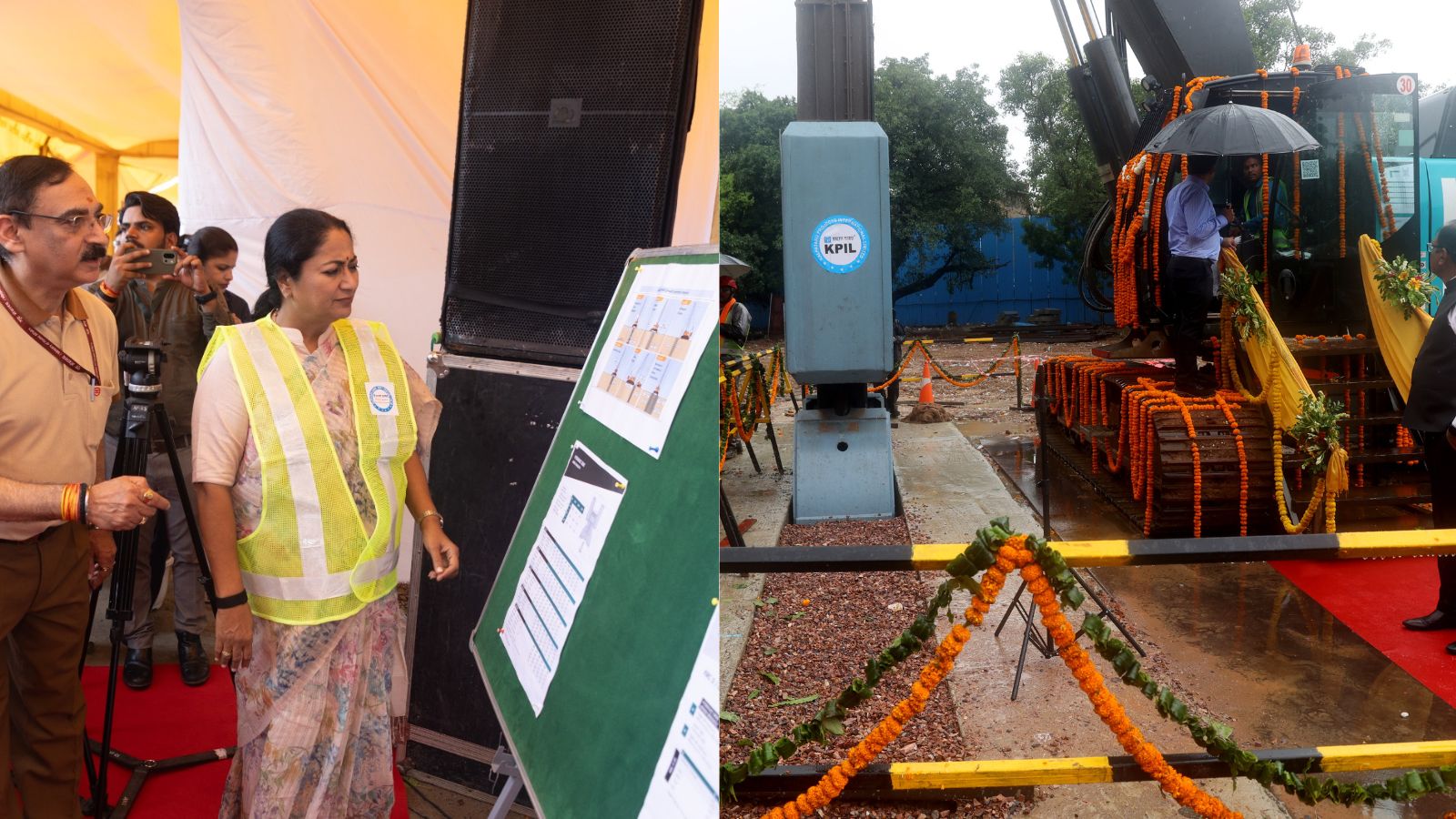
Inderlok-Indraprastha Metro corridor: The Delhi Metro Rail Corporation (DMRC) has started construction work on the Inderlok-Indraprastha Corridor, which is part of the Phase 4 expansion project. The 12.377 km-long corridor marks a significant addition to the Delhi Metro network. The construction work began with the initiation of Diaphragm Wall construction at the Sarai Rohilla Metro Station site in the national capital. The work started in the presence of Chief Minister Rekha Gupta.
The corridor was approved by the Union Cabinet in March 2024, and the foundation stone for the project was laid by Prime Minister Narendra Modi in the same month. The Inderlok-Indraprastha Corridor is targeted for completion by December 2030.
About Sarai Rohilla Metro Station
The proposed Sarai Rohilla Metro Station is set to become one of the important stations on the Inderlok-Indraprastha Corridor of the Magenta Line. Strategically located in central Delhi, the station is expected to provide improved connectivity to several educational institutions, cinema halls, the Karol Bagh market, Desh Bandhu Gupta Road, and other important destinations in the surrounding areas.
Delhi Metro’s Inderlok-Indraprastha corridor: Full list of stations
The Inderlok-Indraprastha Metro corridor is being developed as a fully underground extension of the Magenta Line (Line-8). It will feature 10 underground stations, further expanding Delhi Metro’s underground network. These are:
Indraprastha
Delhi Sachivalaya
IG Stadium
Delhi Gate
New Delhi
Nabi Karim
Jhandewalan Mandir
Ajmal Khan Park
Sarai Rohilla
Daya Basti
Inderlok
Once completed, the Magenta Line is set to become the longest corridor of the Delhi Metro network, with the highest number of interchange stations and underground stations. According to DMRC, the route is very important as it provides interchange facilities for seven lines:
Green Line and Red Line at Inderlok Metro Station.
Magenta Line at Nabi Karim Station.
Yellow Line and Orange Line at New Delhi Station.
Violet Line at Delhi Gate Station.
Blue Line at Indraprastha Station.
Civil construction packages for Inderlok-Indraprastha Corridor
The project will be executed through multiple major civil contract packages. The contract for one of the packages, D2C-06, has already been awarded, while the tendering process for the remaining packages is at an advanced stage, with finalisation underway.
The corridor connects seamlessly with the existing Delhi Metro network at 5 interchange stations, enabling access to a total of 7 metro lines.
🔗 Interchange Stations 5 Stations | 7 Lines
Interchange StationConnecting Metro Line(s)
Indraprastha
Blue Line
Delhi Gate
Violet Line
New Delhi
Yellow Line Orange Line (Airport Express)
Nabi Karim
Magenta Line
Inderlok
Red Line Green Line
⚙️ Salient Features
🛤️
Standard Gauge Track — 1435 mm
⚡
25 kV AC Overhead Electrification (OHE)
🚃
Modern 3.2 m wide rolling stock — Six-car train configuration
🤖
Unattended (Driverless) Train Operation (UTO)
📡 Integrated Communication & Control Systems
🌐
Fibre Optic Network — high-speed data backbone
🖥️
SCADA — Supervisory Control and Data Acquisition
📻
Train Radio — real-time communication with train operators
🔊
Public Address System — passenger announcements
📺
Passenger Information System — real-time travel updates
Significance of Delhi Metro’s Inderlok-Indraprastha Corridor
Upon completion, the Inderlok-Indraprastha Corridor will further enhance connectivity to several important destinations, including Sarai Rohilla Railway Station, New Delhi Railway Station, Delhi Secretariat, Arun Jaitley Stadium, Jhandewalan Mandir, India Gate, Kartavya Path, and the Central Vista area.
Story continues below this ad
“The extension will also make the Magenta Line the longest corridor in the Delhi Metro network, extending approximately 89 kilometres from Botanical Garden to Inderlok, and will operate entirely as a driverless metro corridor,” Anuj Dayal, Principal Executive Director, Corporate Communications, DMRC said.
According to DMRC, the corridor will feature an Automatic Fare Collection (AFC) system, enabling passengers to access services through multiple digital and smart payment options, including:
Smart Cards
National Common Mobility Card (NCMC)
QR code-based single and multiple journey tickets
View original source — Indian Express ↗
Related stories

South China Morning Post
WorldJul 9, 2026 · 1 min
Singaporean man hired to tutor children forced 6-year-old to drink urine in 18-hour abuse
South China Morning Post

Portugal Resident
WorldJul 9, 2026 · 1 min
Algarve desalination project advances as minister visits region
Portugal Resident

The Punch
WorldJul 9, 2026 · 1 min
Nothing must happen to Peter Obi, Atiku warns Presidency
The Punch

Philippine Daily Inquirer
WorldJul 9, 2026 · 1 min
BARMM chief convenes cabinet for organized gov't disaster response
Philippine Daily Inquirer