Indian Express
Better roads, foot massage, cleaner toilets: Pilgrims welcome improved facilities on the Wari route
4 min readPuneJul 9, 2026 10:03 PM IST
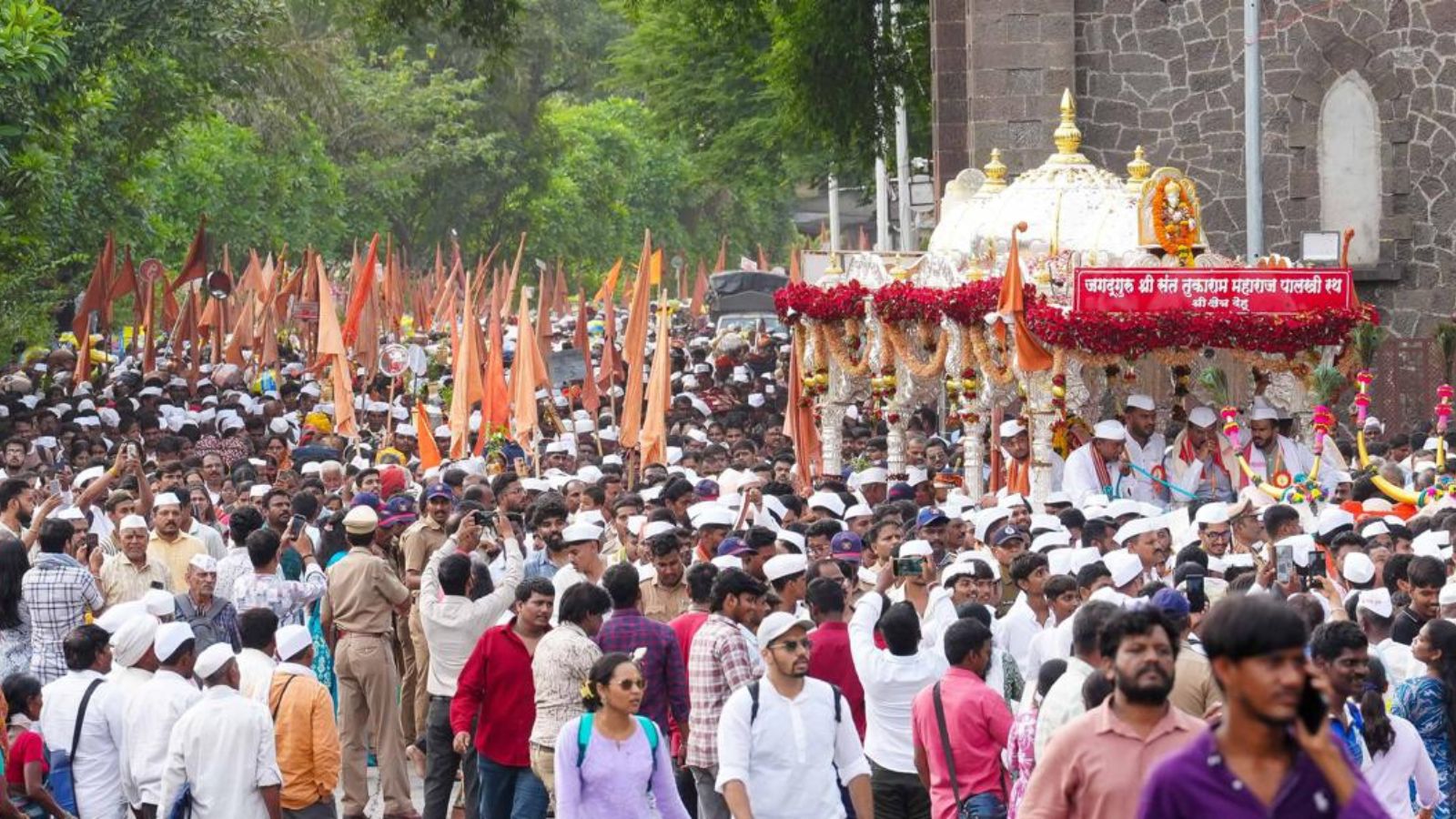
For veteran pilgrims, the improvements have made the physically demanding journey easier, but they insist the purpose of the Wari remains unchanged. (Express photo by Arul Horizon)
Written by Saniya Sinha
For many who have walked the Wari route for years, the journey has become noticeably easier, thanks to improved roads and better facilities.
Laxman Rao, 62, who has been walking with the Wari from Telangana for two decades, has witnessed the change over the years. “Earlier, the roads were narrower and uneven. We would simply keep walking, even if our feet hurt. Today, the roads are better, there are medical teams, drinking water, clean toilets and volunteers to guide us. We feel much better looked after now,” he said.
The Pune Municipal Corporation has introduced several facilities this year, including foot massage machines, physiotherapy services, medical camps, portable toilets, waterproof shelters, additional lighting and CCTV surveillance at halting points. Schools have also been opened to accommodate pilgrims during their stay.
Warkaris accompany the Sant Dnyaneshwar Maharaj Palkhi as it enters Pune via Sangam Bridge near the College of Engineering Pune (COEP) on Thursday. (Express photo by Arul Horizon)
For many pilgrims, however, it is not the scale of the arrangements but the small comforts that stand out the most after hours of walking. One such addition is the foot care service.
“After walking for hours every day, even a few minutes of foot care makes a huge difference. Earlier, we would just apply oil to our feet and continue. Now there are physiotherapy students and volunteers to help us recover before the next stretch of the journey,” said 58-year-old Vishnu Kendre from Alandi.
The improvements have also made the Wari more comfortable for women, many of whom say access to basic facilities has improved significantly over the years. Chandrabhaga Bhosale, 52, from Talegaon, who has been participating in the Wari for the past seven years, said the pilgrimage has become easier without losing its spiritual essence. “Medical camps are nearby if someone feels unwell, drinking water is easier to find and the halting arrangements are much better organised than before,” she said.
Story continues below this ad
Two women click selfies as the Sant Dnyaneshwar Maharaj Palkhi enters Pune, on Thursday. (Express photo by Arul Horizon)
Another pilgrim, 45-year-old Shobha Jagtap from Baramati, who has been walking the Wari for the past 12 years, said better sanitation facilities have made a noticeable difference for women. “There are now separate toilets and better places to rest at the halting points. Earlier, we had to adjust with whatever was available. These may seem like small changes, but when you are walking for several days, they make the journey much more comfortable,” she said.
While dedicated breastfeeding rooms have also been set up this year, several women in the dindis said they rarely see mothers carrying infants during the pilgrimage. Most said families usually leave newborns with relatives and undertake the Wari only when their children are older; meaning the facilities are available if needed but are not commonly used.
For veteran pilgrims, the improvements have made the physically demanding journey easier, but they insist the purpose of the Wari remains unchanged. “The facilities have improved over the years, but the faith has remained the same. We still walk with the same devotion towards Pandharpur,” said Chandrabhaga.
(Saniya Sinha is an intern with The Indian Express)
© The Indian Express Pvt Ltd
View original source — Indian Express ↗
Related stories

Rio Times
WorldJul 9, 2026 · 1 min
Humpback Whales Return to Rio, and the Boats Follow
Rio Times

Straits Times
WorldJul 9, 2026 · 1 min
Russia subjecting 1.6 million Ukraine children to military brainwashing: OSCE report
Straits Times

Indian Express
WorldJul 9, 2026 · 1 min
Delhi records first ‘Good’ AQI day in over 2 years – thanks to heavy rains
Indian Express

CBC
WorldJul 9, 2026 · 1 min
Canadian fugitive drug trafficker captured while working out in Colombia
CBC