Indian Express
Shobha Karandlaje urges Amit Shah to halt Karnataka permanent residence certificate rollout
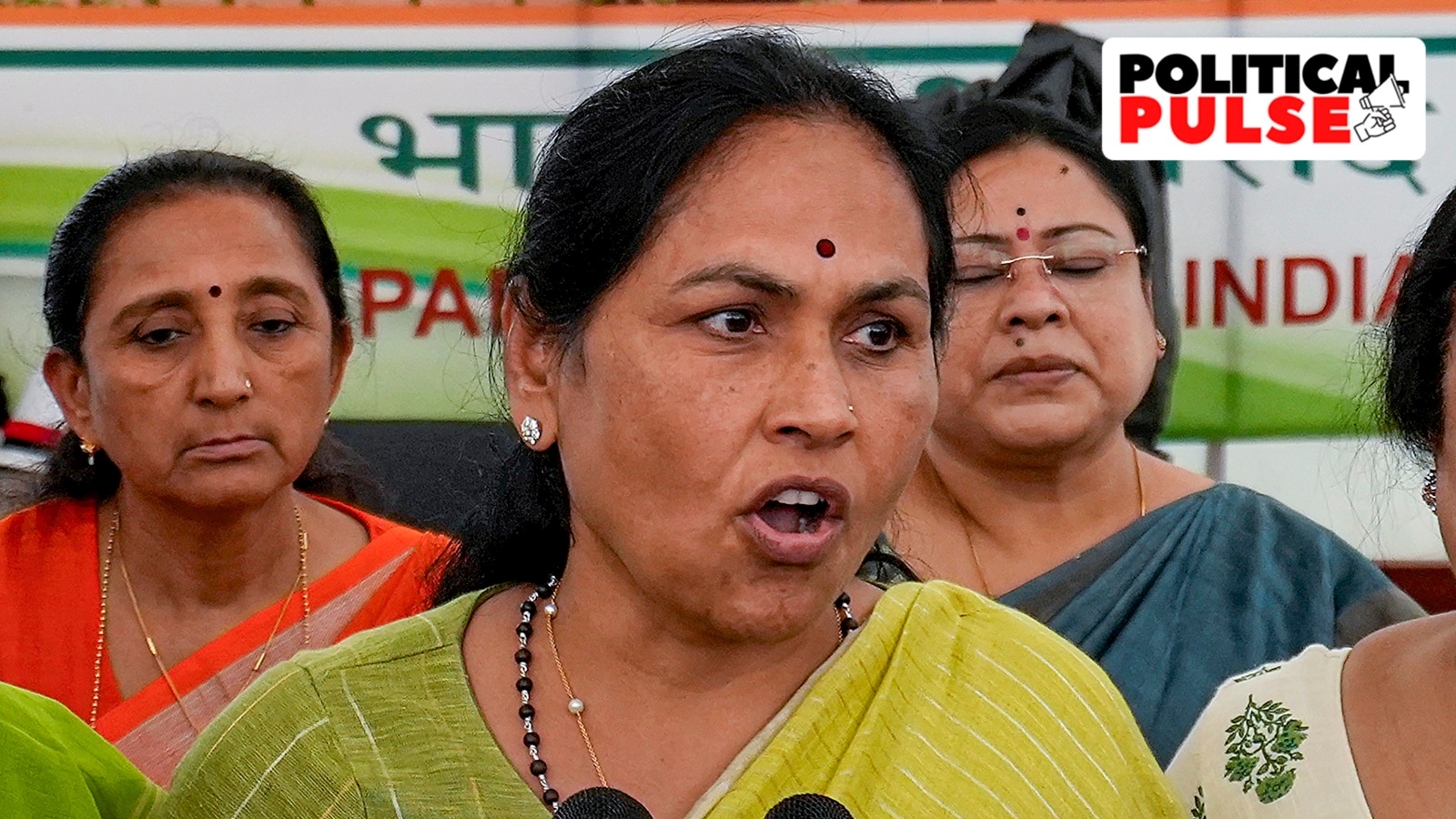
Union Minister Shobha Karandlaje has sought Union Home Minister Amit Shah’s intervention to prevent Karnataka’s move to provide Permanent Residence Certificates (PRC) to its long-term residents to facilitate enrolment in electoral rolls during the Election Commission of India’s (ECI) door-to-door voter enumeration process as part of Special Intensive Revision (SIR).
The Congress government in Karnataka issued orders and guidelines on June 29 — two days after the SIR exercise started in the state — to issue PRCs and domicile certificates to its citizens to establish their residential status. The additional document was meant to prevent large-scale elimination of voters from the electoral rolls for lack of documentation to prove their residential status.
The door-to-door voter verification process of the Election Commission in the state will conclude on July 29, while draft electoral rolls will be published on August 5.
Legal, national security concerns voiced
“The PRC notification raises serious constitutional, legal and national security concerns that require urgent examination by the Union Government,” Karandlaje has stated in the letter to Shah, while highlighting “constitutional and national security grounds”.
She said the introduction of a ‘Permanent Residence Certificate’ seeks to create a separate category of ‘permanent residents’, without any constitutional or statutory authority.
According to the Union Minister of State for Labour and Employment, persons who have illegally entered India or are residing unlawfully in the State may, by producing local documents or through fraudulent means, secure a Permanent Residence Certificate.
“Once such a certificate is issued, it may be relied upon to obtain various State benefits, government documents, educational admissions, employment opportunities and other entitlements, thereby legitimising illegal residence and frustrating the efforts of the Union Government to identify and remove illegal immigrants,” Karandlaje pointed out, while urging the Centre to direct Karnataka to keep the implementation of the notification in abeyance.
Story continues below this ad
According to the June 29 order, the purpose of PRCs in Karnataka is “to establish a uniform, transparent and legally sustainable framework for issuance of Permanent Residence Certificates and Domicile Certificates throughout the state.”
Rights groups for migrants hail move
While the issuance of the PRC has been welcomed by rights groups for migrants in the state, they have also raised questions on whether the ECI would consider the PRC as a legally valid document for the inclusion of names of voters in the electoral rolls during the SIR exercise.
According to the order, PRCs will be granted by the authorities in the state if “the issuing authority is satisfied, after enquiry and verification, that the applicant is a genuine and permanent resident of Karnataka”.
Criteria for Permanent Residence Certificate
Among the considerations for grant of PRCs is birth in Karnataka, residence in the state by parents or legal guardian for a continuous period of 10 years, studying in educational institutions in Karnataka for not less than ten academic years – including II PUC/Class XII, legal ownership of residential property in the state, and government documents like voter list entries, Aadhaar ID, Ration Cards, land records and other government documents.
Story continues below this ad
“Where documentary evidence is insufficient, local enquiry and other reliable evidence may be relied upon after recording reasons,” states the government order.
According to the operational guidelines, every grama panchayat and every ward office of all urban local bodies shall establish a help desk-cum-facilitation counter for facilitating applications relating to Permanent Residence Certificates.
“The government may utilise authenticated government databases, including Kutumba, educational databases, residence databases, electoral rolls and such other Government databases as may be notified from time to time, for the limited purpose of facilitating verification, reducing the requirement for submission of documents and enabling pre-filled online applications,” states the PRC guidelines.
View original source — Indian Express ↗
Related stories

Lovin Malta
WorldJul 11, 2026 · 1 min
World Population Day: Malta’s Population Reaches Record 588,254
Lovin Malta

Indian Express
WorldJul 11, 2026 · 1 min
Pakistan hikes petrol, diesel prices by over PKR 13 per litre amid West Asia crisis
Indian Express

Dawn
WorldJul 11, 2026 · 1 min
Hundreds of thousands evacuated as Typhoon Bavi barrels towards China
Dawn

Indian Express
WorldJul 11, 2026 · 1 min
IDFC First Bank fraud: For his ‘help’, key accused funded Haryana official’s Dubai, Bangkok trips, luxury hotel stay
Indian Express