Indian Express
Military Digest: The Pakistani soldiers still buried on Indian soil 27 years after Kargil war
As India prepares to observe Kargil Vijay Diwas (July 26) to honour the soldiers and airmen who died reclaiming the country’s high-altitude territory from intruders, a stark contrast remains across the Line of Control (LoC). In Pakistan, there is no state commemoration for the soldiers who perished in the freezing heights of Kargil, Batalik, Tololing, and Chotbalta. More than a quarter of a century after the 1999 conflict, dozens of Pakistani soldiers remain buried on Indian soil, forgotten and forsaken by their own military establishment.
It is documented that the Indian Army provided honourable burials to several fallen Pakistani regulars, complete with full military honours and Islamic religious rites. While many remains were repatriated to Pakistan over the years following specific diplomatic or military channels, several dozen Pakistani soldiers, including officers, were never claimed. Today, they remain buried among the jagged rocks of the high-altitude battlefields where they fell.
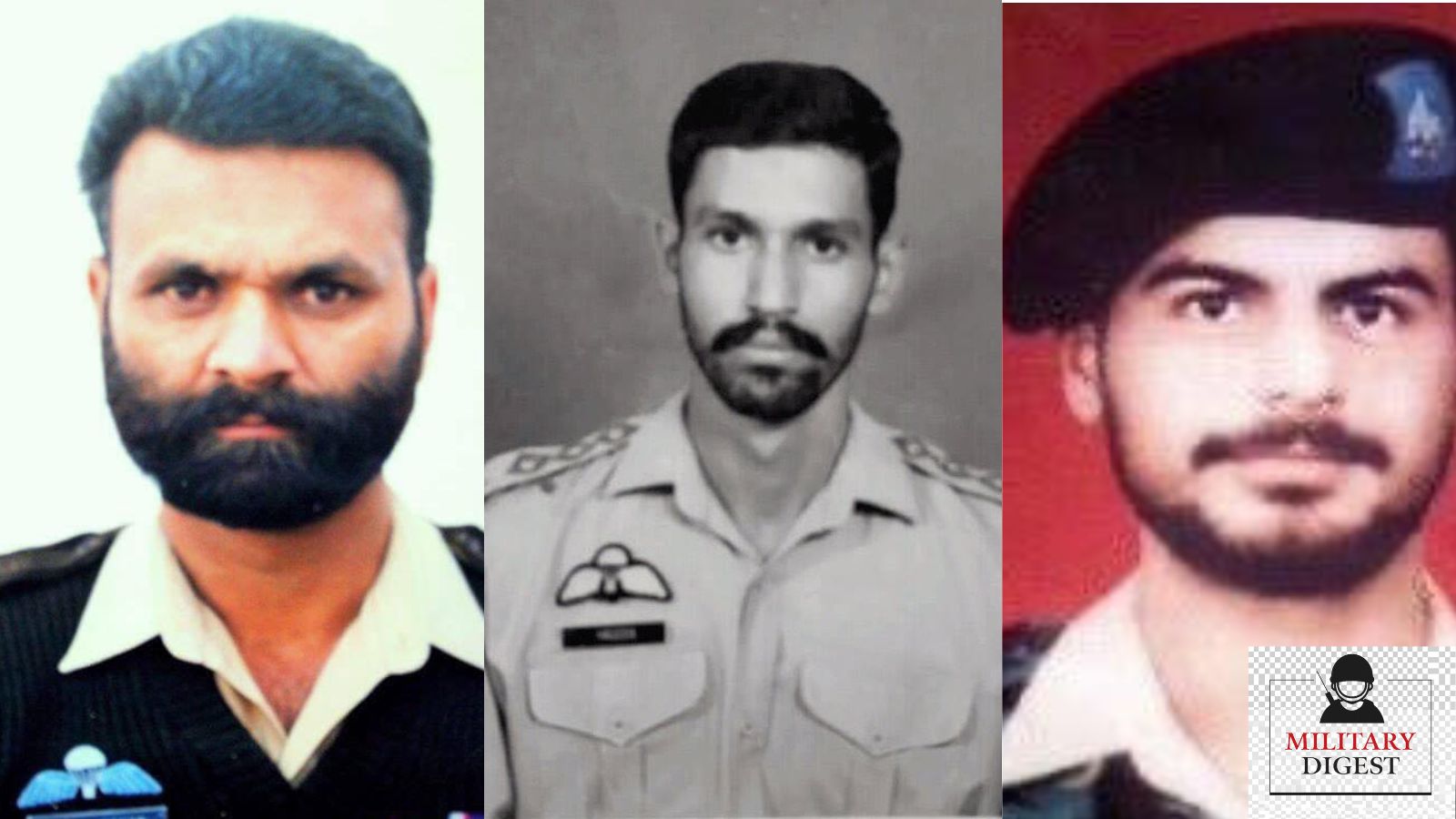
Major Imran, a former Pakistan Army officer who took premature retirement and now resides in Canada, has meticulously documented the names and photographs of some of these abandoned officers on his website. Major Imran, who served in the general area of the conflict in 1999, sheds light on several specific cases. Some are listed below.
Captain Farhat Haseeb Haider (9 Punjab/7 NLI): In early June 1999, Captain Haider’s unit was ambushed by the Ladakh Scouts in the Chorbat La sector, writes Major Imran.
While leading a counter-attack with 10 soldiers, he was killed. Although he was posthumously awarded Pakistan’s Sitara-e-Jurrat (Star of Courage) based on the testimony of a lone survivor, his body was never recovered by Pakistan. He remains buried under an unmarked boulder.
Major Abdul Wahab (32 Baloch/6 NLI): Having volunteered for the conflict zone, Major Wahab was deployed to the Batalik sub-sector along the Astore-Kargil axis. Critically wounded during an intense exchange of fire with Indian troops, he chose to hold his position alone to avoid delaying his retreating men. He was posthumously awarded the Sitara-e-Jurrat, but Islamabad never sought his body from the slopes of Tololing.
Captain Muhammad Ammar Hussain (1 Commando Battalion, SSG): Deployed on the slopes of Tiger Hill, Captain Hussain fought alongside Captain Karnal Sher Khan, launching fierce counter-attacks agains India’s 8 Sikh. Both were killed.
Notably, the Indian Brigade Commander, Brigadier M P S Bajwa, was so impressed by Captain Sher Khan’s exceptional bravery that he ordered his body brought down and repatriated with a citation, leading to Khan receiving Pakistan’s highest gallantry award, the Nishan-e-Haider. However, Captain Hussain’s body was left behind; he lies buried where he fell on Tiger Hill, writes Major Imran.
Story continues below this ad
When a Pakistani Commanding Officer invoked ‘Paltan ki Izzat’
Some years ago, this correspondent reported how the Commanding Officer of a Pakistan Army infantry battalion, which had infiltrated into Indian territory in the Zulu Top area of Kargil, referred to the ‘Izzat’ (honour) of his battalion while requesting bodies of his troops killed in battle. He even invoked the name of Field Marshal Sam Manekshaw, who had served in the regiment before partition.
Brigadier Bajwa (retd), who commanded the 192 Mountain Brigade that captured Tiger Hill, recalled a battlefield interaction with a Pakistani counterpart near Zulu Top around July 27, 1999.
Lieutenant Colonel Mustafa, the Commanding Officer of the 19th Battalion of the Frontier Force (FF) Regiment, reached out directly via radio communication to the Commanding Officer of India’s 3/3 Gorkha Rifles, requesting to speak with the Brigade Commander.
“The Pakistani officer said, ‘Hello Sir, this is Lt Col Mustafa from the Frontier Force Regiment. Field Marshal Sam Manekshaw was part of the FF before Partition,'” Brig Bajwa then told The Indian Express.
Story continues below this ad
“He told me, ‘Your boys have fought very well. My boys have been killed. You know this is a case of izzat (honour) of the battalion. My request is that I be handed over the dead bodies so I can bury them myself. This is for the izzat of the paltan (regiment)’,” Brig Bajwa recalled, adding that he negotiated terms on the spot.
“I said, ‘Mustafa, even if I hand over the bodies to you, what will you do for me?’ He replied that he would pull his remaining troops back to the Pakistani side of the LoC. Next fight will not happen, he said.”
Brigadier Bajwa accepted the word of the Pakistani commander. “He said, ‘I am a Pathan.’ I told him, ‘I am a Sardar (Sikh), and I will hand over the bodies as promised.’ I made that decision on the spur of the moment.”
Dignity for fallen Pakistani soldiers
Brigadier Bajwa also laid down strict conditions: the retrieval had to happen under full military custom, and the bodies were to be treated with utmost dignity, not stuffed into gunny bags.
Story continues below this ad
“I told Mustafa that he should send his troops with a white flag and stretchers and take the bodies with full respect. He followed these instructions and a video clip of the handing over of the bodies was made. This video went a long way to establish that Pakistan Army regulars were fighting in the war,” said Brig Bajwa.
Decades later, Pakistan’s refusal to officially acknowledge dozens of its own war dead remains a profound tragedy of the conflict, echoing the poignant lines of World War I soldier-poet Wilfred Owen in The Send-Off:
“So secretly, like wrongs hushed-up, they went.
They were not ours:
We never heard to which front these were sent.”
View original source — Indian Express ↗
Related stories

Straits Times
PoliticsJul 12, 2026 · 1 min
Iraqi prime minister to visit Washington on Monday; oil and gas deals expected
Straits Times

The Guardian
PoliticsJul 12, 2026 · 1 min
Nigel Farage is just one strand in the tangle of rightwing politicians and crypto investors | John Harris
The Guardian

The Hill
PoliticsJul 12, 2026 · 1 min
Sen. Kennedy says democratic socialists will ‘lead their party to defeat’ in November
The Hill
OnlineKhabar
PoliticsJul 12, 2026 · 1 min
Rs 240 million designated for Bhanu Sahitya Udyan
OnlineKhabar