Times of Israel
“You are going to war. I don’t know whether you will return.” - Sponsored Content
Eitan Aliyev lost fellow soldiers, fought in Gaza and on Israel’s northern front during the war that began on October 7, and developed severe post-traumatic stress disorder. After completing his military service, he hoped to begin rebuilding his life. Instead, he found himself in an exhausting struggle to have his condition recognized as a service-related disability. With free legal assistance from the Jerusalem Institute of Justice, Eitan finally received official recognition and was able to begin his rehabilitation. Like him, thousands of Israeli veterans are still fighting for the rights and support they deserve.
Eitan Aliyev, a 22-year-old veteran from Petah Tikva in central Israel, enlisted in the Israel Defense Forces in August 2022, motivated by his love for his country and his desire to contribute.
“Most members of my family served as soldiers in combat units,” Eitan said. “I felt that this was my way to make a real contribution to my country.”
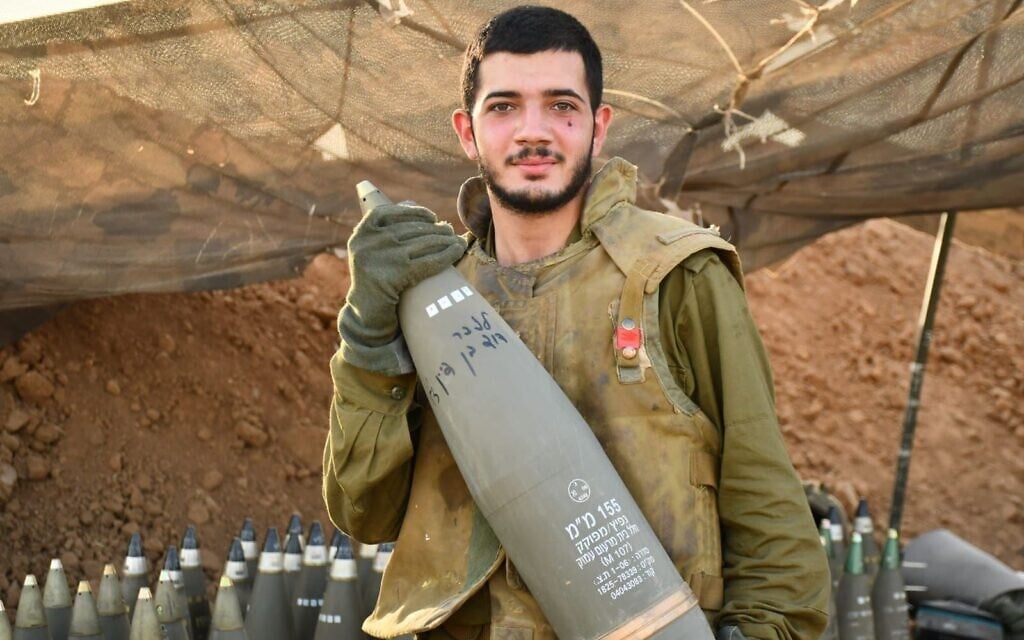
Assigned to the Artillery Corps, Eitan completed four months of demanding basic training.
The Loss That Changed Everything
In August 2023, Eitan and his unit were stationed at the Maccabim checkpoint on a border-security assignment. One day, a terrorist breached the checkpoint and rammed a group of soldiers. Five soldiers were injured, and one was murdered.
At the time of the attack, Eitan was resting in his room at the base after completing a shift in the unit’s operations room. He first heard about the attack from his sister, who called in a panic to make sure he was safe.
“I walked out of the room and saw chaos throughout the base,” Eitan recalled. “A few minutes later, I received the news. The soldier who had been murdered in the attack was my teammate, Maxim Molchanov.”
“Everyone was in shock,” Eitan said. “I became depressed. I could not take part in operational activities or function at all. Maxim and I had been close friends.”
It took time for the military to understand that Eitan and the other soldiers in his unit needed professional psychological support. Just as they began meeting with a military psychologist, the October 7 war broke out and brought everything to a halt.
“You Are Going to War. I Don’t Know Whether You Will Return.”
On the morning of October 7, 2023, Eitan’s unit was called into action within hours of the outbreak of the war.
He packed his equipment and traveled to the mobilization point while receiving messages from his sister, who lived in Sderot, a city near the Gaza border that was directly attacked by terrorists that morning.
She was trapped inside her home’s reinforced safe room. In the background, Eitan could hear gunfire and terrorists shouting.
As the hours passed, he learned that friends and people close to him had fallen in battle or had been murdered.
Before the unit deployed, Eitan’s commander ended the military briefing with a stark warning: “You are going to war. I don’t know whether you will return.”
During the first days of the war, Eitan’s unit moved between Israel’s northern border and Gaza.
“We went to the northern border and fought under intense fire from Hezbollah,” Eitan said. “They fired hundreds of drones, rockets, and mortar shells at us, and we responded with artillery fire.”
“That week, I experienced a genuine fear of death. We were in danger every day.”
The unit was later ordered south to Gaza. Eitan fought inside the Gaza Strip and sustained a minor injury during the combat.
“Throughout those days, every day I heard about another person I knew from home or from the military who had fallen in battle or had been murdered on October 7,” he said. “All of this happened only a few months after Maxim’s death.”
“I was operating on autopilot. I continued fighting and doing what was required of me as a soldier. I was placed in life-threatening situations, saw terrible things, and lived with the constant alertness and pressure of the battlefield. There was no time to stop, even for a moment.”
Support Israel’s Wounded Warriors
Helpless Under Fire
The most traumatic incident occurred in January 2024, when Eitan and his unit were deployed once again to Israel’s northern front.
“We were not firing. It was a defensive battle,” he recalled. “Hezbollah was firing drones and rockets at us without stopping, and all we could do was hide among the bushes and trees.”
“I felt completely helpless, like an easy target that could be hit at any moment, without any ability to defend myself.”
After this succession of traumatic events and the difficult scenes he had witnessed, Eitan began experiencing severe and persistent symptoms of PTSD.
“I started wetting the bed in my sleep and reliving memories from the military over and over again,” he said. “Powerful, uncontrollable memories of the friends I had lost would return as flashbacks.”
“I was constantly on alert, waiting for something bad to happen at any moment. When I returned home for one weekend, I noticed that even the smallest sound made me jump.”
“Whether it was a door closing or a rocket-warning siren, I would start looking for my body armor and my weapon. I genuinely believed I was back in the field. That was when I understood that I needed immediate help.”
A Second Battle After Military Service
Following his discharge from the military, Eitan applied to the Israeli Ministry of Defense Rehabilitation Department and requested recognition as a disabled IDF veteran due to his PTSD.
The Rehabilitation Department is the government body responsible for recognizing and assisting Israeli veterans who sustained physical injuries or psychological trauma as a result of their military service.
“I encountered difficulties and a lack of sensitivity from the system that felt like a slap in the face,” Eitan said. “After everything I had contributed, and after being injured because of my service and contribution to the country, I had to prove that I was really suffering.”
“The psychologists from the Rehabilitation Department asked me questions that felt like a police interrogation. It seemed that they were trying to prove that my PTSD had not been caused by my military service, but by events from my childhood.”
“I felt like I was being tortured, and my mental condition only continued to deteriorate.”
Eitan understood that he needed professional legal advice to navigate the Rehabilitation Department’s medical review boards. At the same time, he heard from friends that attorneys representing veterans in the process charged thousands of shekels for their services.
Then he received a telephone number that was being passed among veterans with a strong recommendation.
“My psychologist gave me the number of attorney Gai Akoka from the Jerusalem Institute of Justice,” Eitan said. “His name was spreading by word of mouth among disabled IDF veterans. My psychologist told me, ‘Call him. He will help you.’”
Free Legal Representation—and the Opportunity to Recover
Eitan called Gai and told him about the difficulties he had encountered and his distressing experiences before the medical review boards.
“Gai studied my case in depth, collected all the necessary documents, and prepared me professionally and thoroughly for the review boards,” Eitan said. “He advised and guided me until I received my disability rating.”
“I do not have enough words to explain how I felt. I could finally begin rebuilding my life.”
Unlike private attorneys who charge veterans for their services, Gai provided Eitan with legal representation entirely free of charge through the Jerusalem Institute of Justice, an Israeli nonprofit legal and human rights organization.
“He is like an angel,” Eitan said. “I am certain that without him, I would still be running between medical review boards and fighting for what I deserve, instead of concentrating on my rehabilitation and the treatment I need.”
“Whenever a friend encounters difficulties with the Rehabilitation Department, I give him Gai’s phone number.”
“He saves our lives. Our real war begins after we leave the military, and he fights the bureaucracy on our behalf.”
They Should Not Have to Fight Alone
Like Eitan, thousands of Israeli veterans are still struggling to receive the rights and assistance they deserve after suffering physical injuries or psychological trauma during their military service.
Your support can help them receive official recognition and begin rebuilding their lives after fighting on behalf of their country.
By supporting the Jerusalem Institute of Justice, you enable wounded and traumatized veterans to receive professional legal representation entirely free of charge.
They fought for us. Now it is our turn to fight for them.
Support Israel’s Wounded Warriors
View original source — Times of Israel ↗
Related stories

Straits Times
PoliticsJul 12, 2026 · 1 min
Ukraine's Zelenskiy says he will replace Prime Minister Svyrydenko
Straits Times

Philippine Daily Inquirer
PoliticsJul 12, 2026 · 1 min
Common sense dictates: Sara Duterte’s ‘kill threat’ video authentic – Diokno
Philippine Daily Inquirer

The Hill
PoliticsJul 12, 2026 · 1 min
Trump pays tribute to Graham: ‘A true American Patriot’
The Hill

OnlineKhabar
PoliticsJul 12, 2026 · 1 min
Deepa Shree Niraula undergoes successful brain tumour surgery
OnlineKhabar