Times of Israel
As US-Iran deal falters, experts say this was caused by the MOU text’s vagueness
Clause on Strait of Hormuz was interpreted by Tehran as empowering it to dictate route used by ships and attack vessels that deviate from it, US diplomats tell New York Times
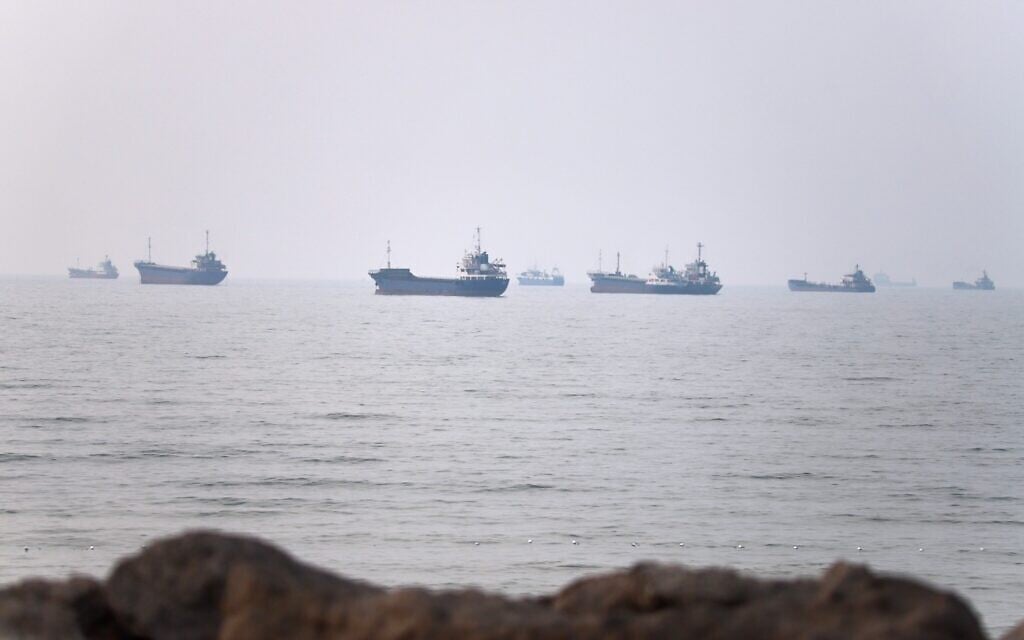
As the US-Iran deal appears to unravel over sharp differences regarding the Strait of Hormuz, The New York Times cited experts Sunday focusing on the vagueness of the text of the memorandum of understanding that caused the wildly differing interpretations.
While the June 17 MOU explicitly compelled the US to “fully end the naval blockade within 30 days” and end “any disturbances or impediments against the Islamic Republic of Iran,” the deal was far less explicit when detailing Tehran’s obligations regarding the strait.
It said Iran would “make arrangements using its best efforts for the safe passage of commercial vessels with no charge for 60 days only.” It added: “The Islamic Republic of Iran will conduct dialogue with the Sultanate of Oman to define the future administration and maritime services in the Strait of Hormuz, in discussion with other Persian Gulf littoral states, in line with the applicable international law and the sovereign rights of coastal states of the Strait of Hormuz.”
The New York Times quoted veteran US diplomat Michael Ratney as saying that “no one should be surprised that Iran views that as explicitly giving them an enduring role controlling passage through Hormuz.”
“Iran’s control obviously gives them powerful leverage, and they appear to be willing to risk a resumption of conflict, perhaps even a collapse of the ceasefire, to maintain that leverage,” he added.
Get The Times of Israel's Daily Edition
by email and never miss our top stories
By signing up, you agree to the terms
The outlet also quoted longtime negotiator Dennis Ross as saying that in Iran’s view, “you were opening the strait — but only on the condition that Iran was completely in control and that any other routes are not acceptable.”
The piece noted that nothing in the MOU specified what route ships would be taking through the Strait of Hormuz, or limited Iran’s control of what route they would take.
While the US viewed the deal’s text as prohibiting Iranian attacks on ships using a route that hugs Oman’s coast — through which the US military has for months been directing vessels — Tehran viewed the text as empowering it to designate an “approved” and “safe” route near its own coast, as well as to attack any ships deviating from that route and to charge passage fees or tolls after the 60 days in which it is prohibited from doing so.
The deal has all but collapsed since Iran last week started targeting ships using the Oman coast route, with recent days seeing US strikes on Iranian coastal areas and Iranian retaliatory attacks on US bases in Gulf states and Jordan.
Traffic through the key oil waterway has plunged from 400 vessels per week late last month — or over 55 per day — to just 22 ships last Thursday, according to maritime traffic tracking firm Kpler.
If you’d like to comment, join
The Times of Israel Community.
View original source — Times of Israel ↗
Related stories

CNA
TechnologyJul 13, 2026 · 1 min
Over 2,700 may have died due to England heatwaves: researchers
CNA

TechPana
TechnologyJul 13, 2026 · 1 min
LOCUS 2027 to Host Eight-Day Software Fellowship for Aspiring Developers
TechPana

Indian Express
TechnologyJul 13, 2026 · 1 min
Cooling failure in Mumbai AC local leaves commuters gasping during rush hour; one hospitalised
Indian Express

TASS
TechnologyJul 13, 2026 · 1 min
Iran to oppose attempts to turn Hormuz Strait into security threat — MFA
TASS