
Portugal Resident
Two days left for people to stand up against ‘renewable energy acceleration’
It is already a hotly ‘responded to’ exercise in public participation, but time is running out on the opportunity for citizens to say how they feel about the government’s plans for massively expanding renewable energy projects through specific areas of the country.
There are now only two days left for contributions to be registered on the ‘public participation platform’ – and last minute explanations on the reasons for doing so are flooding social networks, explaining the bottom line in both Portuguese and English.
As one explains, the enormous ‘Sophia Photovoltaic Park’, straddling three municipalities is being reformulated thanks to “widespread public outrage”. But Sophia ‘only’ involved plastering 1,734 hectares in solar panels. The government’s PSZAER proposal seeks to identify 371,000 hectares for potential solar plants.
“That is 213 projects the size of Project Sophia,” says the post.
“The PSZAER brief isn’t a specific project proposal. It’s a framework that, if passed, will REMOVE the requirement for an Environmental Impact Assessment for energy projects within the specific areas identified”.
This means that people may not even hear about projects before they have been given the construction green-light (as it is generally through the EIA process that the public is informed of a plan, and can organise resistance, if people feel it is needed), warns another.
“The PSZAER will allow these projects to bypass the EIA process,” groups stress.
“The scale of resistance to Sophia has been unprecedented, has been widely reported in the press and doubtless much discussed in the boardrooms of those who plan to destroy our countryside and in the corridors of power.
“Imagine 213 projects on the scale of Sophia being implemented without the current checks and balances, of which there are already far too few?
“The PSZAER might not be in your village like Sophia might be. Instead it has the power to set the tone for the direction THE WHOLE of rural Portugal over the coming years. If this passes, it will send a loud and clear message to the energy corporations that rural Portugal is “open for business”, a free for all.
“A meaningful resistance, whether or not it affects the outcome of the proposal, sends the opposite message.”
The ray of light in this process has been the overwhelmingly negative appreciation by municipalities. Since ANMP (the national association of Portuguese municipalities) gave their opinion, reports in the media have suggested that the ministry of environment and energy has been ‘working’ to change municipalities’ opinions – thus it is not immediately clear how the government’s intentions will progress.
The only certainty is that the time-frame for citizens to say what they think runs out on Wednesday (July 15).
Sources: Citizen social networks
Natasha Donn
Journalist for the Portugal Resident.
View original source — Portugal Resident ↗
Related stories

The Punch
PoliticsJul 13, 2026 · 1 min
Tinubu orders NIMC to enrol all Nigerians, sets 2026 deadline
The Punch
OnlineKhabar
PoliticsJul 13, 2026 · 1 min
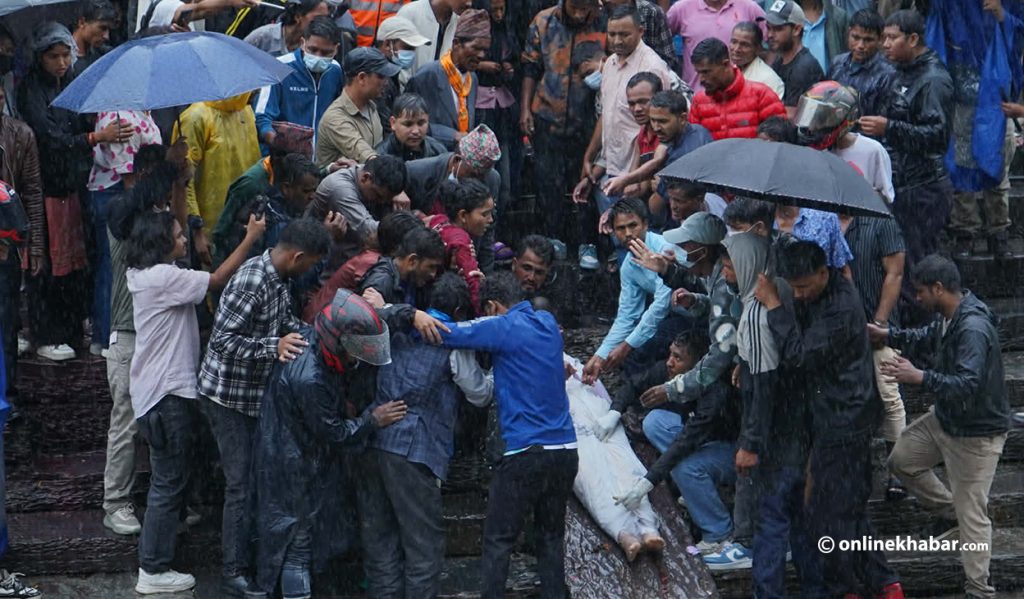
Funeral of Ganesh Nepali, who died by self-immolation, held at Aryaghat (Photos)
OnlineKhabar
The Punch
PoliticsJul 13, 2026 · 1 min
Kano gov retains deputy as running mate for 2027
The Punch

BBC
PoliticsJul 13, 2026 · 1 min
Sudan's paramilitary RSF chief sentenced to death over war crimes
BBC