The Guardian
BBC faces ‘real jeopardy’ as licence fee payments fall faster than expected
The number of people paying the BBC’s licence fee has fallen faster than expected in the last year, with half a million more households opting out of the payment.
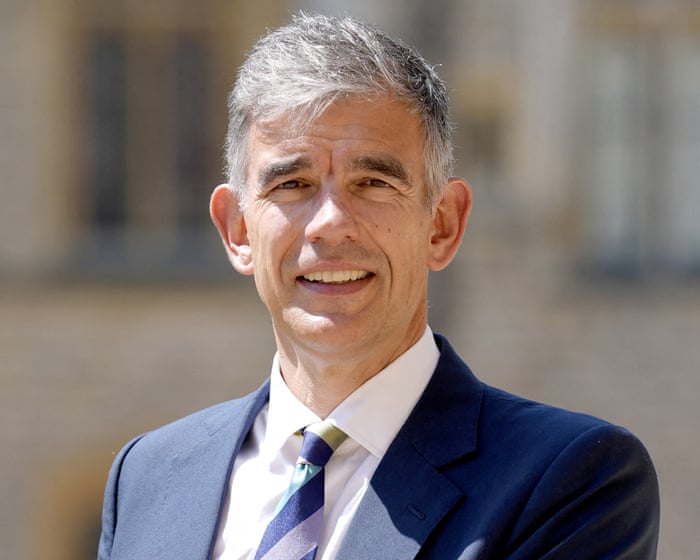
Matt Brittin, the BBC’s director general, said the broadcaster faced a “moment of real jeopardy”, as the licence fee funding model “ties us to the past”.
There are now 23.3m TV licences in force, a fall of 539,000 from a year earlier, according to the corporation’s annual report. It is significantly more than the 300,000 fall in licence fee payers recorded a year earlier.
The pace at which households are opting not to pay the licence fee has been alarming BBC executives for months, with the annual report conceding a “steeper projected decline in licence fee sales”.
The report also revealed that the BBC’s top on-air earner in 2025-26 was Scott Mills, on £750,000, though he has since been sacked after allegations about his personal conduct.
It means the top earner is now the radio presenter Greg James, who earns up to £445,000 a year. He is followed by fellow radio presenters Stephen Nolan, on £430,000, and Vernon Kay, on £410,000, and the television presenter Laura Kuenssberg, also on £410,000.
It comes amid huge change in the media that has seen the rise of streaming services and digital platforms such as YouTube. While 94% of people in the UK continued to use the BBC each month, fewer than 80% of households contributed to the licence fee.
The broadcaster said changing audience behaviours was having a “significant adverse impact on licence fee income”. It also said a “light sports year” meant it had not been able to use big sports events to drive licence fee sales.
The BBC is scrambling to make cuts that will result in as many as 2,000 job losses and about £500m in savings over three years. Major changes to the licence fee are being lined up to arrest its decline.
The current licence fee only covers those watching live television or iPlayer, but BBC executives and government figures accept the definition is now outdated.
There are signs that the fee will be expanded to include anyone who watches streaming services such as Netflix, Disney+ or Amazon Prime, with the fee potentially added to subscriptions for those services.
While it is only one option being discussed, it appears to be the one with the broadest support. Brittin has said replacing the licence fee with a household levy would be simpler and easier to collect, but ministers have ruled this out, deeming it a new tax.
The BBC’s licence fee income rose slightly because the levy increased to £174.50 in April last year. However, despite the £3.9bn it receives from the licence fee and £2.1bn it generates through its commercial arm, the BBC made an operating loss for the third year in a row. It recorded a deficit of £121m in 2025-26.
The BBC said the licence fee income was around a quarter lower, about £1.2bn in real terms, than in 2017, when its current royal charter was agreed.
Brittin said the BBC was facing “real challenges”, adding that he was carrying out a root and branch review of what it produces.
“This is a moment of real jeopardy, not just for the BBC but for public service broadcasting and the UK as a whole,” Brittin said. “Making the savings we require will not be easy and will inevitably have an impact on what we make and how we deliver it. We have to ask ourselves, honestly: if we were inventing the BBC today, what would we do?
“The BBC has proved throughout its history how quickly it can reinvent itself to serve the needs of audiences – from restructuring for world war 2 to repurposing during Covid, to spinning up services in conflict zones. We need, collectively, to call on that sense of urgency now.”
Samir Shah, the BBC chair, acknowledged the impact of a series of BBC controversies in the last year that ultimately led to the departure of Tim Davie as director general.
“The challenges faced by the BBC over the past year have been significant – from the Panorama edit of President Trump’s speech on 6 January 2021 and the breach of our editorial guidelines by Gaza: How to Survive a Warzone, to the serious broadcasting errors at Glastonbury and the Bafta film awards,” he said.
“We know that people care deeply about these mistakes. They affect confidence in our journalism, trust in the BBC as a public institution, and perceptions about how effectively we are held to account.”
View original source — The Guardian ↗
Related stories

Variety
EntertainmentJul 14, 2026 · 1 min
Nicolas Winding Refn’s ‘Her Private Hell’ Ignites Fantasia’s 30th Edition as Hot Global Genre Titles Get Set to Stoke…
Variety

Euronews
EntertainmentJul 14, 2026 · 1 min
Spanish PM's brother banned from public office for nine years for misconduct
Euronews

Variety
EntertainmentJul 14, 2026 · 1 min
Rosemary Who? Get Ready for Emma’s Baby as ‘Birth’ Seduces Tallifornia Film Fund With ‘Grotesque and Terrifying’ Take…
Variety

Daily Trust
EntertainmentJul 14, 2026 · 1 min
No Child Should Miss School due to Poverty – Zazzau Emir
Daily Trust