Indian Express
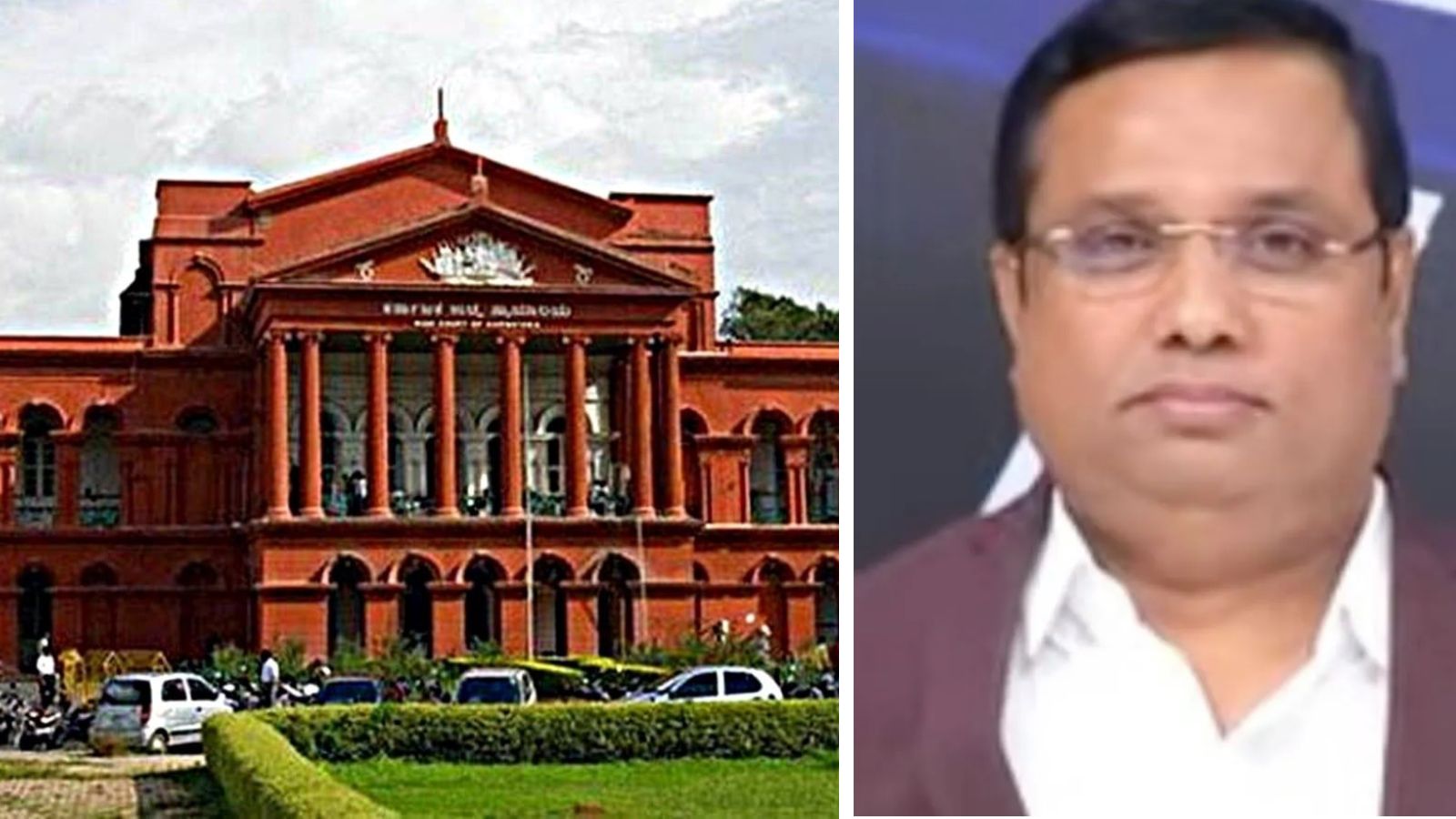
Karnataka High Court upholds Power TV MD’s conviction, cuts jail term to 1 day
The Karnataka High Court on July 10 upheld an order passed by a civil court sentencing Power TV Managing Director Rakesh Sanjeeva Shetty for disobeying an interim order restraining the media from telecasting, publishing, or circulating any defamatory content against Indian Police Service (IPS) officer Dr B R Ravikanthegowda. However, exercising its discretion, the court modified the sentence period from three months to one day.
Justice K S Hemalekha held that the modification of sentence is subject to certain conditions — Power TV should file an affidavit before the trial court, strictly abiding by the civil court’s interim injunction order on September 8, 2023; broadcast a statement of apology in its news channel about the earlier telecast, and express regret for violating the court order; and pay Rs 50,0000 to the IPS officer within four weeks.
On January 6, the court in Bengaluru Rural district had ordered Shetty’s detention in civil prison for three months after finding him guilty of deliberately violating a court injunction order.
The bench in the order held that the evidence placed on record clearly establishes that the programme telecast by the channel “portrayed the respondent in a negative spectrum”, in violation of the injunction order.
The order added, “Courts cannot permit orders of injunction to be disregarded on the basis of a unilateral interpretation by the parties. If such conduct is tolerated, the authority of judicial orders would be seriously undermined, and the administration of justice would be rendered ineffective.”
Power TV, represented by Shetty, had moved the High Court challenging the order passed by the Principal Civil Judge and Judicial Magistrate First Class (JMFC), Bengaluru Rural, on January 6.
Controversial programme aired in September 2023
Story continues below this ad
The trial court had passed the detention order allowing the application filed by the IPS officer, under Order XXXIX Rule 2A read with Section 151 of the Code of Civil Procedure (CPC). It was stated by the IPS officer that in spite of an interim order of the trial court, the channel had telecast programmes on September 22 and 23 in 2023 portraying the officer in a derogatory manner.
Order XXXIX Rule 2A envisages that in the event of disobedience, the court may proceed against the “person guilty of such disobedience or breach”
Shetty argues there’s no specific allegation against him
Shetty’s primary contention was that the suit filed by the IPS officer is directed against Power TV represented by its editor and the allegation of disobedience is also in relation to acts attributable to editorial functions. In the absence of a specific allegation and proof against the MD, the detention order against him was unsustainable.
The bench refused to accept the contention, noting that after the interim order was passed by the trial court on September 11, 2023, Shetty, the defendant No 52 in the suit, had filed his written statement before the trial court and filed an application for setting aside the interim relief granted on September 8, 2023.
Story continues below this ad
Thus, the court held that the contention that there are no specific pleadings against the MD or that the cause title was not amended cannot be accepted.”
Shetty also argued that the telecast was based on certain complaints and communications allegedly received by the channel, and the programme was part of the journalistic exercise of reporting matters of public concern.
The bench refused to accept the argument. It said, “Even assuming that certain complaints or communications were received by the appellant or the letters had been forwarded, alleging allegations against the respondent, such circumstances would not confer liberty upon the appellant to broadcast programs or telecasts discussing or portraying the respondent in a derogatory manner, particularly when a clear order of injunction restraining such telecast was operating.”
‘Power TV should have approached court’
The bench held that if the petitioner felt that the injunction order required clarification or that certain materials could legitimately be reported notwithstanding the order, the appropriate course would have been to approach the court.
Story continues below this ad
It also made it clear that an injunction order is directed against the entity (Power TV); the person in control and responsible for its functioning shall fall within the ambit of the expression “person guilty of disobedience”.
The High Court emphasised that freedom of the press constitutes an essential component of democratic governance and facilitates transparency in public administration. However, it is equally settled that the right guaranteed under Article 19(1)(a) of the Constitution is not absolute and is subject to reasonable restrictions, it held.
‘Right of reputation, integral to right to life’
The court stated that one of the important facets recognized by Constitutional jurisprudence is the right of reputation, which forms an integral part of the right to life and personal liberty under Article 21 of the Constitution.
The bench said, “The freedom of speech cannot be invoked as a justification to disregard and undermine a subsisting judicial order. The Constitutional guarantee under Article 19(1)(a) of the Constitution does not extend to permitting parties to ignore or circumvent the authority of Courts. Permitting such conduct would seriously undermine the rule of law and erode public confidence in the administration of justice.”
Story continues below this ad
Dismissing the appeal, the bench said ends of justice would be met by modifying the judgment of punishment. Accordingly, it modified the sentence and imposed a cost of Rs 50,000 to be paid to the IPS officer.
View original source — Indian Express ↗
Related stories

The Punch
WorldJul 15, 2026 · 1 min
Sultan declares Thursday first day of Safar 1448AH
The Punch

Antara News
WorldJul 15, 2026 · 1 min
Gov't builds Sekolah Rakyat to ensure equitable education: Minister
Antara News

Antara News
WorldJul 15, 2026 · 1 min
Indonesia presses on after mixed WTO ruling on EU fatty acid duties
Antara News

Dawn
WorldJul 15, 2026 · 1 min
Pakistan publishes its agriculture census, revealing the federation beneath our fields
Dawn