Indian Express
Noida building fire: The dos and don’ts of charging EVs at housing complexes
3 min readNew DelhiJul 16, 2026 01:53 AM IST
Aans Chaudhary (30), who lived on the first floor of the building for the last six years and paid a monthly rent of Rs 9,000, sat on a nearby stone slab with soot covering his hands and clothes.
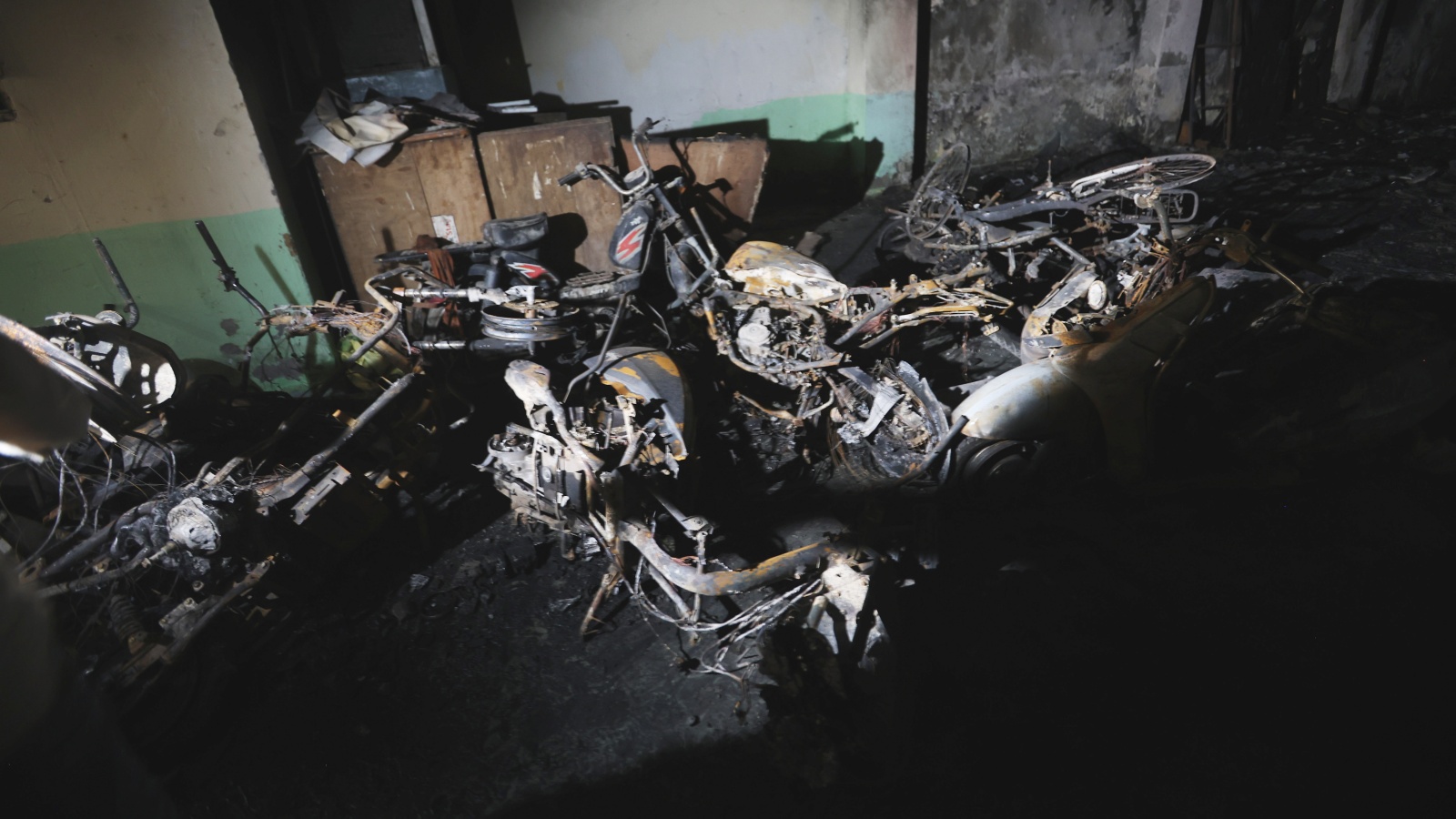
The fire in the Noida residential building, allegedly triggered while an electric two-wheeler was being charged, has once again raised concerns over the safety of EV charging points in homes and residential complexes.
Those related to the industry maintained that to ensure such situations do not arise, before buying an electric vehicle, owners should ask the retailer about the vehicle’s charging requirements and ensure that their home’s electricity connection and sanctioned load are adequate for the charger that will be installed.
Genesia Rodrigue, Senior Manager (Public Policy) at EV charging startup Kazam, said homeowners should ensure that chargers are installed by trained technicians and connected through a dedicated electrical circuit instead of sharing power with other high-load appliances.
“Owners should avoid temporary or improvised charging arrangements, which involve extension cords, adapters or exposed wiring which significantly increase the risk of overheating and electrical faults,” she added.
A recent study by Kazam and the Alliance for an Energy Efficient Economy (AEEE) found that only 55% of prospective EV buyers across India have access to formal charging infrastructure.
Shyamasis Das, Fellow at the Delhi-based think tank Centre for Social and Economic Progress (CSEP), who works on electric mobility, said vehicle owners should always use the charger supplied by the original equipment manufacturer (OEM). “Only a charger provided by the OEM should be used, and that too only for the specific vehicle it was bought for,” he added.
Two dead, families rescued after massive fire in residential building in Noida pic.twitter.com/THH5qcAAKI
— The Indian Express (@IndianExpress) July 15, 2026
This is absolutely essential since the same power socket will be subjected to high electrical loads everyday in a home.
Rodrigue advised that essential protection devices such as miniature circuit breakers (MCBs) and residual current circuit breakers (RCCBs) be installed, there should be proper earthing and the charger should be mounted in a dry, well-ventilated location away from water seepage.
Story continues below this ad
She added that periodic electrical inspections, particularly in older buildings, along with regular checks of charging cables and connectors are also important.
Moreover, EV owners should never ignore warning signs that might seem trivial at first – burning smell, damage to cables or connectors, exposed wiring, sparks or buzzing sounds. “They should immediately contact the vehicle manufacturer because many times, local electricians are not trained to fix such issues,” Das said.
© The Indian Express Pvt Ltd
Devansh Mittal is a Correspondent at The Indian Express, based in the New Delhi City bureau. He reports on urban policy, civic governance, and infrastructure in the National Capital Region, with a growing focus on housing, land policy, transport, and the disruption economy and its social implications.
Professional Background
Education: He studied Political Science at Ashoka University.
Core Beats: His reporting focuses on policy and governance in the National Capital Region, one of the largest urban agglomerations in the world. He covers housing and land policy, municipal governance, urban transport, and the interface between infrastructure, regulation, and everyday life in the city.
Recent Notable Work
His recent reporting includes in-depth examinations of urban policy and its on-ground consequences:
An investigation into subvention-linked home loans that documented how homebuyers were drawn into under-construction projects through a “builder–bank” nexus, often leaving them financially exposed when delivery stalled.
A detailed report on why Delhi’s land-pooling policy has remained stalled since 2007, tracing how fragmented land ownership, policy design flaws, and mistrust among stakeholders have kept one of the capital’s flagship urban reforms in limbo.
A reported piece examining the collapse of an electric mobility startup and what it meant for women drivers dependent on the platform for livelihoods.
Reporting Approach
Devansh’s work combines on-ground reporting with analysis of government data, court records, and academic research. He regularly reports from neighbourhoods, government offices, and courtrooms to explain how decisions on housing, transport, and the disruption economy shape everyday life in the city.
Contact
X (Twitter): @devanshmittal_
Email: [email protected] ... Read More
Stay updated with the latest - Click here to follow us on Instagram
Tags:
New Delhi
View original source — Indian Express ↗
Related stories

Straits Times
WorldJul 15, 2026 · 1 min
US Mint will produce $1 coin with Trump’s image, Treasury Secretary says
Straits Times

BBC
WorldJul 15, 2026 · 1 min
William tells England to 'hold their heads high' after defeat
BBC

Philippine Daily Inquirer
WorldJul 15, 2026 · 1 min
P68,000 suspected shabu seized in Oriental Mindoro buy-bust
Philippine Daily Inquirer

Indian Express
WorldJul 15, 2026 · 1 min
Will rebuild the party… have done earlier, will do it again: Mamata Banerjee
Indian Express